
Is It Better to Add Onto My House or Move If It's Become Too Small?
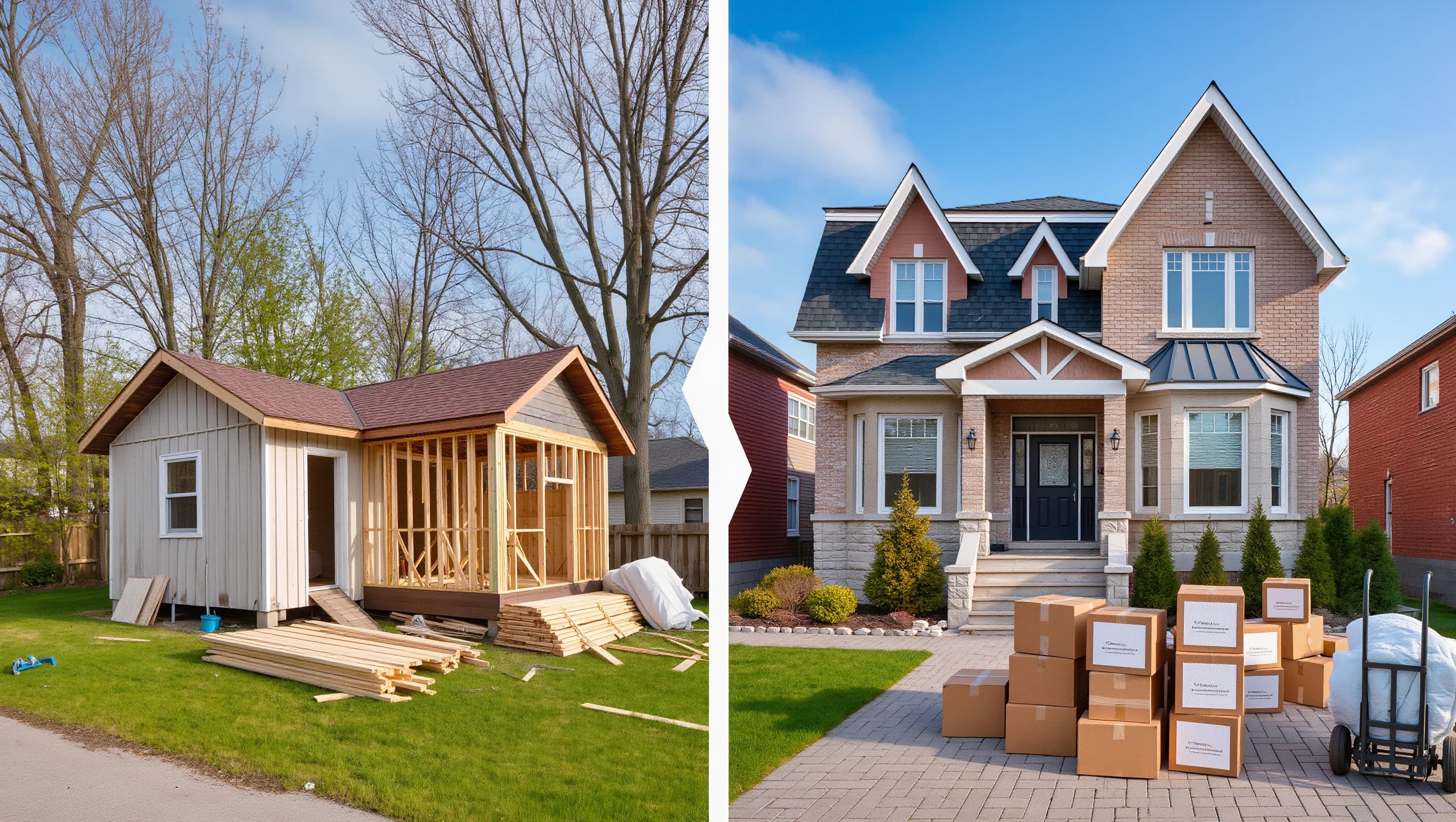
The current house no longer provides enough space for the family, and the question keeps coming back: add onto the house where it stands, or sell to buy bigger elsewhere? This decision deserves a structured analysis rather than a choice based on emotion alone.
Factors favoring an addition
| Factor | Why it weighs in favor of adding on |
|---|---|
| Current location highly sought-after or hard to find elsewhere | Moving would lose an advantage hard to recreate |
| Addition cost lower than the net cost of moving | Selling fees, transfer tax, and moving costs add up fast |
| Attachment to the neighborhood (schools, social network, proximity to work) | A real emotional factor with concrete practical value |
| Enough land for the desired addition | Without available space, the option to add on becomes limited or impossible |
Factors favoring a move
A lot too small for the desired addition limits expansion options regardless of available budget. A current home with significant structural limitations (foundation, aging plumbing) can make an addition more complex and expensive than expected, while a newer home elsewhere avoids these complications.
How to compare the real costs
A typical addition involves the cost of the work itself, but also often-underestimated fees like municipal permits, a potential adjustment to the property's assessed value (and therefore municipal taxes), and the inconvenience of living in a construction site for months. Moving involves selling costs for the current home, the transfer tax (also known as the "welcome tax") on the new property, moving costs, and often a mortgage rate adjustment based on market conditions at the time of purchase.
The often-overlooked factor: return on investment
A well-planned addition that fits the neighborhood's standards can raise the home's resale value, while an addition poorly suited to the local market (too luxurious for the neighborhood, for example) may never fully pay for itself at resale. A local real estate agent can offer valuable perspective on this point before committing to a major addition project.
How to reach a structured decision
Setting a precise budget for both options, including all the hidden costs mentioned above, and comparing that amount against the actual value added (space gained, return on investment, emotional value of staying in the neighborhood) allows a decision based on concrete numbers rather than intuition alone.
Frequently asked questions
Does an addition always increase my municipal taxes?+
Generally yes, since the property's assessed value is adjusted to reflect the added square footage, though the increase varies by municipality.
How much does an addition generally cost compared to moving?+
It varies enormously based on the project's scope and the local real estate market — an accurate comparison requires real numbers for your specific situation.
Does an addition always require a municipal permit?+
Almost always for an addition that changes the home's footprint or structure — check with your municipality before starting the plans.
Is living in a construction site during an addition really that disruptive?+
It depends on the scope of the work and whether part of the house remains accessible — many families choose temporary housing for the most intrusive phases.
Get a free quote
More to know before your project.
By Catherine Lavoie — RBQ-licensed general contractor, residential renovation specialist
Updated on July 23, 2026