
Do I Need a Permit to Finish My Basement?
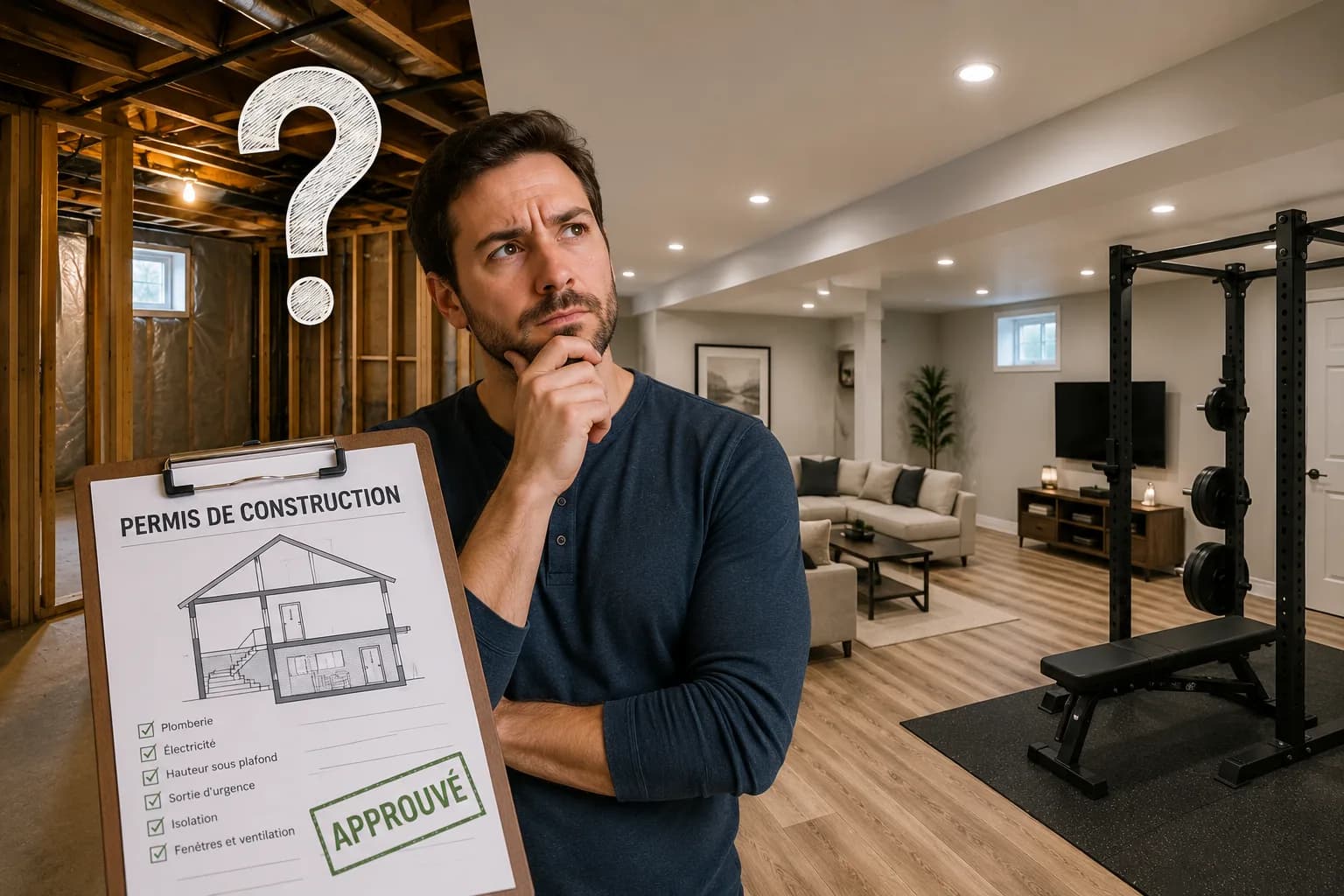
Turning an unfinished basement into extra living space is one of the most popular renovation projects in Quebec, for good reason: it's often the least expensive option per square foot for gaining livable space. But before starting, one administrative question deserves a clear answer: is a permit required?
The short answer: almost always yes
Most Quebec municipalities require a permit for finishing a basement as soon as it involves any of the following: adding or modifying plumbing, adding or modifying electrical circuits, creating a bedroom (which requires a compliant emergency egress), or altering the existing structure. A simple cosmetic refresh — paint, flooring with no other change — generally escapes this requirement, but that's the exception rather than the rule for a full finish.
What almost always triggers the permit requirement
| Project element | Permit generally required? |
|---|---|
| Adding partitions to create rooms | Yes |
| Installing a full bathroom | Yes |
| Creating a bedroom | Yes, with egress requirements |
| Adding electrical circuits | Yes |
| Paint and flooring only | Generally no |
Why egress matters especially
Any room intended as a bedroom must have a compliant emergency exit — generally a window of a specific minimum size, large enough to allow evacuation or firefighter access in a fire. It's one of the most commonly overlooked requirements in unpermitted finishes, and one of the most important from a safety standpoint.
The real consequences of working without a permit
Beyond the risk of a municipal fine, an unpermitted finish can seriously complicate a future home sale — a pre-purchase inspector or the buyer themselves may discover the missing permit, which often leads to a lower negotiated price or being required to bring the work up to code retroactively. An insurance claim tied to a loss in an unpermitted space can also be denied or reduced, with the insurer citing a non-compliant installation.
How to do it right
- Contact your municipality's urban planning department before starting, to learn the exact requirements for your project.
- Have plans prepared if the project includes new partitions or structural changes, generally required for the permit application.
- Hire licensed professionals for plumbing and electrical, whose work must be inspected and code-compliant.
- Keep all documentation — permit, plans, final inspections — valuable at a future sale or insurance claim.
The permit cost versus the risk
A municipal permit's cost is generally modest compared to a basement finish's total budget, and represents a small fraction of the financial risk tied to non-compliant work discovered later.
Frequently asked questions
How long does it take to get a permit for a basement?+
It varies by municipality and project complexity, generally a few weeks to a month for a standard finish.
Can I get a permit retroactively for work already done?+
It's sometimes possible, but the municipality may require opening walls to inspect already-installed plumbing and electrical — a more costly process than getting a permit before the work.
Does an unpermitted basement finish affect resale value?+
Yes, often negatively — a buyer or their inspector may discover the missing permit, which frequently leads to a lower negotiated sale price.
Does a general contractor handle the permit application?+
Most licensed general contractors handle this as part of their service, including preparing the documents the municipality requires.
Get a free quote
More to know before your project.
By Catherine Lavoie — RBQ-licensed general contractor, residential renovation specialist
Updated on July 23, 2026