
Why Does My Roof Make a Drumming or Wave-Like Sound When It's Very Windy?
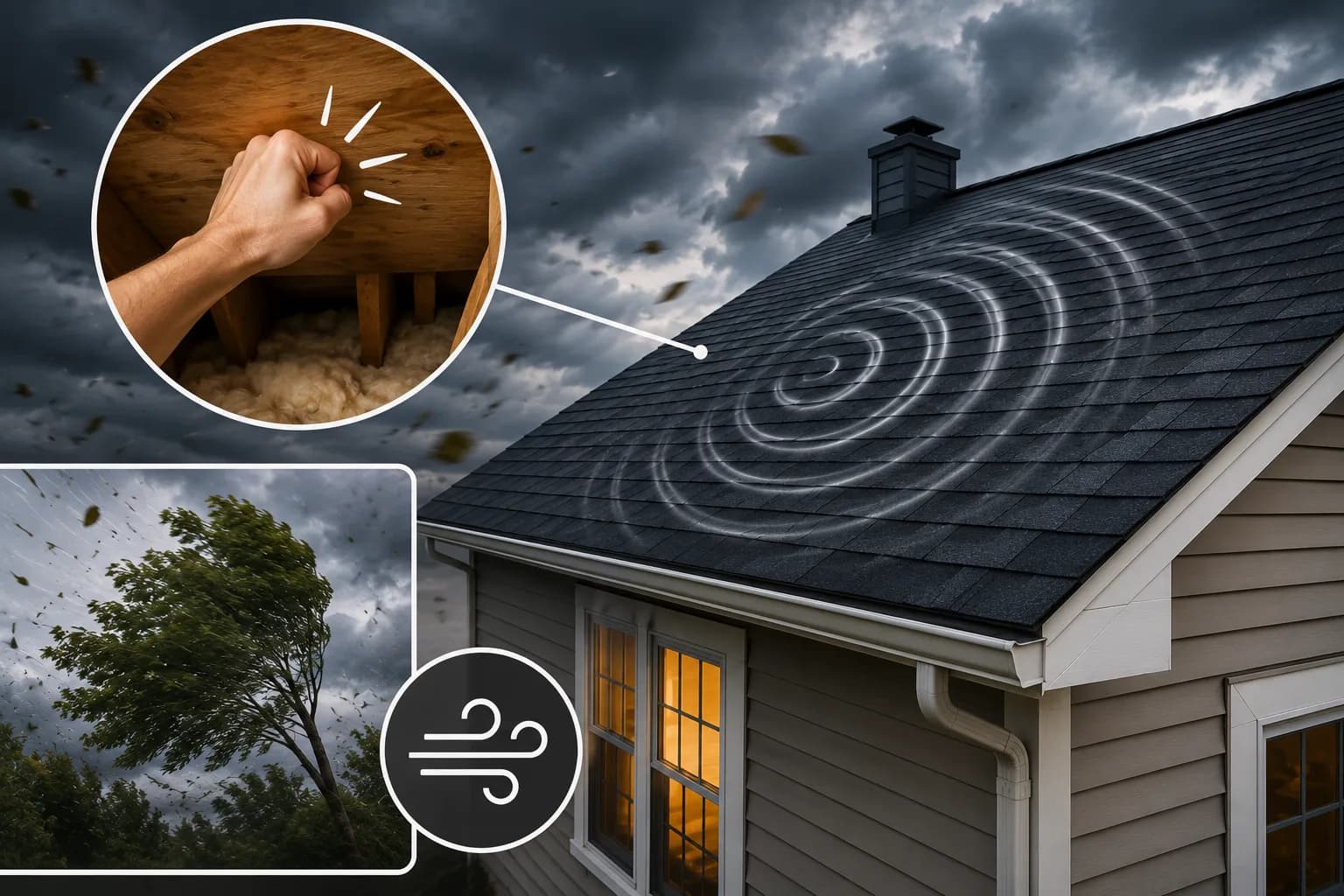
A drumming or wave-like sound on the roof in strong wind almost always means a section of shingles, sheathing, or flashing is no longer firmly fastened and is moving under wind pressure. It's not immediately dangerous, but unlike a simple wood crack, this type of sound signals a physically loose element that risks tearing off or letting water in if it isn't repaired.
What's Happening?
A drumming or wave-like sound, deeper and more rhythmic than a dry crack, usually comes from a flat surface lifting and falling under wind — a bit like a tent canvas flapping. On a roof, that can be a section of sheathing that's not fastened tightly enough, a detached row of shingles slapping against the rest of the roof, or a piece of flashing vibrating.
Wind creates negative pressure (a suction effect) above the roof surface, particularly on exposed slopes and the ridge. When a material is no longer well anchored, that suction makes it ripple, producing the characteristic wave or drumming sound you hear from inside.
This isn't the same phenomenon as wood normally cracking as it works — here, there's real physical movement of a material that's no longer fastened the way it should be.
Is It Dangerous?
Not immediately, in most cases, but it's a signal you shouldn't ignore for long. A material flapping in the wind wears out faster and risks tearing off completely during a future storm.
Inspect or act quickly if:
- You see shingles visibly lifted or missing from the ground
- The noise gets louder or more frequent with each storm
- You also hear a metallic clanging sound from flashing
- Roofing debris (shingle pieces, granules) shows up on the ground after a windy episode
- The noise comes with new ceiling stains
Most Common Causes
| Cause | Explanation |
|---|---|
| Insufficiently fastened shingles | Poorly driven nails or a deficient original installation leave shingles free to move |
| Roof sheathing flexing | Thin, aged, or insufficiently fastened plywood ripples under wind suction |
| Detached or loose flashing | A metal strip around a chimney or vent that's no longer well anchored vibrates in the wind |
| Poorly sealed ridge cap | Caps along the roof peak, often the most wind-exposed, come loose over time |
| Shifting snow or ice buildup | Weight moving on an already weakened roof adds to the noise and pressure |
| Aging roof near end of life | Brittle shingles hold in place less well and flap more easily in the wind |
Why This Happens in Quebec
Quebec experiences violent wind episodes several times a year, particularly in fall and during winter storms. Combined with freeze-thaw cycles that gradually loosen metal fasteners and nails, this creates ideal conditions for materials that were originally installed properly to end up slightly detached over the years.
Older homes, particularly bungalows and triplexes with thinner roof sheathing per the standards of their era, are especially prone to this kind of noise during strong winds.
How to Check It Yourself
From the ground, with binoculars if possible, check whether any shingles look lifted, rippled, or missing after a windy episode. Also check your gutters and the ground around the house for roofing debris after a storm.
In the attic, listen to whether the sound corresponds to a specific spot on the roof and check whether light or moisture is visible there. Never climb onto the roof in strong wind or right after a storm — leave that inspection to a roofer.
Can I Ignore It?
No, not long-term. A drumming or wave-like sound indicates real physical movement of a roofing material, which means it's wearing out faster than a properly fastened shingle. Over time, this repeated movement fatigues the fasteners and can lead to a complete tear-off during a future significant wind event.
You can generally wait for a scheduled inspection rather than calling for an emergency at night, unless you see shingles actively flying off or a leak starting.
How Much Does It Cost?
| Service | Approximate Price |
|---|---|
| Roof inspection | $150 - $300 |
| Re-fastening or spot repair of shingles | $300 - $800 |
| Flashing or ridge cap repair | $200 - $600 |
| Full roof replacement | $6,000 - $18,000 |
Acting early, as soon as the sound starts, generally costs a few hundred dollars — waiting until an entire section tears off can push the bill toward a larger emergency repair.
When to Call a Professional
- You see lifted, rippled, or missing shingles from the ground
- The noise gets louder or more frequent with each storm
- You find roofing debris on the ground after a windy episode
- The noise comes with a distinct metallic clanging
- A water stain appears on the ceiling at the same time as the noise
Related Questions
- Why Do I Hear Cracking Noises In the Attic When It's Windy?
- How Many Missing Shingles Before It Becomes a Serious Problem?
- My Shingles Look Like They're Curling at the Edges: Replace Now or Wait?
- Are the Icicles Hanging From My Roof Actually Dangerous?
- Why Are Roofers All Slammed At the Same Time Every Fall, and How Do I Avoid the Wait?
- Can I Wait Through One More Winter Before Replacing My Roof?
Frequently asked questions
Is this sound different from a simple wood crack?+
Yes. A crack is a short, dry sound caused by wood working. A drumming or wave-like sound is deeper, rhythmic, and indicates a material is physically lifting and falling under wind.
Can I keep using my roof normally while I wait for an inspection?+
Yes, there's nothing special to change about daily use. The risk mainly concerns the roofing material itself during the next strong winds, not your safety inside the house.
Could it damage my roof further if I do nothing until spring?+
Yes, every additional windstorm fatigues the already-loose material a bit more, and the risk of losing a whole section increases. An inspection before winter is better than waiting until spring.
How long does a typical repair take?+
A spot repair of shingles or flashing usually takes a few hours in a single day, depending on weather and roof access.
Get a free quote
More to know before your project.
By Éric Gagné — RBQ-licensed roofer, roofing and roof snow removal specialist
Updated on July 23, 2026