
Why Won't My New Kitchen Cabinets Close Properly Anymore After a Few Months?
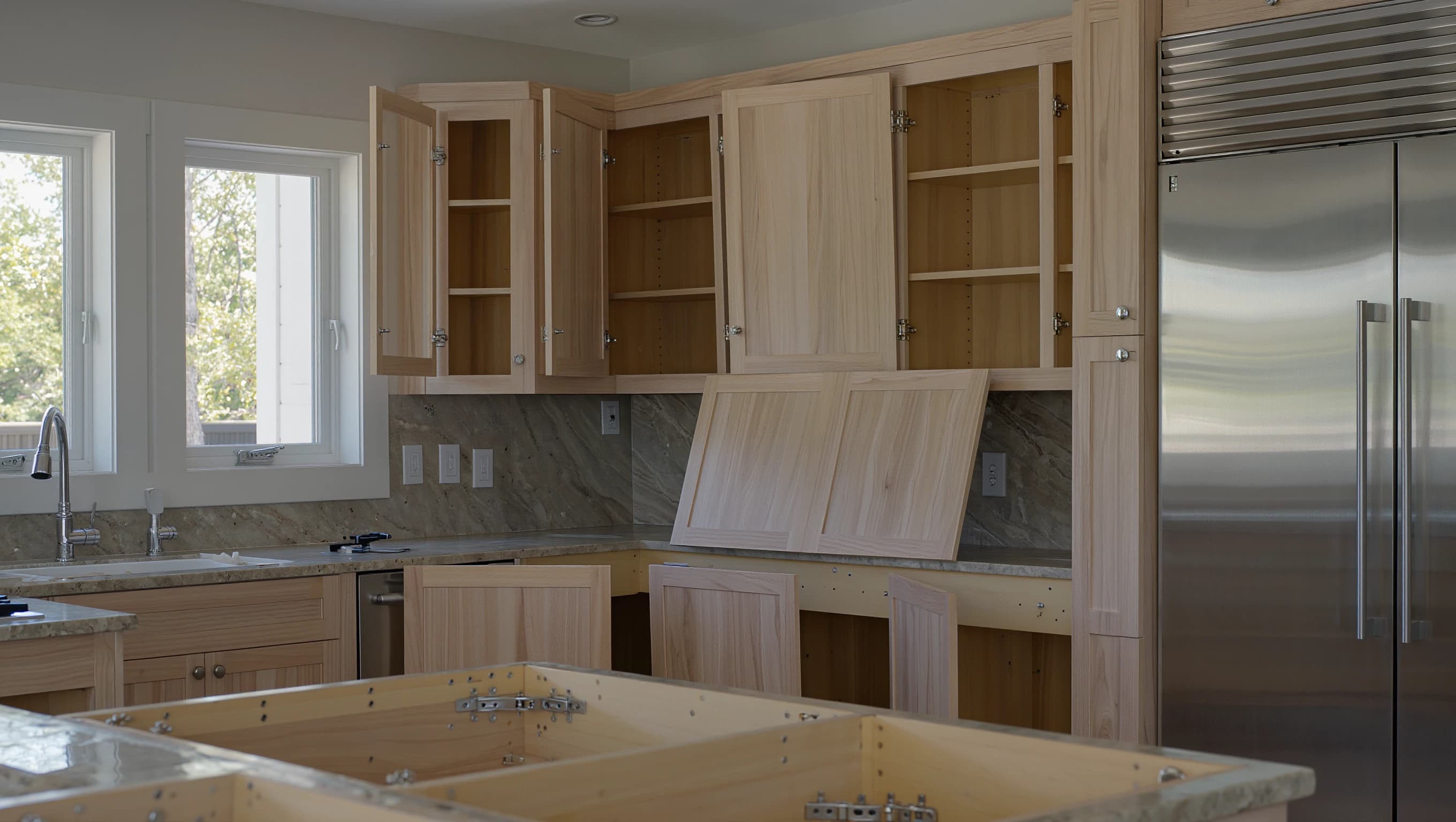
In most cases, this isn't a serious defect: European-style hinges loosen slightly with normal daily use, and normal humidity swings in the house make the wood and cabinet boxes move a little. It's usually a five-minute adjustment per door, not a sign your cabinets are faulty. If several doors on the same wall stop closing properly at once, or an entire cabinet box looks out of alignment, it's worth a look from your contractor, especially if the cabinets are still under warranty.
What's Happening?
Modern kitchen cabinets are mounted with European-style hinges that adjust on three axes: depth, height, and side-to-side. The small screws on these hinges gradually loosen with repeated opening and closing, especially during the first months of heavy use in a brand-new kitchen.
At the same time, the wood and the melamine or MDF panels in the cabinet boxes absorb and release moisture with the seasons. A kitchen installed in summer, when the air is humid, can see its doors shift slightly once the heat comes on in the fall and indoor air dries out. That's not a manufacturing flaw — it's the material responding to its environment.
Finally, a door that closes poorly can simply mean it was never perfectly adjusted to begin with, and the small misalignment became more noticeable with time and use.
Is It Dangerous?
No, it isn't dangerous. A misaligned cabinet door poses no safety risk to your home or family. It's a cosmetic and usability issue, not a structural one.
That said, a few signs call for a closer look rather than a quick hinge adjustment:
- An entire cabinet box appears to have sagged or pulled away from the wall (not just one door)
- Anchor screws are visibly pulling out of the wall or floor
- A growing gap between two neighbouring cabinets that used to be well aligned at installation
- A musty smell or staining under the sink, which could point to a leak causing wood movement rather than normal ambient humidity
In those cases, the problem is likely more than a hinge that needs tightening.
Most Common Causes
| Cause | Explanation |
|---|---|
| Loosened hinges | Repeated use loosens the adjustment screws; this is by far the most common and easiest cause to fix |
| Normal movement of wood and panels | Materials absorb moisture in summer and shrink slightly in winter once the heat is on |
| Imperfect original installation | A cabinet box that wasn't perfectly square, or hinges not quite dialed in at installation, becomes more noticeable over time |
| Wall or floor structure shifting slightly | Small house settling can misalign cabinets anchored at different points |
| Uneven weight distribution inside a drawer or cabinet | Heavy contents concentrated on one side can slightly warp a door or panel over time |
| Lower-quality hinges | On entry-level cabinets, plastic or lightweight metal hinges wear out and deform faster |
| Excess humidity in the kitchen | A weak range hood or poor ventilation keeps cooking air too humid, speeding up wood movement |
Why This Happens in Quebec
Quebec's climate is particularly hard on kitchen wood and panels because of the swing between a hot, humid summer and a winter where heating dries indoor air down to very low levels, sometimes under 20% relative humidity. That annual cycle makes materials move in a predictable way: it's normal to see doors close a little differently depending on the season, especially in the first year after a renovation, while the materials "acclimate" to the house.
Older Montreal-area triplexes and duplexes, where a kitchen renovation is often built onto a structure that isn't perfectly square to begin with, can amplify this effect: cabinets that were perfectly aligned at installation can look slightly off once the house "settles" through its freeze-thaw cycles.
How to Check It Yourself
You can fix most cases yourself in a few minutes:
- Open the door and find the two round screws on the hinge attached to the cabinet box
- The screw closest to the door's edge usually adjusts depth (front-to-back)
- The other screw usually adjusts the side-to-side position
- Turn in small quarter-turn increments and close the door to check alignment after each adjustment
- Also check that the screws holding the hinge to the cabinet box haven't simply worked loose
What you shouldn't do yourself: force a hinge that looks cracked or broken (it needs replacing, not adjusting), or try to move an entire wall-mounted cabinet box if you aren't sure how it's anchored — a bad drill hole can damage the countertop or the wall.
Can I Ignore It?
Yes, in most cases you can ignore it without serious consequences — it stays a cosmetic issue. A door that rubs slightly or closes a bit crooked won't damage your kitchen.
That said, waiting too long has two real downsides: a door that keeps rubbing can prematurely wear the finish or paint at the contact point, and a hinge left badly misaligned puts more strain on its anchor points over time, which can speed up wear on the screws holding it into the cabinet wood. An adjustment done early stays simple; a cabinet box whose screw holes have been "chewed up" by years of play sometimes needs reinforcement or a part replacement.
How Much Does It Cost?
| Service | Estimated Cost |
|---|---|
| Adjusting hinges yourself | Free |
| Professional adjustment visit (a few doors) | $100 - $200 |
| Replacing faulty hinges (per door) | $25 - $75 per hinge, plus labour |
| Full kitchen realignment (multiple cabinets) | $300 - $800 |
| Major repair tied to an installation defect (under warranty) | Often covered, otherwise $800 - $2,000 |
If the problem affects the whole kitchen and the cabinets are less than a year old, check your warranty first before paying — most kitchen renovation contractors cover post-installation adjustments for 6 to 12 months.
When to Call a Professional
- Multiple doors or drawers from the same project stop closing properly at once, suggesting an installation issue rather than a simple adjustment
- A hinge is visibly cracked, bent, or makes an abnormal metallic noise
- A cabinet box seems detached from the wall or countertop, not just a misaligned door
- You've tried adjusting it yourself and the problem comes back within a few weeks
- The cabinets are still under warranty and you want the fix documented by the original contractor
A professional can check whether the cabinet box itself is square, whether the wall anchoring is adequate, and whether the issue comes from a material defect — things a screwdriver alone won't reveal.
Related Questions
- Why Does My Renovated Kitchen Still Smell Weird Months Later?
- Why Is There a Gap Between My Counter and the Wall Since the Kitchen Renovation?
- Why Does My Floor Creak More Than Before Since the Renovation?
- Why Do Cracks Keep Coming Back In the Same Spot After the Renovation?
- Why Did My Renovation Quote Nearly Double Once the Work Started?
- How Many Quotes Should I Really Get Before Choosing a Contractor?
- My Contractor Disappeared In the Middle of the Job — What Do I Do?
Frequently asked questions
Can I keep using my cabinets even if one door doesn't close properly?+
Yes, without any issue. A misaligned door doesn't affect the cabinet's function or safety, only its look and how smoothly it closes. You can fix it whenever it's convenient.
Is it normal for this to happen only in winter?+
Yes, that's very common. Indoor air gets much drier once the heat comes on, which makes wood and panels shrink slightly. Doors often settle back to their original position in spring when humidity rises again.
How much does it cost if I call a professional for the whole kitchen?+
For a full adjustment covering several cabinet boxes, expect between $300 and $800, depending on how many doors and drawers are involved. If the kitchen is less than a year old, check first whether it's covered under the contractor's warranty.
Do I need to call a professional right away if a hinge breaks?+
Not urgently — it isn't dangerous. But avoid forcing the door, and replace the hinge fairly soon, since a badly hanging door can damage the panel or finish over time.
Could the misalignment point to a bigger problem with my kitchen?+
Rarely. It's only a red flag if several cabinets on the same wall are moving together, if a cabinet seems to be pulling away from the wall, or if you notice moisture stains nearby — in those cases, have a professional take a look.
Get a free quote
More to know before your project.
By Catherine Lavoie — RBQ-licensed general contractor, residential renovation specialist
Updated on July 23, 2026