
Is It Normal for My Furnace to Be 25 Years Old?
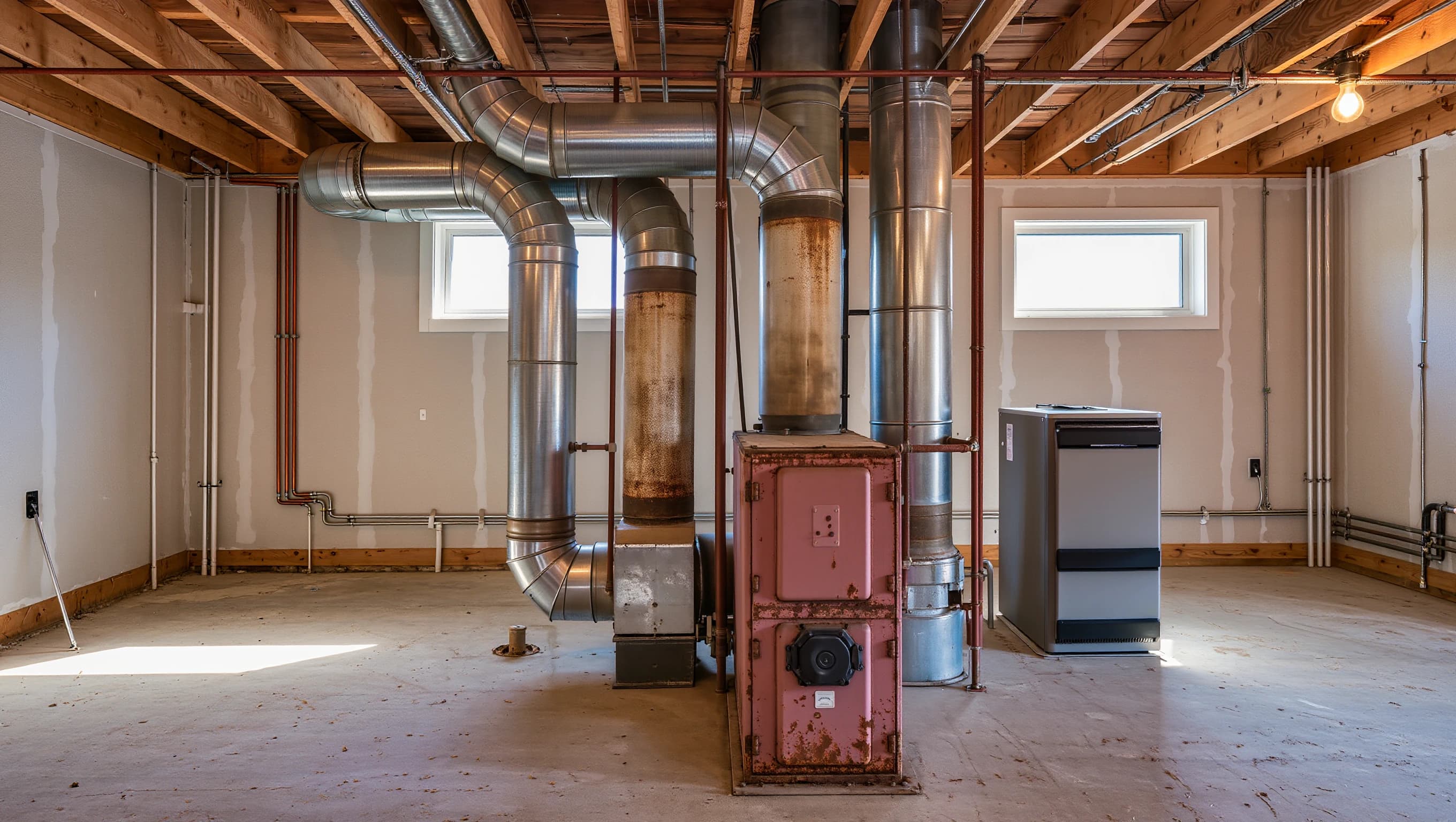
The furnace still works, still produces heat, and has never caused a major problem. So why do so many people suggest that at 25 years, it's time to start thinking about it? The answer comes down to both efficiency and safety.
A furnace's typical lifespan
Most residential furnaces are built to last 15-20 years with regular maintenance. A 25-year-old furnace that's still running isn't necessarily dangerous, but it's statistically past its normal life expectancy, which raises the odds of a failure at any point rather than lowering them over time.
What degrades with age, even without an obvious breakdown
| Aspect | Impact of aging |
|---|---|
| Energy efficiency | Older furnaces often use 20-40% more energy than current models |
| Heat exchanger | Growing crack risk with age, a carbon monoxide safety concern |
| Parts availability | Replacement parts harder and more expensive to find for very old models |
| Overall reliability | Failure probability that rises with each year past the typical age |
The real concern: the heat exchanger
The most serious risk of an aging furnace isn't that it stops working, but that it develops a crack in the heat exchanger — a component that separates combustion gases from the air circulating through the home. A crack can let carbon monoxide escape with no other obvious sign, which is why a working detector matters regardless of the unit's age.
Repair or replace at this age
For a 25-year-old furnace, the question generally isn't "how much does the repair cost" anymore but "is it worth investing in a unit that's statistically past its useful life." A major repair on a unit this age rarely delays a replacement by more than a year or two, making the investment less cost-effective than replacing directly with a high-efficiency model.
What to do now
Have the heat exchanger specifically inspected by a technician, make sure a working carbon monoxide detector is installed near bedrooms, and start budgeting for a replacement, even if no breakdown has happened yet — better to plan than to face a failure in the middle of winter.
Frequently asked questions
Can a 25-year-old furnace still be efficient?+
Rarely at the same level as a current model — most old units run 60-70% efficiency versus 90-98% for modern units.
How do I know if the heat exchanger is cracked?+
Only a technician with the right equipment can reliably confirm a crack — this isn't a test to do yourself.
Does replacing the furnace really lower my heating bill?+
Yes, often significantly — the efficiency gap between an old model and a current one translates directly into savings.
Should I replace it immediately even without failure signs?+
Not necessarily urgently, but starting to plan the replacement rather than waiting for a complete failure avoids a winter emergency.
Get a free quote
More to know before your project.
By Marc Tremblay — Certified HVAC technician, 12 years of experience in Quebec
Updated on July 23, 2026