
Carbon Monoxide and Your Furnace: Warning Signs to Know
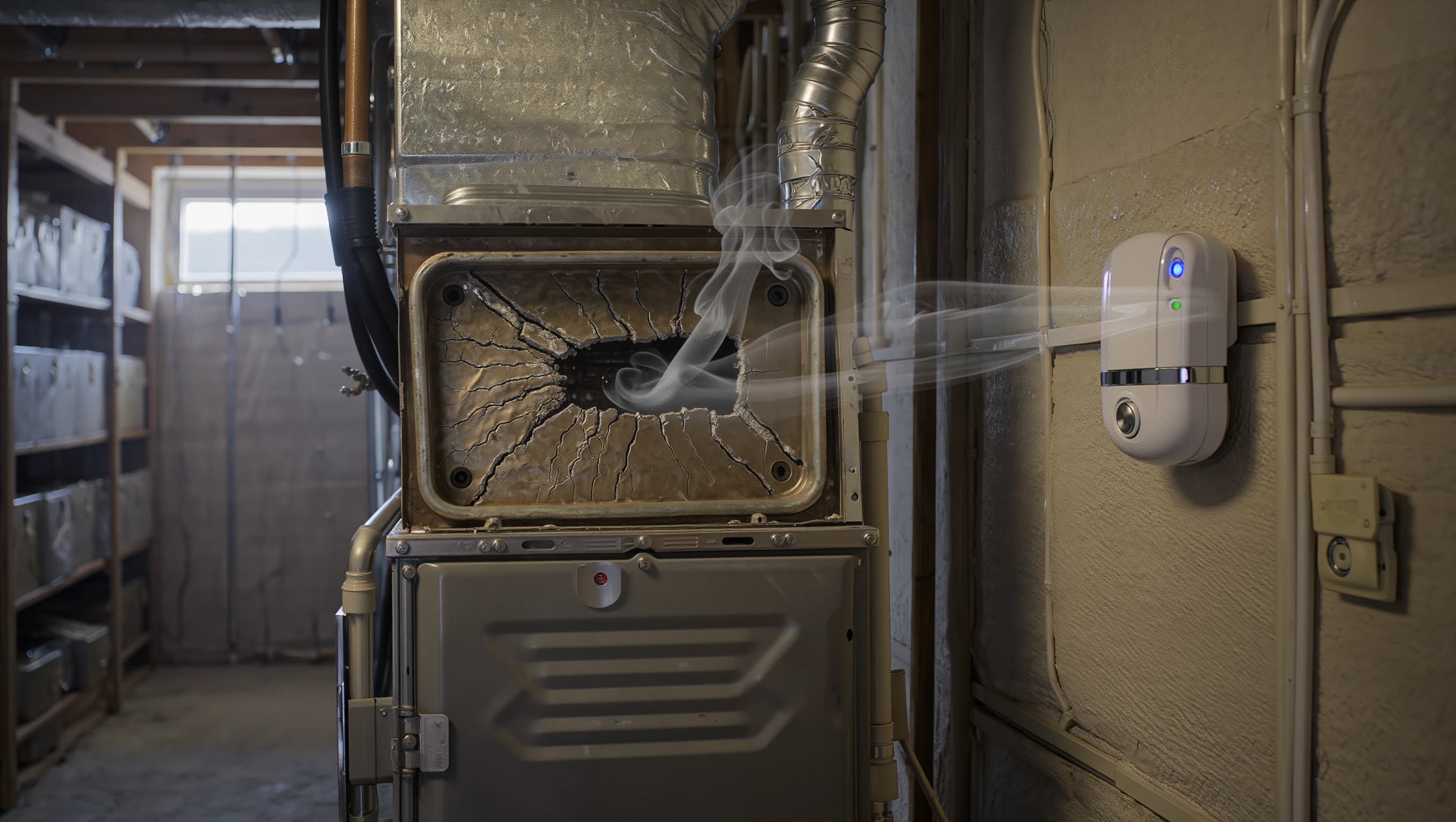
Carbon monoxide (CO) is an invisible, odorless gas that can be fatal, produced by a furnace with faulty combustion. This is always a potential emergency: if your CO detector goes off, or several people in the house have headaches, dizziness, or nausea at the same time, leave immediately and call 911. You cannot see or smell CO — only a working detector warns you in time. Never wait to "see if it passes."
What's Happening?
A gas, oil, or wood furnace burns fuel to produce heat. When combustion is complete and properly vented, it mostly produces carbon dioxide and water vapor, safely carried away through the chimney. When combustion is incomplete — due to a cracked heat exchanger, a blocked chimney, or a poor tune-up — it produces carbon monoxide instead.
CO is especially dangerous because it's completely invisible and odorless: unlike natural gas, which smells like sulfur, nothing alerts your senses. Once inhaled, it binds to blood hemoglobin in place of oxygen, gradually starving the body of oxygen. At high concentrations, exposure can be fatal within minutes to hours.
That's why a working CO detector, separate from a smoke detector, is essential in any home with a combustion appliance — furnace, water heater, fireplace, or attached garage.
Is It Dangerous?
Yes, potentially fatal. This is one of only two heating-related scenarios (along with a gas smell) that call for an immediate reaction, not an eventual inspection.
Leave the house and call 911 immediately if:
- your CO detector goes off, even with no apparent symptoms
- several occupants feel headaches, dizziness, nausea, or confusion at the same time, especially if symptoms improve once outside
- you see soot around the furnace, water heater, or chimney
- the pilot flame is yellow or flickering instead of blue and steady
- there's unusual condensation on windows near the mechanical room
Never try to "confirm" poisoning yourself by staying in the house longer. Symptoms often resemble a mild flu, which leads many people to underestimate the danger — that's exactly what makes CO so dangerous.
Most Common Causes
| Cause | Explanation |
|---|---|
| Cracked heat exchanger | A crack lets combustion gases escape into the house air instead of venting outside |
| Blocked chimney or vent | A bird's nest, snow, ice, or debris prevents gases from venting properly |
| Poor burner adjustment | An improperly tuned air-fuel mixture causes incomplete combustion |
| Missing annual maintenance | Accumulated dust and soot disrupt combustion over time |
| Insufficient mechanical room ventilation | The burner lacks enough fresh air to fully burn the fuel |
| Missing, expired, or dead-battery CO detector | The only warning system for a gas you can't see or smell is out of service |
Why This Happens in Quebec
Quebec's long, cold winters mean furnaces run almost continuously for months, wearing down components like the heat exchanger faster. Heavy snow and ice buildup also frequently block chimney outlets and the sidewall vents of high-efficiency appliances — a particularly common blockage cause here.
The older housing stock — postwar bungalows, Montreal triplexes — often pairs aging furnaces with poorly ventilated mechanical rooms, a combination that raises the risk. Quebec law (the Construction Code and the Régie du bâtiment) requires a CO detector in any home with a combustion appliance or an attached garage.
How to Check It Yourself
You can safely:
- confirm you have a working CO detector near bedrooms, with a fresh battery or battery backup
- test the detector with the test button every month
- check the burner flame's appearance through the small inspection window: it should be blue and steady, not yellow or orange
- visually inspect the outside chimney outlet for snow or ice blocking the opening
Never attempt to: open or disassemble the furnace, inspect inside the heat exchanger, or stay in the house to "see if symptoms pass." If the detector goes off, act first, ask questions later.
Can I Ignore It?
No, never. A sounding CO detector or symptoms in multiple people don't resolve on their own, and continued exposure can cause permanent neurological damage or death. Even without symptoms, a furnace showing signs of poor combustion (yellow flame, soot) must be inspected before its next use, not after.
How Much Does It Cost?
| Service | Estimated Price |
|---|---|
| CO detector (purchase, per unit) | $25 - $60 |
| Combustion inspection and CO testing | $100 - $200 |
| Chimney/vent cleaning or unblocking | $150 - $400 |
| Burner repair or tune-up | $200 - $500 |
| Heat exchanger replacement | $800 - $1,800 |
| Full furnace replacement | $3,000 - $7,000 |
When to Call a Professional
- immediately (911) if the CO detector sounds or several people have symptoms at the same time
- once the house is safe, have the furnace inspected and repaired by a certified technician before restarting it
- schedule an annual combustion inspection, ideally in the fall before heating season begins
- if you don't have a working CO detector, get one installed now — a technician can also check your chimney draft at the same time
Related Questions
Frequently asked questions
How do I know if my symptoms are from CO poisoning or just a cold?+
A key sign: symptoms affect several people in the house at the same time, and improve once you step outside into fresh air. If that's the case, leave immediately and call 911 — don't take a chance.
How often should I replace my CO detector's battery or the unit itself?+
Change the battery at least once a year, and test it monthly with the test button. The unit itself has a lifespan of about 5 to 7 years; check the expiry date printed on it.
Can I keep using my furnace if I don't have a CO detector?+
It's not recommended, and it's illegal in Quebec for any home with a combustion appliance. Install a detector today — it's your only way to be warned of a leak, since CO can't be seen or smelled.
Should I call a professional immediately if my CO detector goes off?+
Get everyone out of the house first, then call 911 from outside. Once emergency responders have secured the situation, have the furnace inspected and repaired by a certified technician before turning it back on.
Can a brand-new furnace still produce carbon monoxide?+
Yes, if it's poorly installed, poorly vented, or the chimney is blocked. A new furnace lowers the risk but doesn't eliminate it — a working CO detector remains essential regardless of the unit's age.
Get a free quote
More to know before your project.
By Marc Tremblay — Certified HVAC technician, 12 years of experience in Quebec
Updated on July 23, 2026