
Can the Electric Baseboard Heater In My Baby's Room Cause Burns or a Fire?
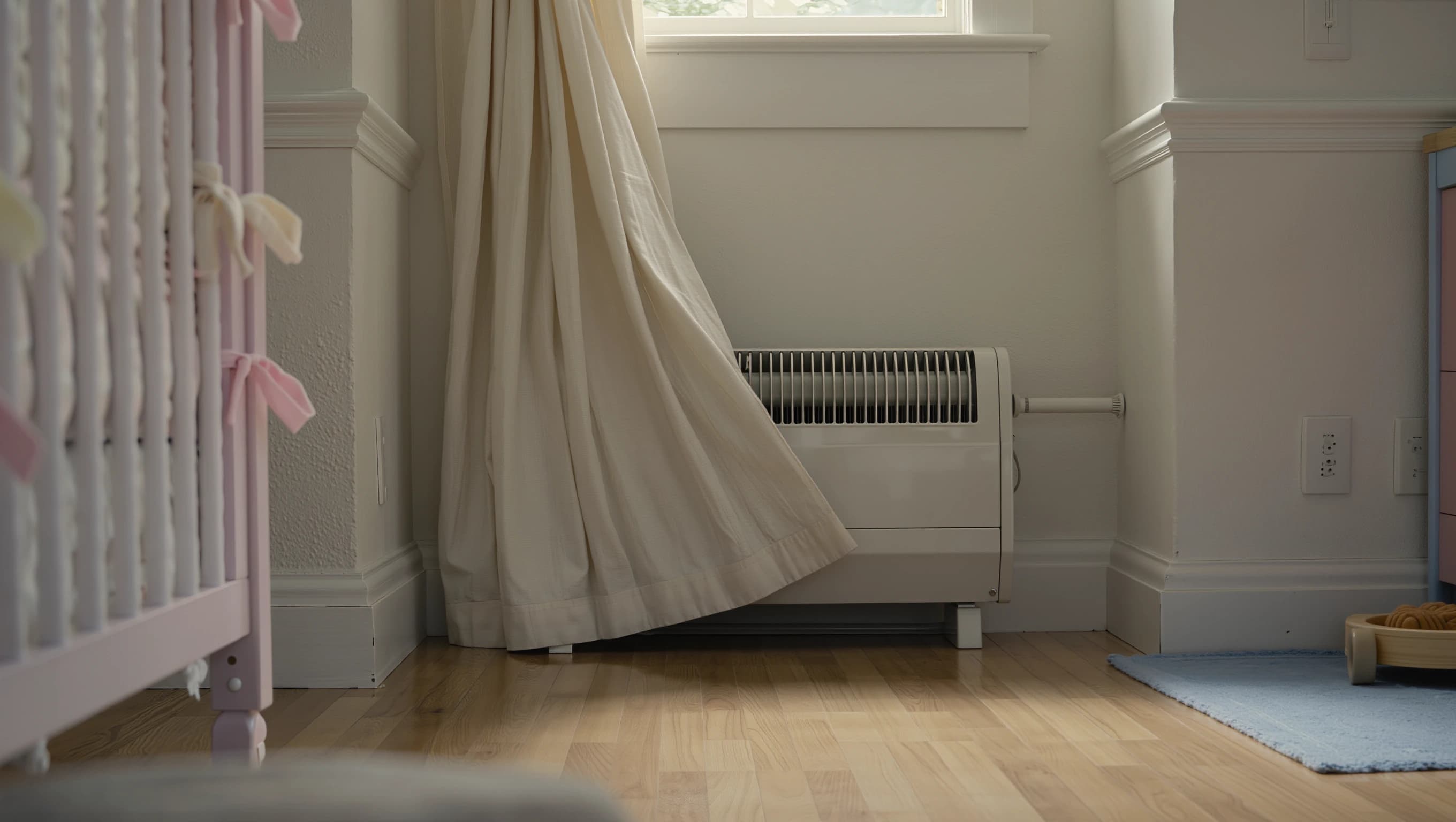
A baseboard heater in good condition, properly clear of furniture, curtains, and your baby's crib, is generally not dangerous — it's a common and safe heating method in Quebec. Burn risk comes from direct contact with the surface, which can exceed 60°C, and fire risk mostly comes from a faulty, dusty, or obstructed unit sitting too close to flammable objects. Check the clearance around the unit and the condition of its housing; if everything looks clean and intact, you can keep using it normally.
What's Happening?
An electric baseboard heater works with a resistive element that heats the surrounding air. Its outer surface can reach 60°C to 90°C depending on the setting — more than enough to cause a burn on direct skin contact, especially a baby's thinner skin if they touch the unit or lean on it while learning to stand.
Fire risk is a separate issue from burn risk. It almost always comes from a problem with the unit itself or its immediate surroundings: accumulated dust overheating, a faulty thermostat stuck in the "on" position, or flammable objects (curtains, blankets, fabric toys) left in direct contact with the heating element.
Is It Dangerous?
It depends on the unit's condition and placement, not simply on the fact that there's a baseboard heater in the room. A unit in good condition, properly clear of surroundings, is safe to sleep near all night.
Check or act immediately if:
- The crib, changing table, or curtains touch or come close to the heater.
- You smell burning, hot plastic, or scorched dust when it starts up.
- The unit makes repeated clicking noises, hums loudly, or clicks for no obvious reason.
- The housing is cracked, discolored, or you can see the heating element inside.
- The heater stays hot even when the thermostat is set to minimum or off.
Most Common Causes
| Cause | Explanation |
|---|---|
| Proximity to the crib, bed, or curtains | Direct heat and accidental contact are the most common causes of burns in children. |
| Dust and fuzz buildup | Dust can scorch or even ignite if it accumulates on the heating element, especially in a child's room where stuffed toys and rugs generate more fibers. |
| Faulty thermostat | A thermostat stuck in the "on" position runs the unit continuously at full power, raising surface temperature. |
| Older unit with a damaged housing | A cracked housing exposes the heating element, raising both burn risk and the risk of contact with flammable materials. |
| Objects leaned against the unit | Toys, blankets, or clothes left against the heater "to dry" block airflow and cause local overheating. |
Why This Happens in Quebec
Electric baseboard heating is the most common heating method in Quebec, largely thanks to Hydro-Québec's low electricity rates compared to the rest of Canada. Most homes and apartments have a unit in every room, including children's bedrooms. Long, cold winters also keep these units running at high output for extended periods, which speeds up thermostat wear and dust buildup in older housing.
How to Check It Yourself
When the unit is off and cool, touch the housing to check for cracks, discoloration, or scorch marks. Gently vacuum along the fins once or twice a year to remove accumulated dust — never while the unit is plugged in or warm. Listen at startup: a light clicking from metal expansion is normal; loud humming or repeated clicking is not.
What you should not do yourself: open the housing to inspect or repair the thermostat or heating element inside. This is a directly wired appliance, and improper handling can cause an electrical shock.
Can I Ignore It?
It depends on what you observe. Light clicking at startup or normal dust buildup isn't urgent — routine cleaning fixes it. But a unit touching the crib, smelling like it's burning, or staying hot continuously shouldn't wait: move anything flammable away immediately and get the unit checked promptly.
A faulty thermostat that's stuck doesn't fix itself — it keeps the unit running at full power until it's replaced, which wears out the heating element faster and keeps the surface hot continuously.
How Much Does It Cost?
| Fix | Cost |
|---|---|
| Inspection by an electrician | $80 - $150 |
| Baseboard thermostat replacement | $150 - $350 |
| Full baseboard heater replacement (unit and install) | $150 - $400 per unit |
| Relocating a heater (electrician, rewiring involved) | $300 - $700 |
An electrical emergency involving a faulty unit (burning smell, unit continuously hot) typically falls in the $150 to $500 range for an emergency visit.
When to Call a Professional
- The heater smells like burning, hot plastic, or gives off even light smoke — cut the breaker and call immediately.
- The thermostat no longer responds to setting changes (the unit stays hot or cold regardless of position).
- The housing is cracked, dented, or you can see the heating element.
- You're renovating the room and want the heater moved away from where the crib will go.
- The unit is over 20-25 years old and its wiring has never been checked.
Related Questions
- Are Uncovered Electrical Outlets Really Dangerous for My Baby Who's Starting to Crawl?
- How Do I Know If My Carbon Monoxide Detector Really Protects My Baby's Room?
- A Warm Electrical Outlet to the Touch: Is It Dangerous?
- Why Are My Light Switches Warm to the Touch When the Light's Been On For a While?
- Can Old Aluminum Wiring in My House Actually Catch Fire?
- Is It Dangerous That My Electrical Panel Still Uses Fuses?
- Why Does My Smoke Detector Chirp Occasionally Even With a Fresh Battery?
Frequently asked questions
Is it normal for a baseboard heater to make a light clicking sound?+
Yes, a light click when starting or stopping is normal — it's the metal element expanding or contracting with heat. Loud humming or repeated clicking isn't normal and warrants a check.
How much distance should I keep between the crib and the heater?+
As a general rule, keep at least 12 inches (30 cm) of clearance on all sides, and make sure no fabric (blanket, curtain, rug) can touch the unit even if furniture shifts slightly.
Can I keep using the heater while I wait for an inspection?+
If the unit doesn't smell like burning and isn't continuously hot, yes — just make sure nothing flammable touches it in the meantime. If you noticed a suspicious smell, cut the breaker until it's checked.
Should I call a professional right away if I see scorched dust?+
A light scorched-dust smell at the start of the heating season is common and usually clears up once you clean the unit. But if the smell persists after cleaning or comes with smoke, cut the power and call an electrician.
Get a free quote
More to know before your project.
By Isabelle Roy — RBQ-licensed electrician, residential electrical safety specialist
Updated on July 23, 2026