
Why Does My Tub Drain Very Slowly While the Sink In the Same Bathroom Works Fine?
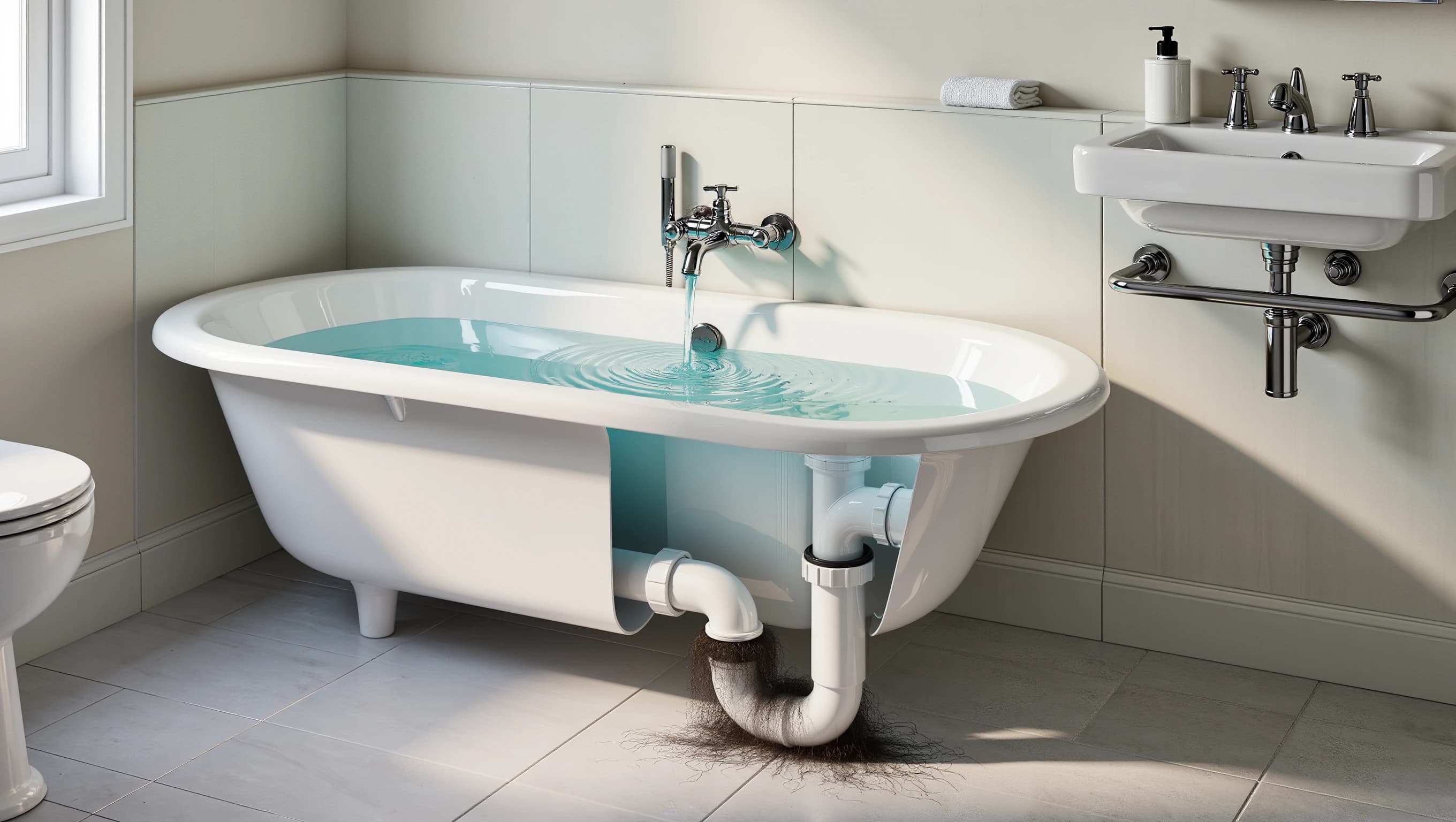
This is almost always a local clog in the tub's own drain — hair, soap residue, or scale — not a house-wide plumbing issue, since the sink drains fine. It's not dangerous, but it does get worse over time if left uncleaned. A basic cleaning or professional drain clearing ($150 to $350) resolves it in the vast majority of cases.
What's Happening?
Every fixture — tub, sink, toilet — has its own U-shaped trap and often its own branch of pipe before joining the main drain. When the tub drains slowly but the nearby sink works perfectly, that confirms the blockage is local, somewhere between the tub drain and its trap.
The tub is especially prone to clogs because it combines two drain enemies: hair and soap. Hair clings to the inside of the pipe, and soap (especially bar soap) hardens into a waxy film that sticks to it. Over time, this mix forms a plug that gradually narrows the water's path.
Sometimes the tub's drain stopper mechanism (the "pop-up") is misadjusted or partially closed, which slows drainage even without a real blockage.
Is It Dangerous?
No, it's not dangerous. It's an inconvenience, not a safety emergency. There's no water damage risk as long as the tub eventually drains, even slowly.
That said, inspect or act quickly if:
- The water stops draining entirely and sits stagnant for hours
- A sewage smell accompanies the slow drainage (a possible sign of a bigger issue, not just the tub)
- The slow drainage also affects other fixtures in the home at the same time
These signs point to something larger than a simple local clog and deserve a closer look.
Most Common Causes
| Cause | Explanation |
|---|---|
| Hair and soap buildup | Clings to the trap walls and gradually narrows the passage |
| Mineral scale (hard water) | Hard water reduces the pipe's inner diameter over time |
| Misadjusted pop-up stopper | The drain mechanism stays partially closed even in the open position |
| Old corroded cast iron drain pipe | Cast iron's rough inner walls trap debris more easily |
| Object stuck in the trap | A small toy, bottle cap, or other item accidentally dropped in |
| Venting issue specific to this drain | Rare, but can slow drainage without a full blockage |
Why This Happens in Quebec
Several regions of Quebec, particularly in the Montérégie and other limestone-rich areas, have relatively hard water. The calcium and magnesium it contains slowly deposit inside pipes, speeding up clogs in drains already stressed by hair and soap.
Older homes in Quebec, especially in central Montreal and Quebec City neighborhoods, often still have cast iron drain pipes. Compared to the smooth PVC used today, cast iron's rough inner walls trap debris more easily and accelerate gradual blockages.
How to Check It Yourself
- Remove the stopper or drain cover and pull out any visible hair clumps by hand
- Use a hand snake (a small flexible hook tool, about $10-15) to reach hair deeper in the trap
- Check whether drainage improves after removing a visible clump — a sign the blockage was shallow
- Avoid repeated caustic chemical cleaners, especially in a home with old cast iron pipes: frequent use can damage them
- Don't force a motorized metal auger into an old, fragile pipe yourself — too much force can puncture it
Can I Ignore It?
You can ignore it for a while, but the problem doesn't resolve on its own — it gets progressively worse as more hair and soap accumulate. A slow drain today often becomes a fully blocked drain within weeks or months, especially if anyone in the home has long hair.
A neglected clog can also encourage biofilm buildup and unpleasant odors in the trap, on top of adding pressure to the drain joint if you eventually need a more aggressive motorized auger to clear it.
How Much Does It Cost?
| Service | Estimated Price |
|---|---|
| Hand snake (DIY tool) | $10 - $20 |
| Professional drain clearing | $150 - $350 |
| Emergency clearing (evening/weekend) | $150 - $450 |
| Camera inspection (if recurring) | $200 - $400 |
| Damaged pipe section replacement | $800 - $2,000 |
When to Call a Professional
- You've tried a hand snake and drainage is still slow
- The problem keeps coming back every few months
- The slow drainage comes with a sewage smell
- The water doesn't drain at all, even after several hours
- You have old cast iron pipes and worry about damaging them with a DIY tool
A plumber uses a professional motorized auger that reaches further into the drain without risking damage to old pipes, and can confirm with a camera if there's a deeper issue in the branch.
Related Questions
- My Toilet Gurgles When the Washing Machine Drains: What Does It Mean?
- Why Does My Toilet Make a Sucking or Gurgling Sound After I Flush?
- Can Vinegar and Baking Soda Actually Unclog a Drain, or Is That a Myth?
- That Floor Drain In My Basement — Should I Be Worried About It?
- My Shower Tile Sounds Hollow When I Tap It — Is That a Plumbing Problem?
- My Basement Smells Like Sewage After It Rains: Causes & Fixes
Frequently asked questions
Can I use a liquid chemical drain cleaner to unclog my tub?+
You can, but with caution: these products are caustic and can damage old cast iron pipes with repeated use. A hand snake is safer and often just as effective for a hair clog.
Is it normal for only the tub to be slow while the rest of the plumbing works fine?+
Yes, and it's actually the most reassuring sign possible: it confirms the blockage is localized in the tub's drain, not in the home's main plumbing.
How long before it clogs completely?+
It varies with use, but a gradually slowing drain often turns into a full blockage within a few weeks to a few months if nobody cleans it.
Should I call a professional right away?+
Not necessarily. Try removing the hair by hand or with a hand snake first. Call a plumber only if that doesn't work or the problem comes back quickly.
Can mineral scale really block a tub drain?+
Yes, over time. In hard water areas, scale gradually narrows the pipe's inner diameter, which makes the drain more prone to hair and soap clogs.
Get a free quote
More to know before your project.
By Julien Fortin — RBQ-licensed plumber, 10 years of experience in residential plumbing
Updated on July 23, 2026