
Can Vinegar and Baking Soda Actually Unclog a Drain, or Is That a Myth?
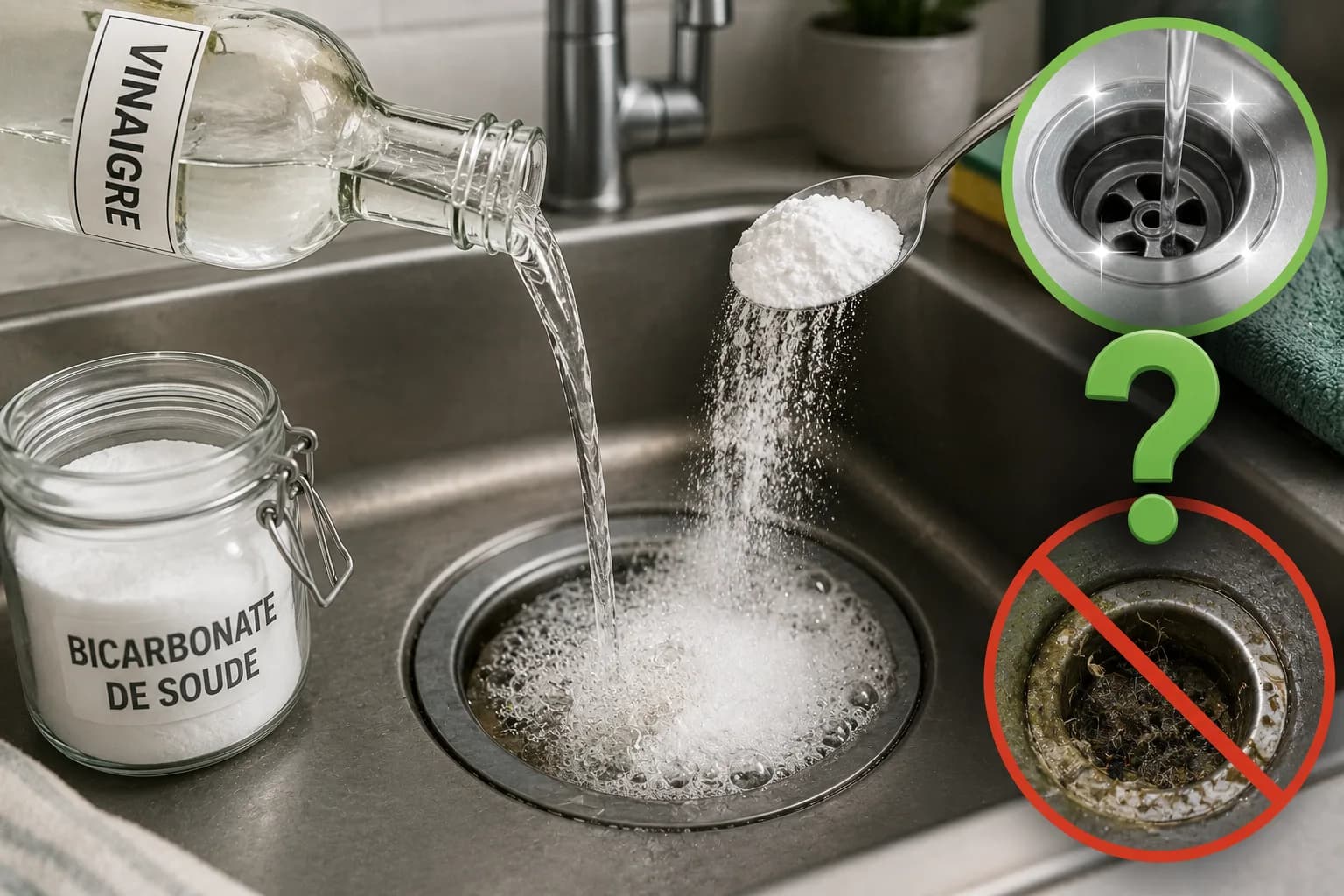
The vinegar and baking soda mix is presented all over the internet as a miracle, eco-friendly solution for a slow drain. The reality is more nuanced: it works in certain specific cases, but not in others.
What actually happens chemically with this mix
Vinegar (an acid) and baking soda (a base) react together to produce carbon dioxide, creating the dramatic fizzing often shown in online videos. This reaction produces slight mechanical agitation, but generates very little heat or genuine dissolving chemical force compared to a commercial drain product.
What types of clogs this mix can help with
| Clog type | Mix's effectiveness |
|---|---|
| Light buildup of soap and organic residue | Can help partially thanks to the mechanical agitation |
| Hair accumulated in the drain | Not very effective, the agitation doesn't physically dissolve hair |
| Hardened grease or oil buildup | Generally ineffective, the reaction doesn't generate enough heat to dissolve it |
| A complete blockage preventing any flow | Ineffective, the mix can't move a blockage that's already stopping water from flowing |
Why this mix is popular despite its limited effectiveness
The visible fizzing gives an impression of power and action, and the mix is safe for plumbing unlike some harsh chemical products — these two factors explain its popularity even though its real effectiveness stays limited to light, partial clogs.
What works better for a truly clogged drain
A manual plumbing snake, which physically moves the blockage rather than trying to dissolve it chemically, is generally more effective for hair and more serious clogs. For hardened grease buildup, hot water poured directly, while imperfect alone, handles this type of clog better than vinegar and baking soda.
When to move to a professional solution
If the drain stays slow or fully blocked despite several attempts with vinegar and baking soda or a manual snake, professional drain clearing with a motorized snake or high-pressure cleaning reaches deeper, more serious blockages that home methods can't resolve.
Frequently asked questions
Can the vinegar and baking soda mix damage my pipes?+
No, unlike harsh chemical drain cleaners, this mix is safe for plumbing, regardless of its actual effectiveness on the clog.
How long should I let the mix sit before rinsing?+
Generally 15-30 minutes, though the actual effectiveness depends more on the clog type than on extra waiting time.
Why does this mix sometimes work even for a hair clog?+
The mechanical agitation can slightly shift a partial hair clog, but it doesn't dissolve it — a snake is generally needed for complete removal.
Is a commercial chemical drain product always more effective?+
Generally yes for organic clogs, but these products pose a risk to certain older piping types and must be used with caution.
Get a free quote
More to know before your project.
By Julien Fortin — RBQ-licensed plumber, 10 years of experience in residential plumbing
Updated on July 23, 2026