
My Basement Smells Like Sewage After It Rains: Causes & Fixes
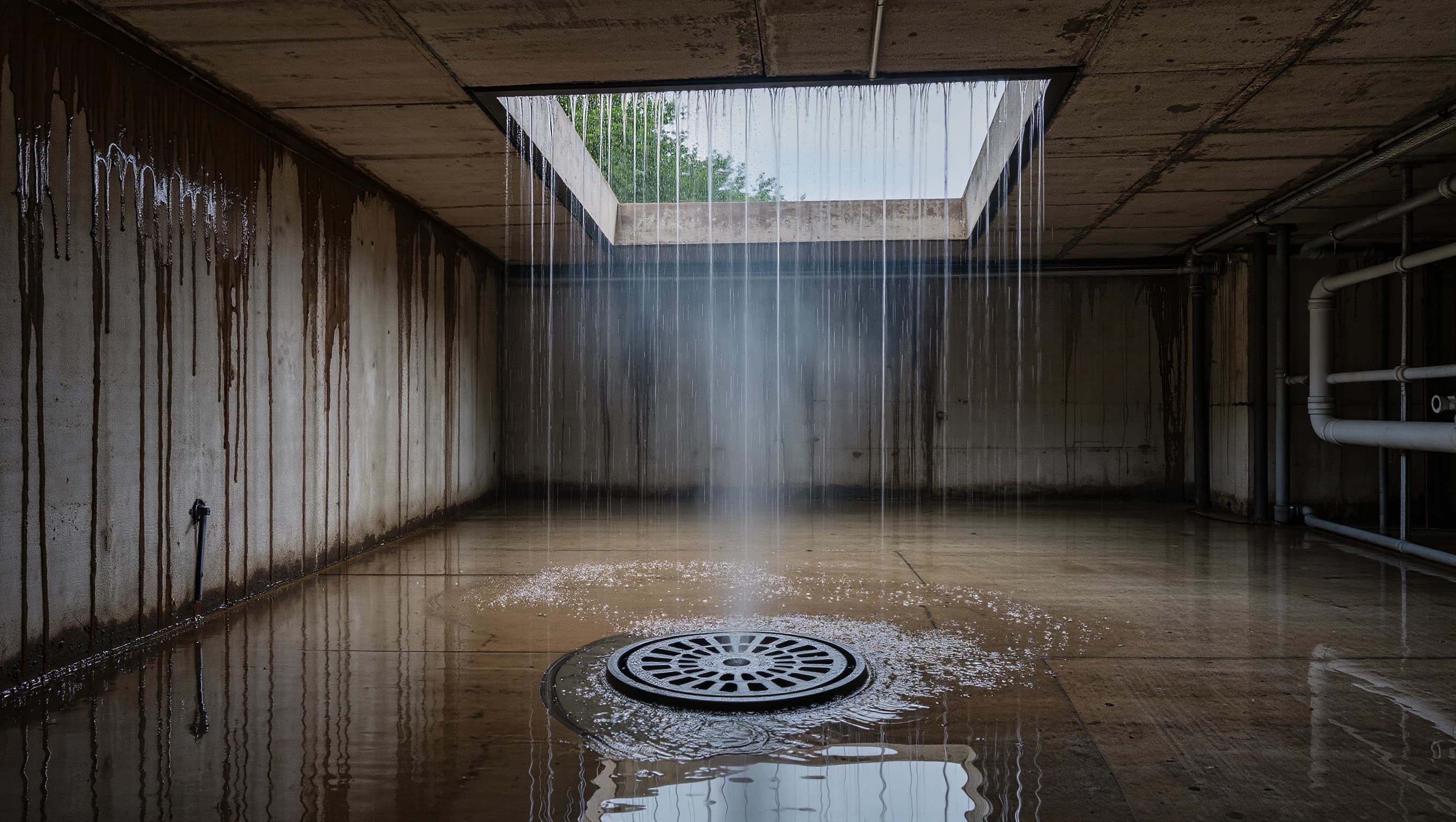
This is most often caused by a dried-out floor drain trap, which lets sewer gases rise into the basement. It's usually not dangerous if it's occasional, but if the smell comes back with every heavy rain or comes with water on the floor, it can indicate an overloaded drainage system. Pour water into the drain and monitor; if it persists, call a plumber.
What's Happening?
Every floor drain has a water-filled trap that normally blocks sewer gases from rising into the house. When that trap dries out — which often happens if it isn't used regularly — gases can rise freely, and heavy rain can simply push more air and odor through the system at the same time.
In other cases, heavy rain raises the water level in the municipal sewer or the residential drainage system, temporarily forcing odor-laden air back up through floor drains or basement drains.
Is It Dangerous?
Most of the time, an occasional sewage smell after rain isn't dangerous on its own, but it points to a weak spot in your drainage system worth fixing. Sewer gas at low concentration is mostly unpleasant rather than toxic, but prolonged exposure in a poorly ventilated space is never a good idea.
Inspect or act immediately if:
- Water actually appears on the basement floor, not just a smell
- The smell is very strong and lasts several hours after the rain
- You hear gurgling in multiple drains at the same time
- The smell comes with headaches or dizziness in the room
Most Common Causes
| Cause | Explanation |
|---|---|
| Dried-out floor drain trap | The trap water evaporates when the drain isn't used, letting gases through |
| Overloaded municipal sewer network | Heavy rain fills the combined sewer, pushing air and odor back toward homes |
| Faulty or missing backwater valve | Without this device, water and sewer gases can back up into the home during heavy rain |
| Crack in the French drain or foundation pipe | Lets soil gases and sometimes wastewater seep in near the foundation |
| Sump pump falling behind | An overwhelmed submersible system lets water stagnate, generating odors |
| Insufficient basement ventilation | A poorly ventilated basement holds odors longer than a well-aired room |
Why This Happens in Quebec
Many old Quebec neighborhoods, notably in Montreal and Quebec City, still have combined sewer systems that mix stormwater and wastewater in the same pipe. During heavy rain, this system fills up fast and odor-laden air looks for an exit, often through the least resistant residential drains.
Spring thaw adds seasonal pressure too: rapid snowmelt combined with rain can saturate the system within hours, which is why this kind of smell often shows up in spring or after an intense summer storm.
How to Check It Yourself
Locate your basement's floor drain(s) and pour about two liters of water into each to refill the trap — this is often enough to fix the problem in minutes. Also check whether a backwater valve is visible near the main drain entry.
Inspect the ground around the foundation for signs of moisture or cracking. Never attempt to disassemble a backwater valve or open the main drain yourself — contact with wastewater carries a real health risk.
Can I Ignore It?
It depends on whether it's occasional or recurring. A one-off smell that clears up after refilling the trap can be ignored once fixed. But if the smell comes back with every heavy rain, it's a sign the system is vulnerable to backup, and that won't fix itself.
Waiting can lead to an actual sewage backup into the basement during a particularly heavy rain, causing significant property damage and costly decontamination.
How Much Does It Cost?
| Service | Estimated Price |
|---|---|
| Drainage system inspection | $150 - $350 |
| Backwater valve installation | $800 - $2,500 |
| Foundation crack/French drain repair | $500 - $3,000 |
| Emergency drain clearing | $150 - $450 |
When to Call a Professional
- Water actually appears on the floor in addition to the smell
- The smell comes back consistently with every heavy rain
- You don't have a backwater valve installed on your main drain
- Several drains or floor drains gurgle at the same time
- You've already had a sewage backup in the past
A plumber can install a backwater valve and camera-inspect the French drain, a structural check a homeowner can't perform without specialized equipment.
Related Questions
- My Toilet Gurgles When the Washing Machine Drains: What Does It Mean?
- That Floor Drain In My Basement — Should I Be Worried About It?
- Why Are There Always More Plumbing Emergencies During the Spring Thaw?
- My Basement Is Damp — Is It a Plumbing, Foundation, or Ventilation Problem?
- My Neighbor Has a Drainage Problem That's Affecting My Property — What Can I Do?
- How Do I Know If There's a Water Leak Behind My Wall?
Frequently asked questions
Can I still use my basement if it smells like sewage after rain?+
Yes for a short period, but ventilate the room and try refilling the floor drain trap. If the smell persists beyond 24 hours, it's better to limit time spent in the room.
Is it normal only after heavy rain, never otherwise?+
Yes, this exact pattern (smell only after rain) strongly points to municipal network overload or a missing backwater valve rather than a constant residential issue.
How much does a backwater valve installation cost?+
Expect between $800 and $2,500 depending on how accessible the main drain is and whether floor work is needed to reach it.
Should I call a professional right away?+
Not if it's a first isolated incident resolved by refilling the trap. Call soon if the smell returns with every rain or if water appears on the floor.
Get a free quote
More to know before your project.
By Julien Fortin — RBQ-licensed plumber, 10 years of experience in residential plumbing
Updated on July 23, 2026