
Why Does My Dishwasher Leave Standing Water At the Bottom After Every Cycle?
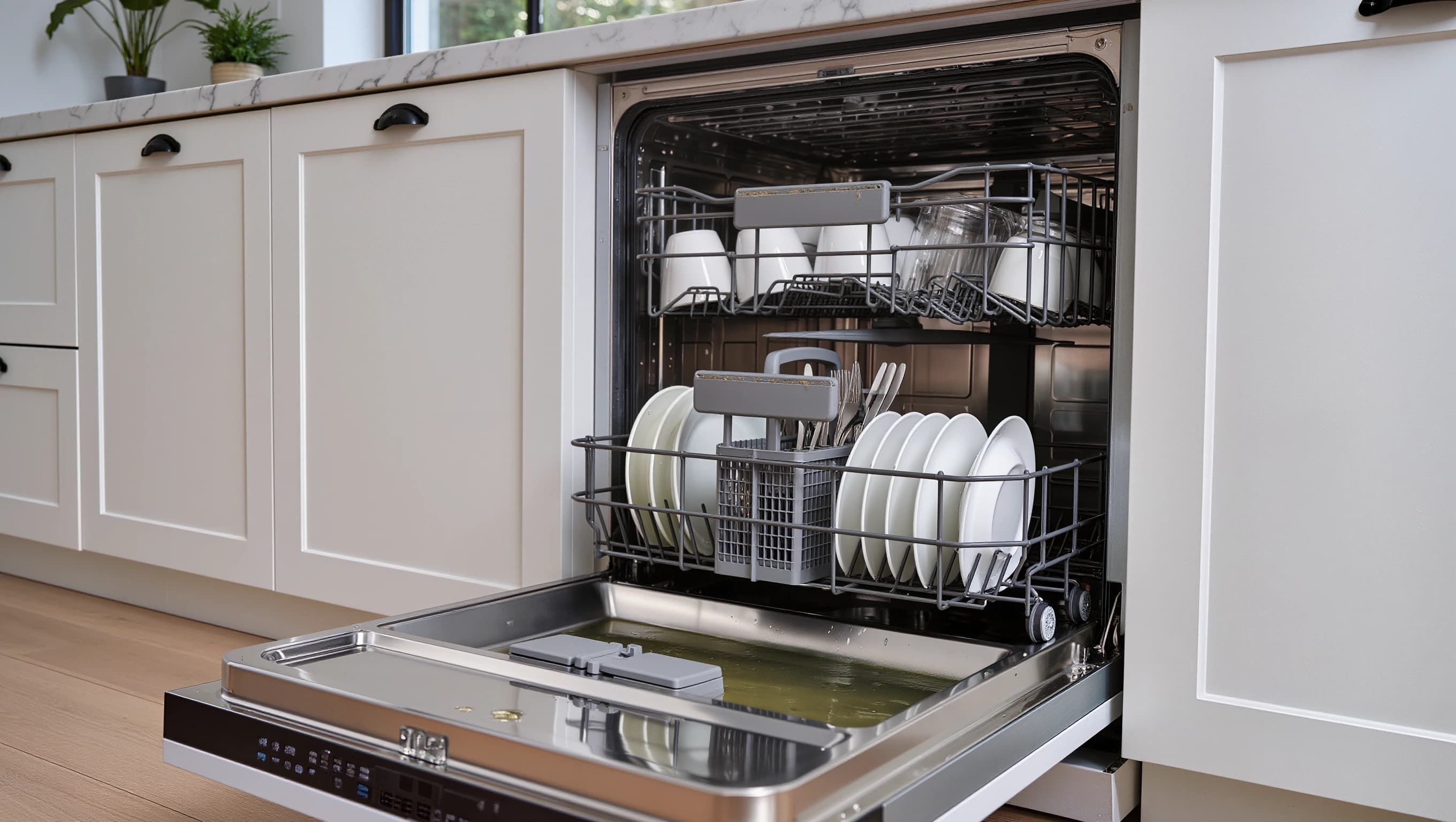
Standing water at the bottom of the dishwasher after every cycle almost always comes from a blockage in the drain system: a clogged filter, a kinked hose, or a blocked sink drain downstream. It's not dangerous, but it prevents good cleaning results and can cause odors if left too long. Cleaning the filter fixes it most of the time, without needing to call a professional.
What's Happening?
A normal dishwasher expels almost all the water at the end of each cycle — it's normal to see a small puddle around the filter (about a cup's worth), but not a visible pool covering the whole bottom.
When water stays standing, it's a sign the drain pump isn't clearing water fast enough, or at all. The most common cause is a filter at the bottom of the unit clogged with food debris, forcing water to pool before it can be pumped out.
The problem can also come from further down the line: the drain hose connecting the dishwasher to the sink can be kinked behind the unit, or the sink's own drain can be partially clogged, preventing the dishwasher's water from draining properly even if the pump itself works fine.
Is It Dangerous?
No, it's not dangerous in a safety sense. There's no electrical or major water damage risk as long as the water stays contained inside the unit.
That said, don't ignore it indefinitely:
- Standing water quickly becomes a breeding ground for odors and mold
- Prolonged buildup can affect the drain pump's function over the long run
- If the dishwasher keeps running despite the standing water, an overflow is possible during a cycle, especially if more water is added on top
It's not urgent in the sense of imminent water damage, but it's worth fixing promptly to avoid odors and pump wear.
Most Common Causes
| Cause | Explanation |
|---|---|
| Filter clogged with food debris | The removable filter at the bottom of the unit gradually clogs |
| Kinked or pinched drain hose | The flexible hose behind the unit can kink when pushed against the wall |
| Manufacturing knockout plug never removed | On a new install, the disposal's transport plug is sometimes left in place |
| Blocked air gap | The small cylinder on the counter near the sink accumulates residue |
| Blocked sink drain downstream | A poorly draining sink can back water up into the dishwasher |
| Faulty pump or check valve | A mechanical part that wears out over time and lets water flow back |
Why This Happens in Quebec
This isn't a particularly climate-related problem, but two local factors play a role. In hard water areas, such as parts of the Montérégie, scale builds up faster in the filter and pump, speeding up clogs.
Also, in renovated homes or new construction where a dishwasher is installed for the first time, the installer sometimes forgets to remove the garbage disposal's transport knockout plug (which must be removed), completely blocking drainage from the start.
How to Check It Yourself
- Unplug the unit before touching anything (pull the plug or shut off the breaker)
- Remove and rinse the removable filter at the bottom of the unit — most unscrew or lift out by hand
- Check the flexible drain hose behind the unit for a visible kink
- If you have an air gap on the counter, unscrew the cap and clean inside
- If you have a garbage disposal, run it for a few seconds, since the dishwasher often drains through it
- Don't take apart the drain pump yourself: it's an electrical part connected to the motor, best left to a professional
Can I Ignore It?
You can live with a small amount of standing water short-term without major risk, but it's not a good idea long-term. The odor worsens over time, dishes eventually come out poorly cleaned since water isn't circulating properly, and a pump working against a constant blockage wears out faster than it should.
If the cause is a blockage further down the sink drain, ignoring the problem can also lead to a broader backup affecting the sink itself.
How Much Does It Cost?
| Service | Estimated Price |
|---|---|
| Filter cleaning (DIY) | Free |
| Diagnostic visit if cleaning isn't enough | $100 - $150 |
| Drain hose clearing or replacement | $150 - $300 |
| Air gap or disposal clearing | $120 - $250 |
| Pump or check valve replacement | $250 - $450 |
When to Call a Professional
- You've cleaned the filter and checked the hose, but water still stands
- A persistent odor accompanies the standing water despite cleaning
- The dishwasher stops mid-cycle
- Sink water backs up into the dishwasher (or vice versa)
- The problem keeps recurring even with regular cleaning
A plumber or technician can check the pump, check valve, and the sink drain connection — parts a homeowner shouldn't take apart themselves without risking damage to the unit.
Related Questions
- Why Does My Tub Drain Very Slowly While the Sink In the Same Bathroom Works Fine?
- Why Does My Toilet Make a Sucking or Gurgling Sound After I Flush?
- Can Vinegar and Baking Soda Actually Unclog a Drain, or Is That a Myth?
- Can I Pour Cooking Oil Down the Sink If I Run Hot Water After?
- Can I Pour Coffee Grounds Down My Sink?
- My Basement Smells Like Sewage After It Rains: Causes & Fixes
Frequently asked questions
Can I keep using my dishwasher with standing water at the bottom?+
You can in the short term, but dishes may come out poorly cleaned and odors will worsen. Clean the filter as soon as possible rather than continuing to ignore it.
Is it normal to see a bit of water around the filter?+
Yes, a small residual puddle (about a cup's worth) around the filter is normal. The problem starts when water visibly covers the entire bottom of the unit.
How much does the repair cost if cleaning the filter doesn't fix it?+
A diagnostic visit costs between $100 and $150, and clearing the hose or air gap generally runs between $120 and $300 depending on the exact cause.
Should I call a professional right away?+
No, first try cleaning the filter and checking the drain hose behind the unit. Call a professional only if water still stands after these basic checks.
Can a forgotten transport plug really cause this on a new unit?+
Yes, it's a common cause on new installs. If you have a garbage disposal and a recently installed dishwasher, check that the transport plug was actually removed from the drain connection.
Get a free quote
More to know before your project.
By Julien Fortin — RBQ-licensed plumber, 10 years of experience in residential plumbing
Updated on July 23, 2026