
Why Does My Heat Pump Blow Cold Air In Heating Mode During Extreme Cold?
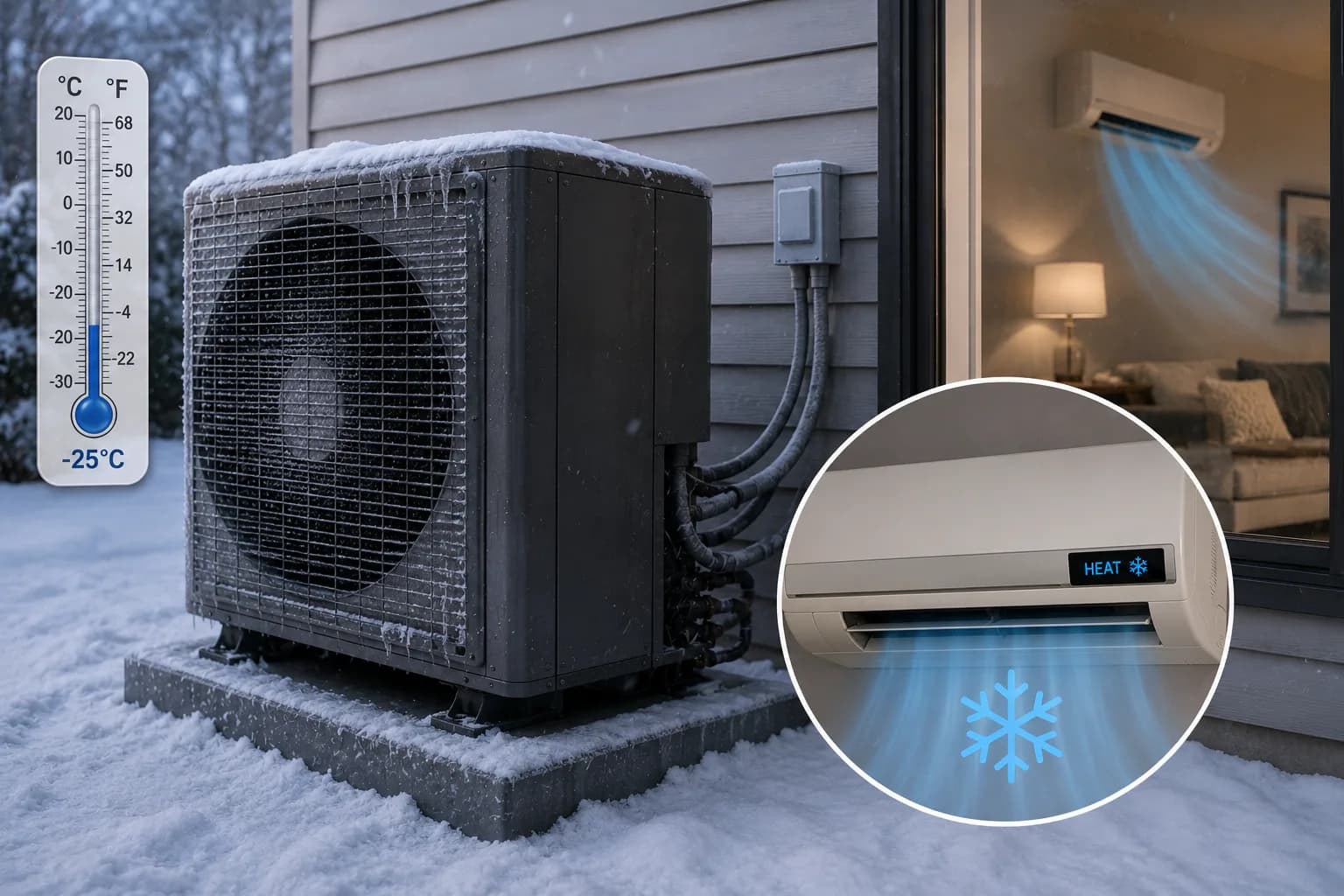
Slightly cool (not cold) airflow during extreme cold is normal for most heat pumps, since the produced air is simply less hot than the room's ambient temperature, especially during a defrost cycle. It's generally not dangerous, but if the air is genuinely cold continuously and the house is losing warmth, it can indicate a refrigerant leak, a defrost issue, or a heat pump that simply isn't rated for these temperatures. First check whether a backup system (electric or furnace) is properly kicking in.
What's Happening?
A heat pump captures heat from outdoor air, even cold air, and transfers it indoors. But the colder it gets outside, the less heat is available to capture, so the air blown indoors is naturally less hot than in mid-season — sometimes around 25-30°C instead of 40°C+, which can feel "cool" compared to the house's ambient temperature even though it's not actually cold.
There's also a normal phenomenon called the defrost cycle: in extreme cold and humidity, frost forms on the outdoor unit. The heat pump temporarily reverses its cycle to melt this frost, and during these few minutes (usually 5-15 minutes), it blows genuinely cold air indoors.
Below a certain temperature threshold (often between -15°C and -25°C depending on the model), some standard heat pumps lose a lot of heating capacity, and a backup system (electric baseboards, furnace) needs to take over to maintain comfort.
Is It Dangerous?
It's not a safety danger, but it can indicate a loss of comfort or efficiency worth attention.
Inspect or act immediately if:
- The blown air is cold continuously, not just for a few minutes during a defrost
- The house temperature is dropping noticeably despite heating running
- The outdoor unit is covered in thick ice instead of light frost
- The electric backup system doesn't kick in when it should
- You hear unusual noises at the same time as the cold air
Most Common Causes
| Cause | Explanation |
|---|---|
| Normal defrost cycle | Cold air for 5-15 minutes while frost melts off the outdoor unit |
| Outdoor temperature below the model's performance threshold | Standard heat pumps lose capacity below about -15°C to -20°C |
| Backup system not activating properly | Electric baseboards or furnace meant to take over but misconfigured |
| Low refrigerant (leak) | Reduces the heat pump's ability to capture and transfer heat |
| Heat pump not designed for cold climates | Some entry-level models aren't optimized for Quebec's extreme cold |
| Dirty filter or coil | Reduces overall heat transfer efficiency |
Why This Happens in Quebec
Quebec regularly sees temperatures below -20°C, even -30°C in January-February, which pushes even the best heat pumps to their limits. That's why "cold climate" models, specifically designed to maintain their capacity down to -25°C or -30°C, are increasingly recommended in the province.
This is also why nearly all residential installations in Quebec include a backup heating system (electric baseboards or furnace), since even the best heat pump may need help during extreme cold snaps. The Rénoclimat and LogisVert programs account for this reality by favoring dual-fuel models suited to Quebec's climate.
Can I Ignore It?
It depends. If the cool air lasts a few minutes during an occasional defrost and the house stays comfortable, you can ignore it — that's normal operation.
If the house genuinely cools down and you need to rely on space heaters to stay comfortable, don't ignore it: this can indicate a refrigerant leak (which worsens over time and eventually damages the compressor) or a misconfigured backup system quietly costing you more in electricity.
How to Check It Yourself
You can safely:
- Time how long the cool air lasts (normal if under 15 minutes, worth monitoring beyond that)
- Check the thermostat to see if "backup" or "auxiliary" mode activates in extreme cold
- Observe the frost on the outdoor unit from a distance (light frost = normal, thick ice = problem)
- Check and replace the air filter if needed
- Note if the issue coincides with specific temperatures (e.g., always below -20°C)
Never climb on the roof or a ladder in icy or snowy conditions to inspect the outdoor unit, and never touch the refrigerant circuit yourself — a leak needs to be repaired by a technician certified to handle refrigerant gases.
How Much Does It Cost?
| Service | Estimated Price |
|---|---|
| Diagnostic inspection | $100 - $200 |
| Refrigerant recharge (minor leak) | $200 - $500 |
| Refrigerant leak repair | $300 - $800 |
| Electric backup system adjustment/repair | $150 - $400 |
| Replacement with a cold-climate model | $4,000 - $12,000 |
When to Call a Professional
- Cold air lasts more than 15-20 minutes continuously, not just during a defrost
- The house is noticeably losing temperature
- The outdoor unit is building up thick ice rather than light frost
- You suspect the backup system isn't kicking in
- Your electricity bill rises unexplained during winter
- Your heat pump is over 10 years old and was never designed for cold climates
A technician can measure refrigerant pressure, test that the defrost cycle and backup system are working correctly, and confirm whether your current model is simply undersized for the Quebec climate — diagnostics that require specialized gauges and refrigerant-handling certification.
Related Questions
- My Heat Pump Is Covered in Frost or Ice in Winter: Is That Normal?
- My House Feels Cold Even Though the Thermostat Says It's Warm: Why
- The Best Cold-Climate Heat Pumps for Quebec
- Rénoclimat and LogisVert: Which Program Actually Funds Your Heat Pump
- Mitsubishi Electric vs Daikin: Which Heat Pump for Quebec?
- When to Replace Your Heat Pump: 7 Signs to Watch For
- Why Is It Colder Upstairs Than Downstairs In My House?
Frequently asked questions
Is it normal for my heat pump to blow cool air in winter?+
Yes, to some extent: the air is naturally less hot in extreme cold, and a 5-15 minute defrost cycle is entirely normal. What's not normal is genuinely cold air blowing continuously.
Should my backup system always kick in during extreme cold?+
On most Quebec installations, yes, the backup system (electric baseboards or furnace) should automatically activate below a certain temperature threshold to compensate for the heat pump's reduced capacity.
How much does fixing a refrigerant leak cost?+
Typically between $300 and $800 depending on where the leak is, plus the cost of the refrigerant recharge itself, which can add $200 to $500.
Should I call a professional immediately?+
Not if the cool air lasts only a few minutes during a defrost. Call if the house genuinely cools down, the backup system doesn't activate, or the outdoor unit is covered in thick ice.
Do all heat pumps work at -30°C?+
No. Only "cold climate" models are designed to maintain good heating capacity down to -25°C or -30°C. Standard models lose a lot of efficiency well before that threshold.
Get a free quote
More to know before your project.
By Marc Tremblay — Certified HVAC technician, 12 years of experience in Quebec
Updated on July 23, 2026