
The Best Cold-Climate Heat Pumps for Quebec
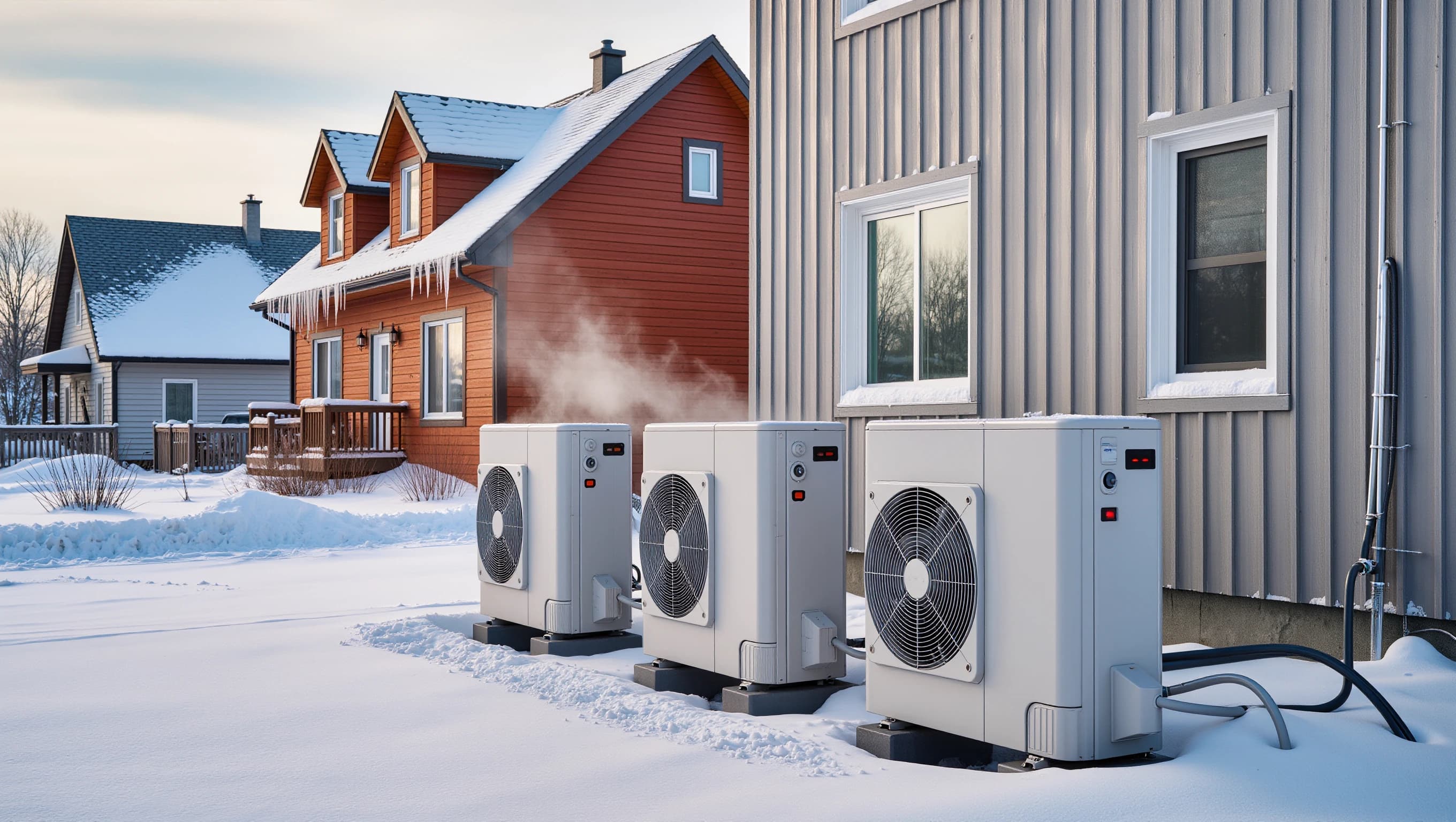
In Quebec, the most important spec isn't price or even the SEER efficiency printed on the yellow label — it's the unit's ability to keep heating effectively when the mercury drops well below -15°C, a winter reality most heat pumps sold across North America simply aren't engineered to handle.
What defines a real "cold-climate heat pump"
These models generally use vapor injection compressor technology or a similar design that maintains high heating capacity even in extreme cold, unlike standard models — often cheaper upfront — that lose significant performance below -15°C, forcing a backup system to kick in far earlier in the winter than expected.
Manufacturers recognized for cold-climate lineups
Several major manufacturers now offer a lineup specifically engineered for northern climates, each with its own proprietary technology for maintaining low-temperature performance:
- Mitsubishi Electric, with its Hyper-Heat lineup, is generally regarded as an industry benchmark for extreme-cold performance
- Daikin offers cold-climate lineups engineered specifically for northern markets, with a solid winter reliability reputation
- Fujitsu offers extra-low-temperature heating technology, particularly suited to harsh winters
- LG markets a lineup focused on reliability at extreme temperatures
- Bosch offers a cold-climate lineup with a strong energy efficiency reputation
Exact temperature-performance specs vary year to year and by the specific model within each lineup — which is why this guide identifies recognized manufacturers and lineups rather than precise figures that can change.
What to check beyond the lineup name
The lineup name isn't enough — always ask for the specific model's spec sheet, which shows exact heating capacity at different temperature points (typically -15°C, -20°C, and -25°C). Two models in the same lineup, of different capacities, can perform very differently at low temperatures — a smaller model in a cold-climate lineup can even underperform a larger model from a standard lineup.
The trap of looking at purchase price alone
A cold-climate model generally costs more upfront than a standard model of equivalent capacity. What doesn't show up on the price tag: a standard model poorly suited to Quebec's climate may require an electric backup system that kicks in frequently all winter, inflating the electricity bill in a way that never appears in the initial purchase price.
Our recommendation
For a home heated solely or primarily by heat pump, without a substantial backup system, always favor a recognized cold-climate lineup, even if the purchase price is slightly higher — the gap generally pays for itself in comfort and winter reliability, particularly during the thaw-then-deep-freeze swings typical of our climate.
Frequently asked questions
Can a standard heat pump still work in Quebec?+
Yes, alongside a backup system — but it will lose a significant share of its capacity in extreme cold, which limits its value as the sole winter heat source.
How do I verify if a specific model is really cold-climate rated?+
Ask for the exact model's spec sheet, which shows heating capacity at specific temperatures — never rely solely on the lineup's marketing name.
Get a free quote
More to know before your project.
By Marc Tremblay — Certified HVAC technician, 12 years of experience in Quebec
Updated on July 23, 2026