
Why Does My Central Heat Pump Take Longer to Cool the House Than It Used To?
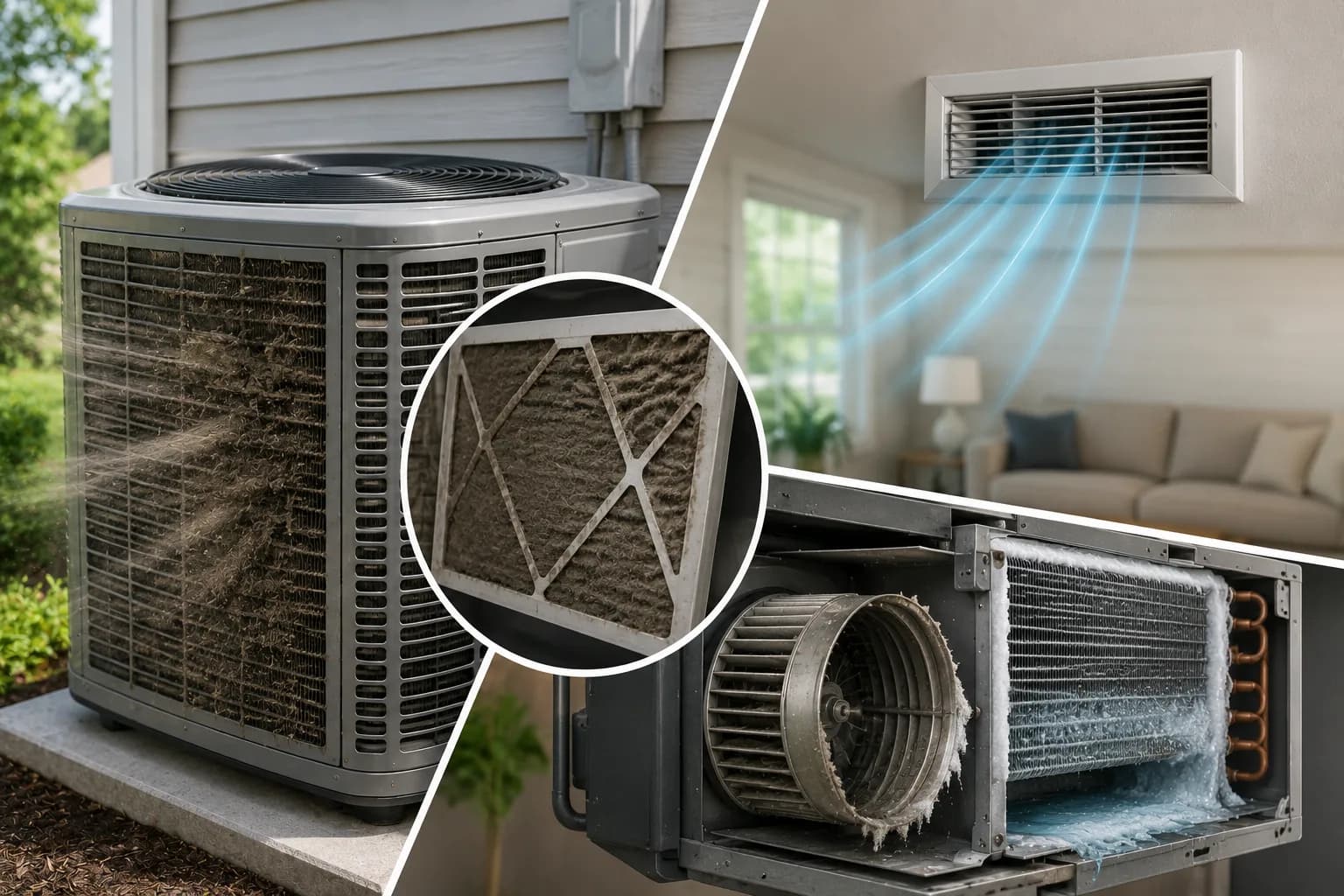
A gradual slowdown in cooling performance is generally not an emergency, but it's almost always a sign that basic maintenance was neglected (filter, coil) or that there's a worsening refrigerant leak. It's not a safety danger, but every month without action typically makes the unit work harder, raises your electricity bill, and can bring you closer to a compressor failure.
What's Happening?
A central heat pump cools the house by capturing heat from indoor air through the coil and rejecting it outside via a refrigerant cycle. This system depends on several parts all working at full capacity: clean airflow, a clear coil, the correct amount of refrigerant, and a healthy compressor.
When the house takes longer to cool than it used to, it means one or more of these parts has lost efficiency. The system compensates by running longer to reach the same temperature, which becomes especially noticeable on very hot days when the gap becomes obvious.
This is almost never a sudden breakdown — it's a gradual slowdown, often over months or years, that goes unnoticed until the difference becomes genuinely bothersome.
Is It Dangerous?
It's not a safety danger to occupants in the vast majority of cases.
Inspect or act immediately if:
- The performance loss happened suddenly (overnight, not gradually)
- You notice frost or ice on the pipes or indoor coil
- A chemical or sweet smell accompanies the drop in performance (possible refrigerant leak)
- The unit makes unusual noises in addition to cooling worse
- Your electricity bill has risen noticeably with no explanation
Most Common Causes
| Cause | Explanation |
|---|---|
| Dirty air filter | Reduces airflow, forcing the unit to work harder and longer |
| Dirty outdoor or indoor coil | Dust, pollen, and debris reduce heat transfer |
| Slow refrigerant leak | The system gradually loses its ability to capture heat |
| Heat pump undersized from the start | Too small for the house's square footage, especially noticeable on heat wave days |
| Blocked or damaged ductwork | Reduces efficient distribution of cool air through the house |
| Aging compressor losing efficiency | On units 10-15 years old and up |
| Outdoor fan running slower | Reduces heat rejection, slowing down the whole cycle |
Why This Happens in Quebec
Quebec summers combine heat and high humidity, which puts heavy strain on heat pumps during July-August heat waves. A unit that's already slightly weakened shows its limits precisely during the periods when it's needed most.
Spring pollen and residue from salted snow that accumulates near the outdoor unit during Quebec winters can also clog the coil faster than in climates without a harsh winter, especially if the unit hasn't been cleaned in spring.
Can I Ignore It?
It depends on how significant the slowdown is. If the difference is minor (a few extra minutes to cool), basic maintenance might be enough to fix it, and it can wait for a regular appointment.
If the slowdown is significant (the house doesn't reach the desired temperature at all anymore, or it takes twice as long), don't ignore it: every additional week makes the compressor work harder than it should, wearing out the unit prematurely and raising your electricity costs continuously, not just once.
How to Check It Yourself
You can safely:
- Check and replace the air filter (do this every 1-3 months in summer)
- Look at whether the outdoor coil is visibly clogged with dust, grass clippings, or debris (without disassembling it)
- Clear away plants, shrubs, or objects blocking airflow around the outdoor unit (keep at least 30-60 cm of clearance)
- Check that indoor air registers aren't closed or blocked by furniture
- Note when you first noticed the slowdown and whether it coincides with a specific event
Never clean the coil yourself with a high-pressure hose or chemicals, and never attempt to add refrigerant yourself — it's illegal without certification and can damage the system if incorrectly dosed.
How Much Does It Cost?
| Service | Estimated Price |
|---|---|
| Full inspection and diagnostic | $100 - $200 |
| Professional coil cleaning | $150 - $350 |
| Refrigerant recharge | $200 - $500 |
| Refrigerant leak repair | $300 - $800 |
| Outdoor fan repair or replacement | $300 - $600 |
| Full replacement if the unit is at end of life | $4,000 - $12,000 |
When to Call a Professional
- The slowdown persists after changing the filter and visually cleaning the outdoor unit
- The house no longer reaches the set temperature at all, even after several hours
- You see frost or ice on the components
- Your electricity bill has risen significantly with no other explanation
- The unit is over 10 years old and hasn't had annual maintenance in a while
A technician can measure refrigerant pressure, test actual airflow with calibrated instruments, and inspect inside the coil and compressor — diagnostics that require specialized equipment and certification to safely handle refrigerant.
Related Questions
Frequently asked questions
Can I keep using my heat pump if it's cooling slower?+
Yes, as long as it's not dangerous, but every week without action wears the compressor down more and raises your electricity costs. Basic maintenance often fixes the problem quickly.
Is it normal for my heat pump to slow down with age?+
A slight efficiency drop is normal after 8-10 years, but a significant drop isn't, and almost always comes from an identifiable, fixable cause, not just age.
How much does a coil cleaning cost?+
A professional coil cleaning typically costs between $150 and $350, and it's often enough to recover a good portion of lost performance.
Should I call a professional immediately?+
Not if the slowdown is minor — first try changing the filter and cleaning the outdoor unit. Call promptly if the house isn't cooling at all anymore or you see frost.
Can simply changing the filter fix the problem?+
In many cases, yes, especially if the filter hasn't been changed in several months. It's the first thing to check before assuming a more serious problem.
Get a free quote
More to know before your project.
By Marc Tremblay — Certified HVAC technician, 12 years of experience in Quebec
Updated on July 23, 2026