
Can I Run My Heat Pump in the Rain?
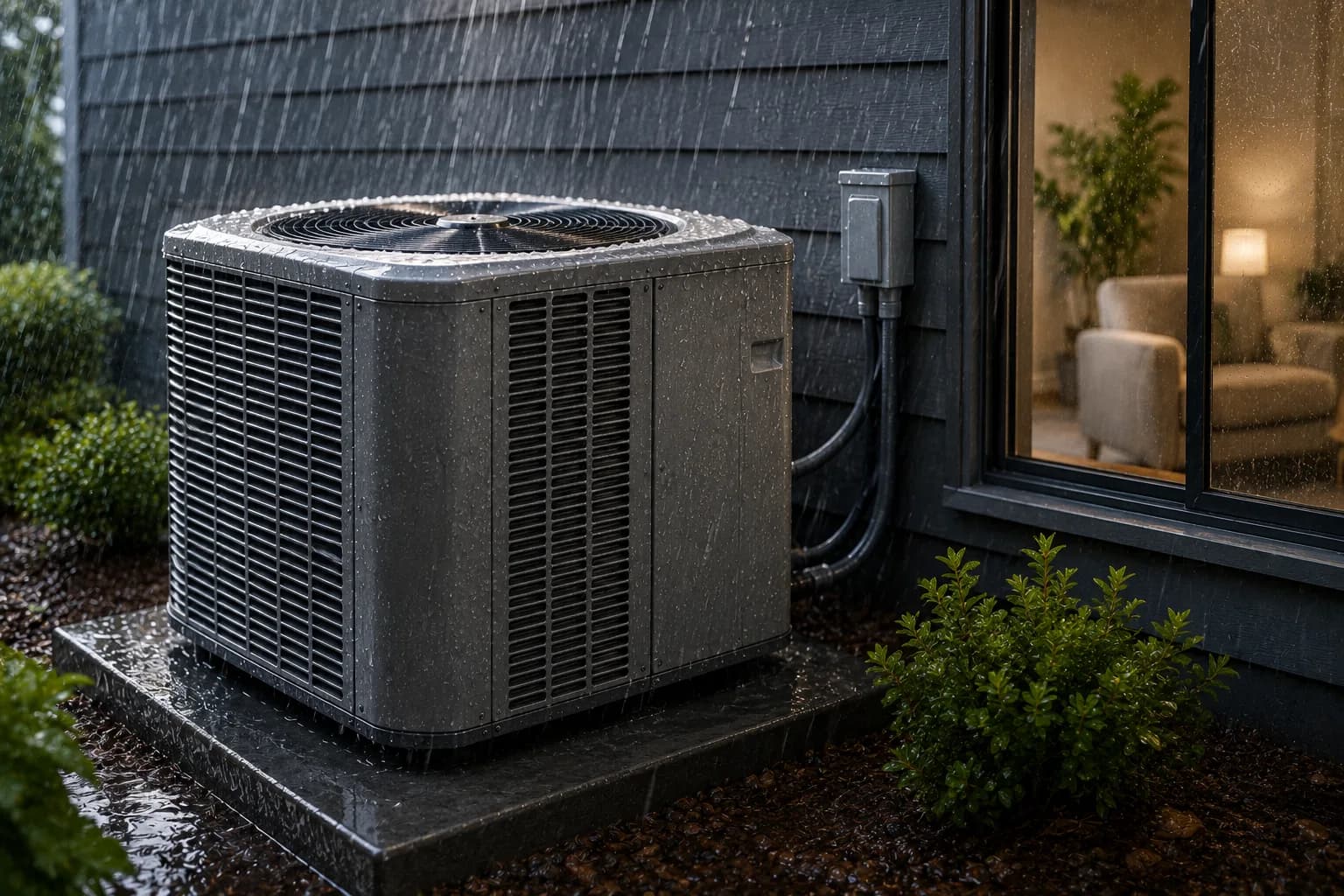
Yes, your heat pump is designed to run in the rain, including during a moderate thunderstorm. The outdoor unit is built to withstand the elements and its electrical system is sealed against water. This is not dangerous under normal conditions. Only shut the system off during a severe electrical storm with direct lightning risk nearby, or if you notice sparks, smoke, or an abnormal electrical sound.
What's Happening?
The outdoor unit of a heat pump is designed from manufacturing to be installed outside, exposed to rain, snow, and freezing conditions year-round. Sensitive electrical components are enclosed in a weatherproof housing, and the fan and coil are built to shed water without issue.
In fact, a bit of rain can even help rinse dust and debris off the coil fins, which slightly improves heat exchange efficiency in the short term.
The heat pump simply continues its normal heating or cooling cycle during rain, exactly as it would in dry weather, as long as the unit isn't damaged or poorly installed.
Is It Dangerous?
No, under normal rain conditions, it's not dangerous. Manufacturers test their units for this kind of exposure, and residential installations in Quebec are designed for it.
Check or shut off the system if you notice:
- Sparks, smoke, or a burning smell coming from the unit
- An unusual electrical sound (loud humming, crackling)
- The breaker trips during rain
- An electrical storm with lightning risk close by
- Water pooling around the base of the unit instead of draining away
In these specific cases, it's better to cut power at the electrical panel and wait for a professional inspection rather than continuing to run the unit.
Most Common Causes
| Cause | Explanation |
|---|---|
| Normal operation | Most of the time, no cause to look for, it's simply designed for this |
| Poorly closed or cracked electrical access panel | Can let water reach internal components |
| Unlevel unit | Prevents water from draining properly, creating a stagnant puddle |
| Cracked or sunken concrete pad | Encourages water to pool around the unit |
| Damaged or poorly sealed outdoor wiring | Rare, but can create a real electrical risk in the rain |
| Storm with nearby lightning | Risk of electrical surge, not related to the rain itself |
Why This Happens in Quebec
Quebec's climate exposes heat pumps to a wide variety of conditions: spring rain, summer thunderstorms, winter thaws with freezing rain, and frequent freeze-thaw cycles. Units sold and installed in Quebec by RBQ-licensed contractors are chosen and placed with this reality in mind, notably with a raised base to prevent water or melting snow from pooling around the unit.
Quebec summer storms sometimes bring strong winds and lightning, which justifies caution during a severe electrical storm, more than the rain itself.
How to Check It Yourself
During calm weather, check whether water drains freely around the base of the unit or pools there, which would indicate a leveling problem. Verify that the electrical access panel on the side of the unit is properly closed and shows no cracks.
Listen for whether the fan noise changes abnormally during rain compared to dry weather. A loud electrical hum or crackling sound is never normal.
Never touch the outdoor unit or its electrical panel during heavy rain or a storm, and never open the housing yourself, even when dry: the refrigerant and electrical components inside require handling by a certified technician.
Can I Ignore It?
Yes, in the sense that there's nothing special you need to do: let the heat pump run normally in the rain. The only thing not to ignore is an abnormal sign (sparks, electrical noise, standing water around the base), which does deserve a quick check before it worsens.
How Much Does It Cost?
| Service | Estimated Cost |
|---|---|
| Inspection after a concern following a storm | $100 - $175 |
| Drain repair or leveling correction | $150 - $350 |
| Access panel replacement or resealing | $100 - $300 |
| Unit replacement (significant electrical damage) | $4,000 - $12,000 |
When to Call a Professional
- You see sparks, smoke, or smell burning
- The breaker trips during or after rain
- Water pools permanently around the base of the unit
- An unusual electrical sound accompanies operation
- The heat pump stops after heavy rain and won't restart
A technician can check the electrical housing's seal, test the base's leveling, and confirm no water has reached sensitive components, a check impossible to do yourself without opening the unit.
Related Questions
- My Heat Pump Is Making a Clicking or Grinding Noise: Causes & Fixes
- Why Is My AC Leaking Water?
- My Heat Pump Is Covered in Frost or Ice in Winter: Is That Normal?
- Why Does My Heat Pump Make a Repeated Clicking Sound Right Before It Starts?
- Spring Heat Pump Maintenance Checklist
- When Should I Really Get My Heat Pump Checked Before Summer: Too Early or Too Late?
Frequently asked questions
Should I cover my outdoor heat pump during a storm?+
No, never cover the unit while it's running. Covering it blocks the airflow the fan needs and can cause overheating. A cover is only useful on a unit shut down for winter.
Can rain cause an electrical shock if I touch the unit?+
Under normal conditions with a unit in good condition, no, the housing is sealed. The risk exists only if the electrical panel is cracked or poorly closed, which stays rare with regular maintenance.
Should I turn off my heat pump every time it rains?+
No, that's not necessary. You can leave it running normally during regular rain. Turn it off only during a significant electrical storm with lightning risk nearby.
Get a free quote
More to know before your project.
By Marc Tremblay — Certified HVAC technician, 12 years of experience in Quebec
Updated on July 23, 2026