
Why Does My Dryer Smell Like It's Burning Even Though I Clean the Lint Trap Every Load?
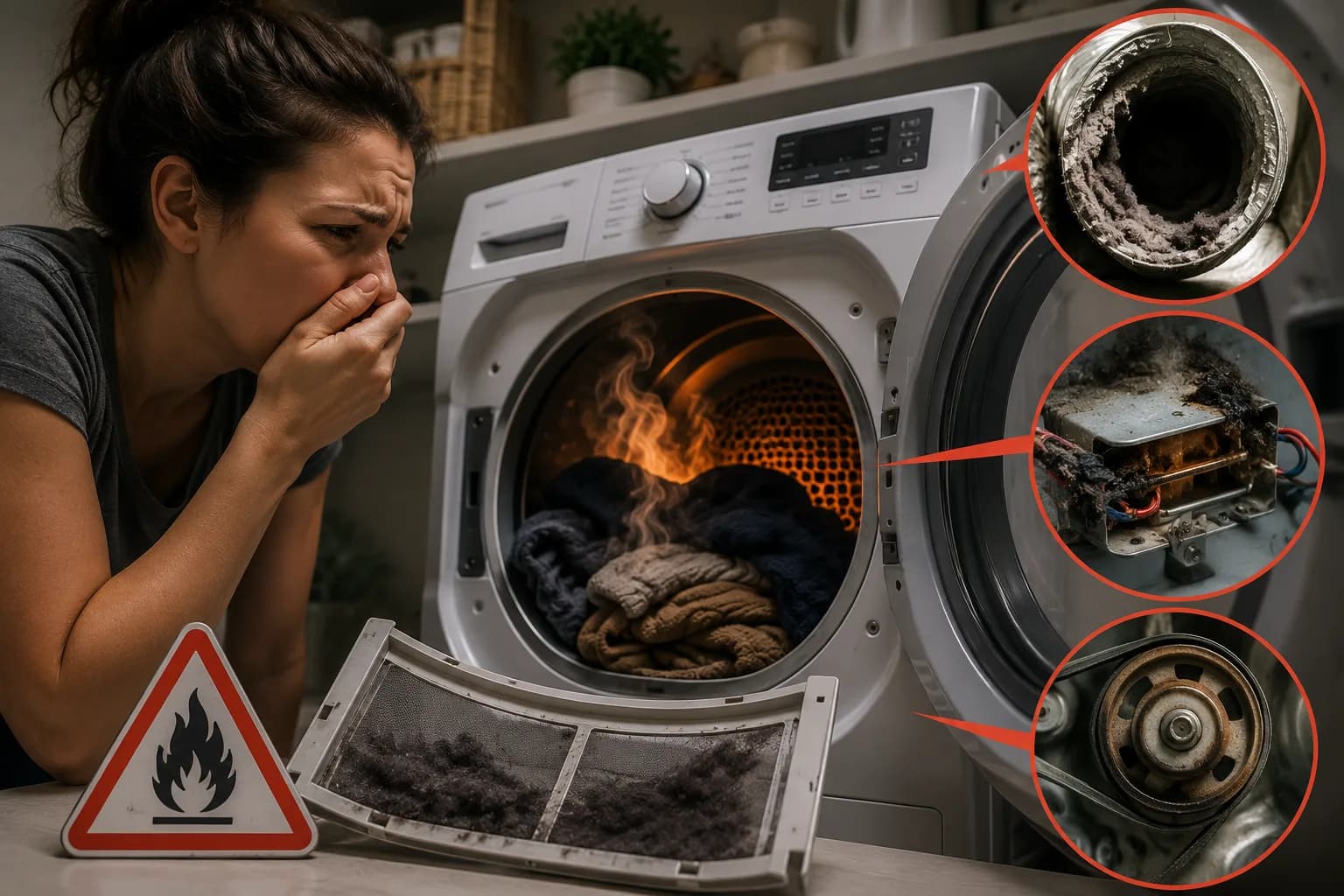
A burning smell despite a clean lint trap almost always means lint has built up further down the exhaust duct, not inside the dryer itself. Warm, moist air can no longer escape properly, the dryer overheats, and leftover lint can start to singe. This isn't trivial: it's one of the leading causes of house fires in Quebec. Stop using the appliance if the smell is strong or the dryer feels hot to the touch, and have the duct checked before you use it again.
What's Happening?
The lint trap only catches part of the fibers that shed during drying, usually around 60 to 70 percent. The rest escapes into the exhaust duct that leads outside. Over time, that lint builds up on the duct walls, especially at bends and along long runs.
This buildup gradually reduces the flow of hot, moist air. The dryer has to work harder to clear moisture, hot air stays trapped longer inside the appliance and duct, and lint in contact with the heating element can start to singe, producing that distinct burning smell.
Is It Dangerous?
Yes, potentially, and it's a signal worth taking seriously, not ignoring. A blocked duct is one of the leading causes of appliance-related house fires in North America.
Inspect or act immediately if:
- The burning smell is strong, not just faint and occasional
- The dryer or the wall behind it is hot to the touch during or after a cycle
- The exterior duct flap barely moves, or doesn't move at all, during drying
- The laundry room becomes unusually hot or humid during the cycle
- The dryer shuts off on its own mid-cycle (a possible sign of the safety thermal fuse tripping)
If you notice several of these signs at once, unplug the dryer and don't use it again before the duct is inspected.
Most Common Causes
| Cause | Explanation |
|---|---|
| Lint built up downstream of the trap | The trap never catches 100 percent of fibers; the rest gradually accumulates in the duct |
| Duct too long or with too many bends | Every bend slows airflow and encourages lint to settle right there |
| Crushed or kinked flexible plastic duct | These ducts, often non-compliant, compress easily behind the appliance and block airflow |
| Blocked exterior flap | Snow, ice, a bird's nest, or accumulated lint prevent the flap from opening fully |
| Faulty thermal fuse or thermostat | A malfunction can let the appliance overheat without shutting off at the right time |
| Poorly vented dryer after a new install | A newly connected or overly restrictive duct creates the same effect right from the start |
Why This Happens in Quebec
In winter, the dryer duct's exterior flap easily freezes as condensation turns to frost in cold weather, further reducing airflow already slowed by accumulated lint. Many Quebec basements place the dryer far from the exterior wall, lengthening the duct run and adding more bends, a direct risk factor.
Many older installations still use thin flexible plastic or foil ducting, now discouraged by safety codes in favor of rigid or semi-rigid metal ducting, which is more resistant to buildup and heat damage.
How to Check It Yourself
- Unplug the dryer before any check
- Go outside during a drying cycle (with someone watching the appliance) to see if the flap opens fully and air exits with good force
- Check behind the appliance that the duct isn't crushed, sharply bent, or disconnected
- Smell around the dryer during a cycle to spot a localized odor
Never disassemble the inside of the dryer (drum, heating element, wiring) yourself — leave that to a technician. Cleaning the duct itself, however, can often be done or supervised by you if access is easy.
Can I Ignore It?
No. An occasional burning smell that persists despite a clean trap signals a buildup that keeps growing with every load. The longer you wait, the greater the overheating risk and drying time become, and the more your electricity bill climbs needlessly. A severely blocked duct can also prematurely wear out the heating element or the dryer's motor.
How Much Does It Cost?
| Service | Estimated Price |
|---|---|
| Duct inspection | $80 - $150 |
| Professional dryer duct cleaning | $100 - $250 |
| Full cleaning if part of a ventilation system | $300 - $700 |
| Replacement of a damaged duct section | $150 - $400 |
When to Call a Professional
- If the burning smell persists after thoroughly cleaning the lint trap
- If the exterior flap barely moves during a cycle
- If drying time has doubled compared to last year
- If the duct has never been cleaned since the dryer was installed
- If the appliance shuts off on its own mid-cycle more than once
Related Questions
Frequently asked questions
Can I keep using my dryer if the smell is faint?+
For a cycle or two while you schedule an inspection, yes, as long as the appliance stays cool to the touch and the smell doesn't intensify. Stop immediately if it gets stronger or the dryer heats up abnormally.
Is it normal for the exterior flap to freeze in winter?+
A little occasional frost can happen, but a flap completely blocked by ice isn't normal and prevents hot air from escaping, which increases the overheating risk.
How much does dryer duct repair or cleaning cost?+
Professional cleaning typically costs between $100 and $250. If a section of duct needs replacing due to crushing or damage, add $150 to $400.
Should I call a professional right away if the burning smell is strong?+
Yes. Unplug the dryer first, then have the duct inspected before plugging it back in. A strong burning smell is a sign of active overheating, not something to just keep an eye on from a distance.
Is a flexible plastic duct really more of a risk?+
Yes. It crushes and kinks easily, which traps lint at those compression points, and it holds up less well to heat than the rigid or semi-rigid metal ducting now recommended.
Get a free quote
More to know before your project.
By Sophie Bouchard — Certified chimney sweep, residential fire safety specialist
Updated on July 23, 2026