
Why Is My Dryer Taking Too Long to Dry My Clothes?
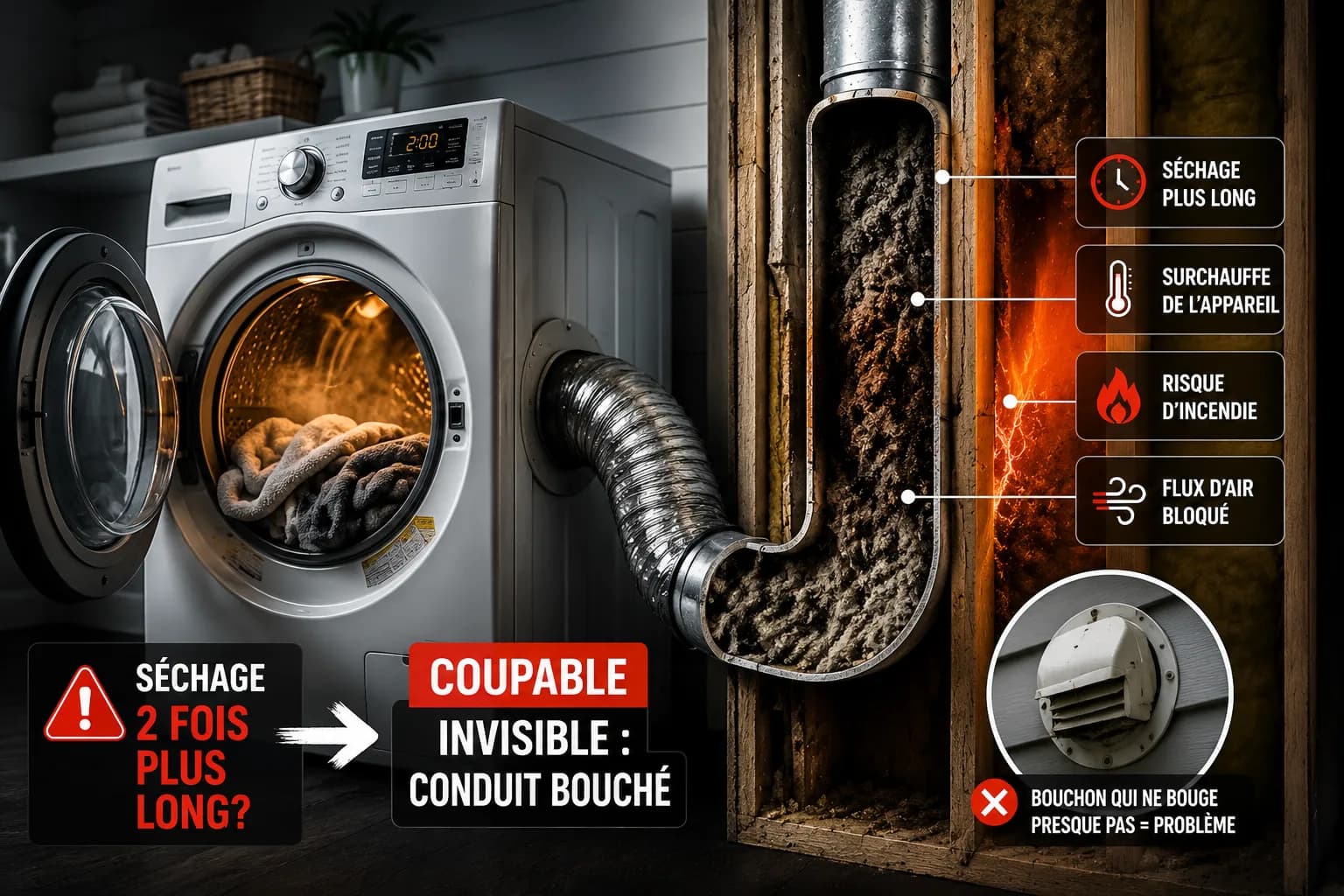
A dryer taking much longer than before almost always comes from an exhaust duct partially or fully clogged with lint, not a problem with the dryer itself. It's not just an inconvenience: a clogged dryer vent is one of the leading causes of residential fires in Canada. Have the duct cleaned before continuing to use the appliance normally.
What's Happening?
A dryer works by pushing hot air through the clothes, then venting that humid, lint-laden air outside through a duct. The lint trap catches most of the fibers, but a fine layer always makes it to the duct, sticks with moisture, and gradually narrows the airway.
When the duct clogs, hot humid air can no longer escape efficiently. The dryer then has to work harder and longer to remove the same amount of moisture, which explains why a cycle that used to take 45 minutes suddenly takes 90 or more.
That same hot, humid air not venting properly also causes the dryer's heating element to overheat, wearing out the appliance prematurely as well as being dangerous.
Is It Dangerous?
Yes, it's potentially dangerous, unlike most home maintenance symptoms. A dryer vent clogged with lint is a recognized cause of residential fires, because lint is extremely flammable and builds up directly around a heating element.
Inspect or act immediately if:
- The dryer is hot to the touch on top or the back during or after a cycle
- You smell burning, even faintly
- Clothes come out hot and damp instead of dry
- The outside vent hood barely moves air when the dryer is running
- You see visible lint buildup at the outside exhaust
Don't keep using the dryer if you notice a burning smell: turn it off and have the duct checked before running it again.
Most Common Causes
| Cause | Explanation |
|---|---|
| Lint buildup in the duct | Most common cause, accumulates over time even with a regularly cleaned filter |
| Duct too long or with too many bends | Slows airflow and encourages buildup, common in homes where the dryer is far from the exterior wall |
| Plastic or flexible aluminum duct | These materials trap lint more easily than rigid metal ducts |
| Blocked exterior vent hood | Bird nest, debris, or a stuck flap preventing air from exiting |
| Dirty or damaged lint trap | A poorly cleaned or torn filter lets more lint through to the duct |
| Duct never cleaned since installation | Common in homes bought with existing appliances and no maintenance history |
Why This Happens in Quebec
Quebecers dry laundry indoors nearly year-round because of the climate, which means the dryer runs far more hours per year than in warmer climates where clothes can be hung outside much of the year. More use means more lint buildup, faster.
In older homes, particularly Montreal triplexes and duplexes where the dryer is sometimes installed in the basement with a long duct run to the outside, the buildup risk is even higher. In winter, snow and ice can also partially block the exterior vent hood.
How to Check It Yourself
You can do a few simple, safe checks:
- Go outside while the dryer is running and hold your hand near the vent hood: you should feel a strong, steady flow of warm air
- Check whether the outside hood is visibly blocked by lint, a nest, or ice
- Note whether drying time has gradually increased over the months
- Clean the lint trap before every load and check that it isn't torn
Don't dismantle the duct yourself beyond the easily accessible flexible section behind the dryer, and don't climb onto the roof or an unstable ladder to inspect a high-up vent outlet.
Can I Ignore It?
No. Unlike other home symptoms that can wait, a clogged dryer vent combines a real fire risk with a cost that grows every month you wait.
The longer you wait, the more lint accumulates and the higher the fire risk climbs, on top of prematurely wearing out the dryer's heating element, which can lead to a completely avoidable repair or replacement. Longer cycles also use more electricity every single load.
How Much Does It Cost?
| Service | Estimated Cost |
|---|---|
| Duct inspection | $80 - $150 |
| Full dryer duct cleaning | $130 - $300 |
| Replacing a damaged duct section | $100 - $350 |
| Combined vent + dryer duct cleaning | $300 - $700 |
When to Call a Professional
- Drying time has doubled or more compared to normal
- You smell burning during a cycle
- The dryer or the wall behind it is hot to the touch
- You've never had the duct cleaned since buying the house
- The outside vent hood lets little or no air through when the dryer runs
- The duct is longer than 4.5 meters or has several bends
A technician cleans the duct along its full length with brushes and an industrial vacuum, not just the visible part, and confirms the outside exhaust is fully clear.
Related Questions
- How a Clogged Dryer Vent Can Start a Fire
- Why Does My Dryer Smell Like It's Burning Even Though I Clean the Lint Trap Every Load?
- How Much Does a Full Sweep vs an Inspection-Only Cost
- Noise in the Ducts: Squirrel, Raccoon, or Dead Animal?
- My House Smells Weird But I Can't Tell If It's the Chimney, the Ducts, or the Plumbing
Frequently asked questions
Can I keep using my dryer while waiting for the cleaning?+
Yes, as long as you don't smell burning and the appliance isn't unusually hot, but avoid long unattended cycles and clean the lint trap before every load in the meantime.
How often should I have my dryer duct cleaned?+
Generally once a year for normal family use, but more often if the duct is long, has several bends, or you do more loads than average.
Is it normal for it to take longer in winter?+
A slight slowdown is normal due to colder outside air, but if drying time doubles, it's more likely a clogged duct or an ice-blocked outside hood than a simple seasonal effect.
How much does the repair cost if my dryer is already damaged from overheating?+
Replacing a heating element generally costs between $150 and $400 in parts and labor, on top of the duct cleaning needed to prevent it from happening again.
Should I call a professional right away, or can I try cleaning the duct myself?+
You can clean the short flexible section behind the dryer yourself, but a long duct or one running through the wall needs specialized brushes a professional has to reach its full length.
Get a free quote
More to know before your project.
By Sophie Bouchard — Certified chimney sweep, residential fire safety specialist
Updated on July 23, 2026