
My Baby's Room Feels Humid Even With the AC On: Why & What to Do
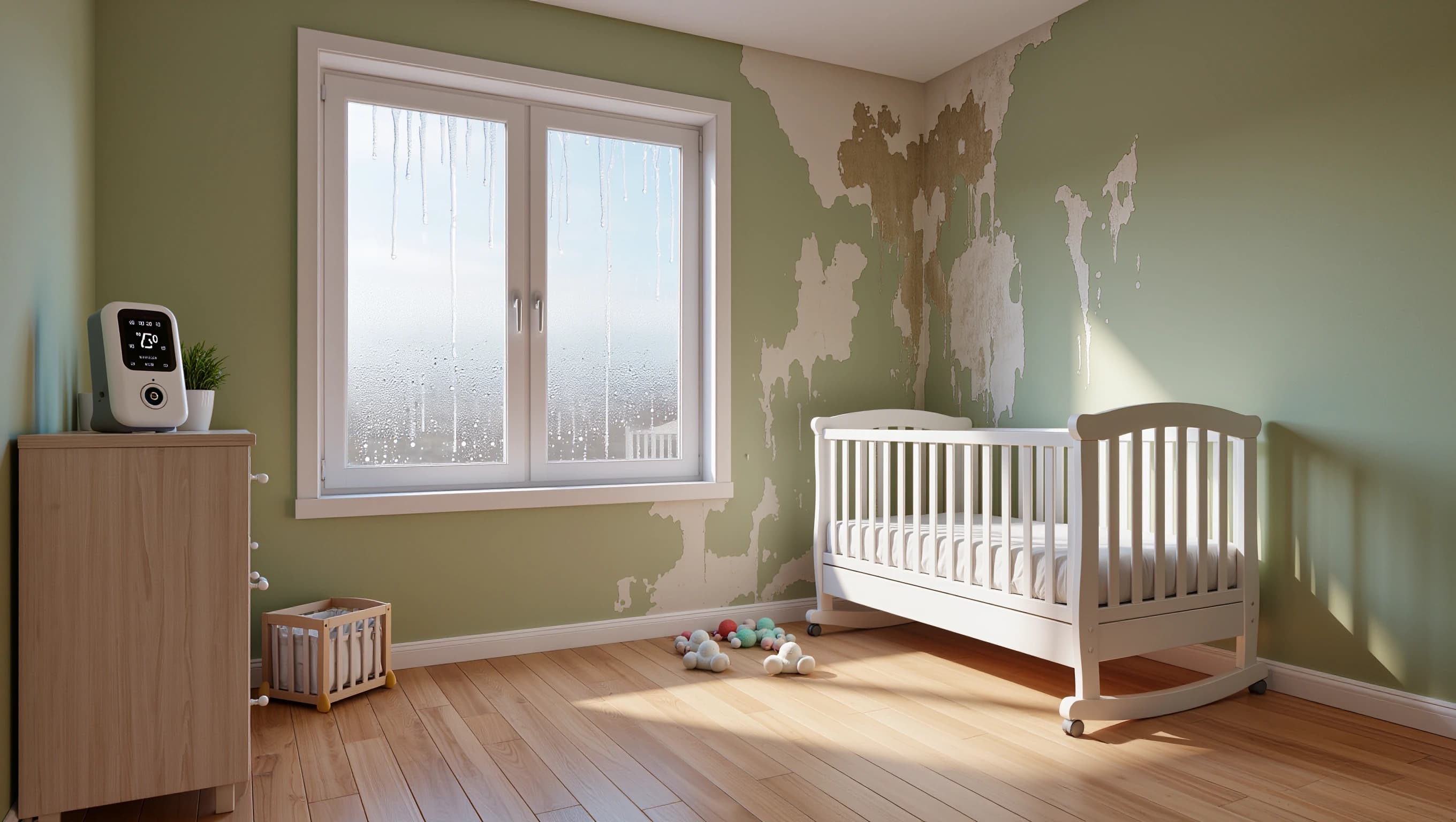
A humid baby's room despite the AC running is usually caused by a poorly balanced central system, a wall-mounted heat pump that's oversized for the room, or a bedroom door that stays closed and blocks conditioned air from circulating. It's not dangerous right away, but humidity above 60% for several weeks invites mold and dust mites, not ideal in a nursery. Check with a hygrometer first, then adjust ventilation before reaching for a dehumidifier.
What's Happening?
An air conditioner or heat pump cools the air, but its equally important second job is pulling humidity out by condensing it on its cold coils. To dehumidify well, the unit needs to run in cycles long enough to properly "wring out" the air.
The problem often shows up when the system is oversized for the room (or the whole house): it cools the air very quickly, hits the set temperature, and shuts off before it's had time to remove enough humidity. You end up with a room at the right temperature, but still sticky.
A closed door, common in a nursery for noise and light control, makes things worse too: it limits fresh, dry air from reaching the room, especially with a central system that only has one supply vent there.
Is It Dangerous?
No immediate health danger to your baby in the short term. This is a comfort and air-quality issue that only becomes a concern if it lingers.
Watch closely and act if:
- measured humidity stays sustained above 60% for several days
- you see condensation on the room's windows or walls
- a musty smell appears, even a faint one
- you notice dark spots in corners or near windows
These signs point to a mold risk, which can irritate a young child's airways. Still, this is never an emergency — you have time to adjust the situation calmly.
Most Common Causes
| Cause | Explanation |
|---|---|
| System oversized for the room | The unit cools too fast and shuts off before properly dehumidifying |
| Bedroom door kept closed continuously | Dry conditioned air struggles to reach the room, especially with a central system with only one vent there |
| Thermostat set too low | Short, frequent cycles remove less humidity than one longer cycle would |
| A humidifier running at the same time | Some parents add a nursery humidifier, which works against the AC's effect |
| Poor sealing in the room (window, door frame) | Humid outside air infiltrates faster than the system can process it |
| Clogged AC filter | Reduces airflow and dehumidification efficiency |
Why This Happens in Quebec
Quebec summers combine heat with high humidity, especially in the St. Lawrence lowlands, where the humidex often tops 30 in July and August. That outdoor humidity easily seeps into a poorly sealed home, especially in older housing (Montreal triplexes, bungalows) where window and door sealing hasn't been updated.
Wall-mounted heat pumps, very popular in Quebec for their winter heating efficiency, are sometimes sized based on heating capacity rather than summer dehumidification capacity — a sizing mismatch that causes exactly this kind of problem.
How to Check It Yourself
You can safely:
- put a hygrometer (a thermometer-humidity gauge, about $15-25) in the room to measure actual humidity, ideally between 40% and 55%
- check whether the bedroom door stays open long enough to let conditioned air circulate
- clean or replace the AC or heat pump filter, a simple task most parents can do themselves
- see if humidity drops when you let the system run longer at a slightly higher temperature instead of short cycles at a low one
Don't attempt to open up the indoor or outdoor unit, or touch refrigerant lines — leave that part to a technician.
Can I Ignore It?
It depends on the humidity level. Below 60%, with no smell or condensation, you can monitor without acting urgently. Sustained above 60%, no — mold can take hold in just a few weeks in a warm, humid environment like a summer nursery, and it's more costly to remediate afterward than to fix the root cause now.
How Much Does It Cost?
| Service | Estimated Price |
|---|---|
| Hygrometer (purchase) | $15 - $40 |
| AC system inspection and adjustment | $100 - $200 |
| Portable dehumidifier for one room | $150 - $350 |
| Minor cleaning/repair (filter, coil) | $150 - $300 |
| Duct rebalancing (central system) | $300 - $600 |
When to Call a Professional
- humidity stays above 60% even after adjusting the door, thermostat, and filter
- you see visible mold or smell a musty odor in the room
- the system seems to start and stop very frequently (abnormal short cycling)
- you suspect the unit is mis-sized for the room or the house
- a technician can precisely measure your system's dehumidification capacity and, if needed, recommend duct rebalancing or a supplemental unit — adjustments a parent can't evaluate without proper tools
Related Questions
Frequently asked questions
What humidity level is ideal for a baby's room?+
Between 40% and 55% is generally considered comfortable and safe. Sustained above 60%, the risk of mold and dust mites rises; below 30%, the air becomes too dry, which can irritate the airways.
Should I leave the nursery door open to help the AC work better?+
It helps a lot, especially with a central system that has only one vent in that room. If noise or light is a concern, crack the door open a few inches or use a door fan to let air circulate without giving up the room's privacy.
Is a portable dehumidifier a good fix for a nursery?+
Yes, it's often the fastest and most affordable fix while you wait to adjust the central system. Choose a model with auto shutoff and place it out of the baby's reach, emptying the tank regularly.
Should I call a professional immediately if the nursery feels humid?+
Not urgently. First measure humidity with a hygrometer and try simple adjustments (door, thermostat, filter) for a few days. If humidity stays high or a musty smell appears, schedule an inspection.
Get a free quote
More to know before your project.
By Marc Tremblay — Certified HVAC technician, 12 years of experience in Quebec
Updated on July 23, 2026