
Frost Forming Inside Windows in Winter: Normal or a Warning Sign?
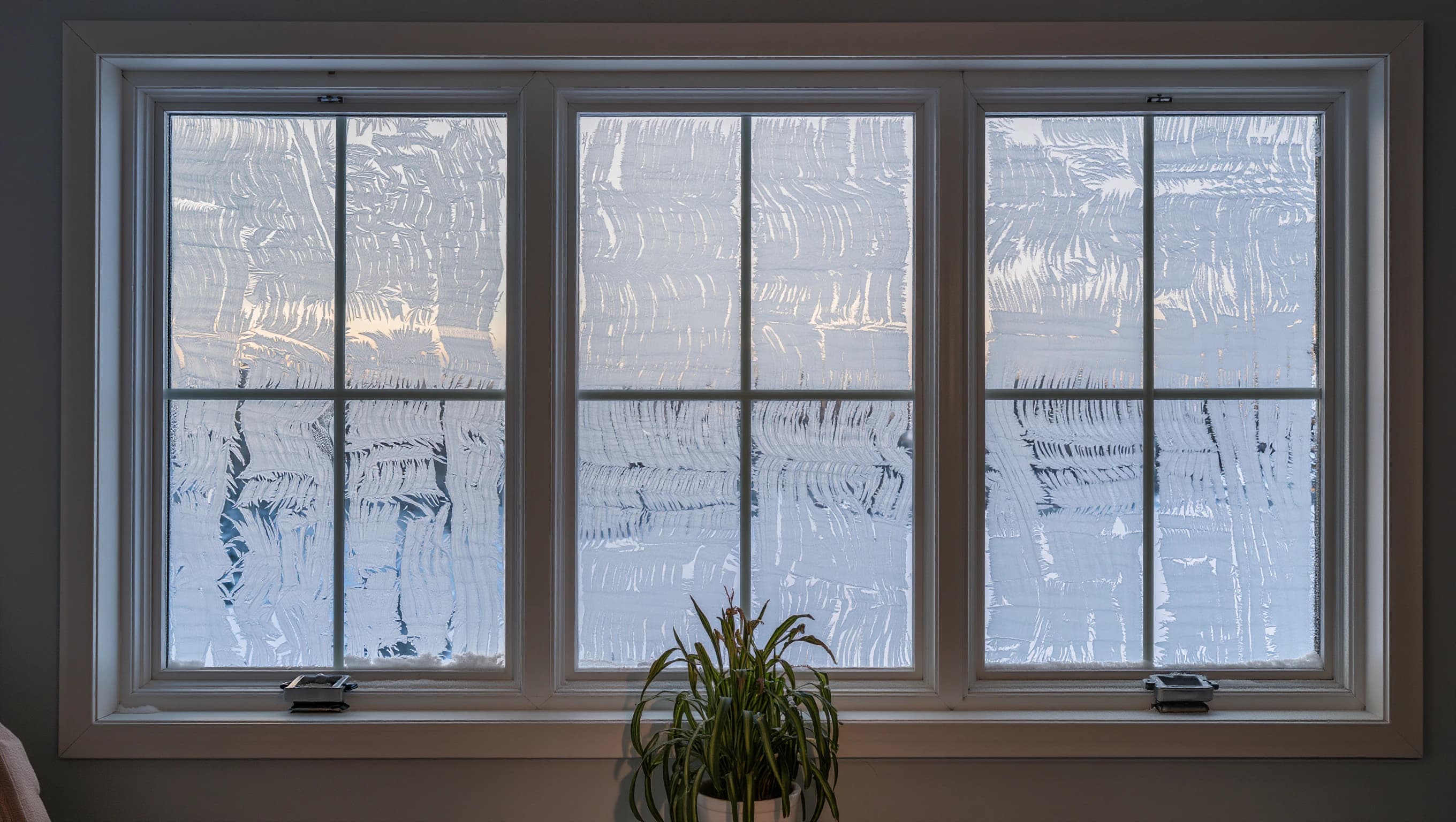
A bit of frost in the bottom corners of your windows during a cold snap is normal in most Quebec homes: it's simply indoor humidity freezing on contact with a cold surface. The most common cause is excess indoor humidity combined with less efficient windows. It's usually not dangerous, but if the frost covers the whole pane, melts into running water, or spreads onto the frame and surrounding wall, it deserves a quick check.
What's Happening?
The air inside your home always carries water vapor, produced by showers, cooking, breathing, and even houseplants. When that humid air touches a cold surface, the vapor condenses, then freezes if the surface is below zero. Window glass, especially in the bottom corner near the frame, is often the coldest surface in the room.
The older or less well-sealed your window, the colder its interior surface stays during extreme cold, and the more likely frost is to form. This is basic physics, not necessarily a manufacturing defect.
Indoor humidity level matters just as much as the window itself. A very airtight house with little ventilation traps more moisture, which makes the problem worse even with good windows.
Is It Dangerous?
In the vast majority of cases, no. A little frost at the bottom of windows during -20 C cold does not damage the house and poses no health risk.
Check or act quickly if you notice:
- Frost that melts and drips onto the sill or wall below
- Dark stains, mold, or a musty smell around the frame
- Window wood that is swelling, peeling, or rotting
- Frost appearing even when it's mild outside (a sign of very high indoor humidity)
Repeated dripping water can damage wood, paint, and eventually the drywall underneath, especially over several winters.
Most Common Causes
| Cause | Explanation |
|---|---|
| Indoor humidity too high | Showers, cooking, indoor laundry drying, without enough ventilation |
| Single-pane or aging double-pane windows | The hermetic seal on thermal units can fail with age |
| Worn weatherstripping or caulking | Lets cold air in, further cooling the glass surface |
| Heavy curtains or blinds pressed against the window | Block warm air from circulating and warming the glass |
| Very airtight house without an air exchanger | Recent renovations that reduced air leaks without adding mechanical ventilation |
| Bathroom fan or kitchen hood not used properly | Humidity isn't being vented outside |
Why This Happens in Quebec
Quebec winters combine extreme cold with constant indoor heating, creating a huge temperature gap between room air and the glass surface. Many older homes, especially Montreal triplexes and postwar bungalows, have single or aging double-pane windows less efficient than current standards.
Recent air-sealing renovations, often done to cut heating costs, also trap more indoor humidity if no mechanical ventilation is added. Rénoclimat and LogisVert programs specifically fund window replacement and ventilation upgrades for this kind of situation.
How to Check It Yourself
Observe where the frost forms (corners only or the whole pane), at what outdoor temperature it appears, and whether it melts into drops or stays dry. Touch the frame around the window to feel if it's unusually cold or damp, a possible sign of air infiltration.
You can also check your indoor humidity level with a hygrometer, available at hardware stores for around fifteen dollars. A level above 40% during extreme cold favors frost formation.
Do not try to scrape frost off with a metal or sharp object, it can damage the seal or scratch the glass. Also do not attempt to reseal a broken thermal-unit seal yourself, that's specialized work.
Can I Ignore It?
It depends. Light frost at the bottom of windows that melts without damage can be tolerated through the winter without issue. But if water drips regularly onto wood or wall surfaces, ignoring it speeds up frame rot and can lead to hidden mold, a much costlier problem to fix than adjusting humidity.
How Much Does It Cost?
| Service | Estimated Cost |
|---|---|
| Humidity/ventilation inspection | $100 - $250 |
| Window caulking and weatherstripping | $150 - $500 |
| Heat recovery ventilator (HRV) installation | $2,500 - $4,500 |
| Window replacement (broken seal) | $500 - $1,200 per window |
When to Call a Professional
- Frost melts regularly and leaves visible water damage
- You see mold or smell a musty odor near the windows
- The frame wood is swollen, soft, or peeling
- Your indoor humidity level stays above 50% even with airing out
- You suspect a double-pane window's hermetic seal has failed (fog between the panes)
A technician can precisely measure indoor humidity, check the home's ventilation, and determine whether the problem comes from the windows, the air sealing, or a lack of air exchange, something a quick look can't confirm.
Related Questions
- Why Is My House Too Dry In Winter?
- My House Feels Cold Even Though the Thermostat Says It's Warm: Why
- My Baby's Room Feels Humid Even With the AC On: Why & What to Do
- Why Is It Colder Upstairs Than Downstairs In My House?
- Rénoclimat and LogisVert: Which Program Actually Funds Your Heat Pump
- My Heat Pump Is Covered in Frost or Ice in Winter: Is That Normal?
Frequently asked questions
Is it normal to get frost on my windows every winter?+
Yes, a little frost during cold snaps is common, even in well-maintained homes. It becomes a concern only if the frost melts into running water, spreads beyond the corners, or shows up even when it's not that cold outside.
How do I reduce my home's humidity to stop the frost?+
Use your kitchen hood and bathroom fan every time you shower or cook, avoid drying laundry indoors, and aim for 30% to 40% indoor humidity in winter. A dehumidifier or a heat recovery ventilator can help if the problem persists.
Can frost inside windows damage them long term?+
If it melts regularly into water, yes. Repeated moisture can rot the frame wood, peel the paint, and eventually damage the wall below over several seasons.
Is window replacement covered by a government program?+
The Rénoclimat and LogisVert programs can fund part of a window replacement or the addition of an air exchanger, based on an energy evaluation of your home. Amounts vary by project.
Get a free quote
More to know before your project.
By Marc Tremblay — Certified HVAC technician, 12 years of experience in Quebec
Updated on July 23, 2026