
Why Are Giant Icicles Hanging From My Roof?
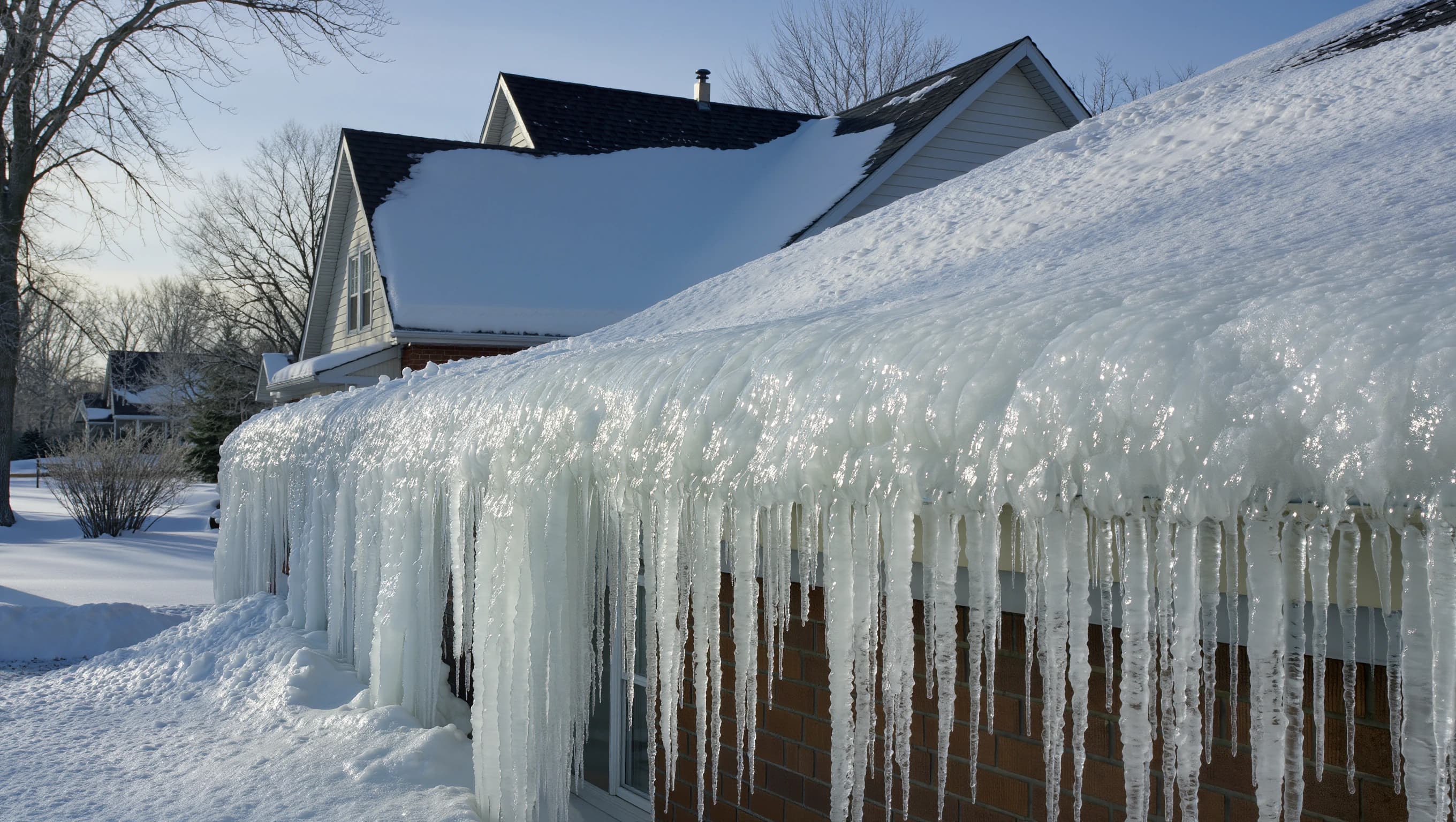
Giant icicles, unlike small decorative ones, almost always signal a well-established ice dam: a thick buildup of ice at the roof edge that forces meltwater to back up under the shingles. It's not just cosmetic — it's an active sign of infiltration happening or about to happen, on top of the risk of heavy falling ice. Unlike small icicles you can just monitor, giant icicles warrant prompt professional snow or ice removal, especially if they come back in the same spot every year.
What's Happening?
A giant icicle doesn't form overnight. It results from multiple melt-refreeze cycles where a significant amount of water continuously runs down the same spot on the roof, usually above an ice dam that's already established along the gutter line.
The thicker the ice dam, the more water it holds back, and the bigger the icicles feeding off it grow. Icicle size is therefore a direct indicator of how big the dam is: an icicle a few centimeters long suggests a minor issue, while one 30, 60 cm or longer suggests substantial ice buildup along the whole roof edge.
This usually gets worse with each new round of snow followed by a thaw, which is why giant icicles tend to show up in January-February in Quebec, after several consecutive winter cycles.
Is It Dangerous?
Yes, more so than small icicles, and on two fronts at once.
Inspect or act quickly if:
- The icicle exceeds 30 cm and hangs over an entryway, driveway, or parking spot
- You see a thick, continuous band of ice along the whole gutter, not just isolated icicles
- The gutter looks sagged, pulled down, or detached from the roof
- Water stains appear on the ceiling while the icicles are growing
A giant icicle can weigh several kilograms — falling, it can cause a serious injury or badly damage a vehicle, a railing, or a porch roof below. At the same time, the ice dam feeding it is actively increasing the risk of water getting into the house.
Most Common Causes
| Cause | Explanation |
|---|---|
| Extensive ice dam | A long section of ice built up at the roof edge holds back a lot of meltwater, producing large icicles |
| Very poorly insulated attic | Significant heat loss causes sustained snowmelt over a wide section of roof |
| Heavy, unremoved snow accumulation | The more snow sits on the roof, the more material there is to melt and feed the icicles |
| Gutters and downspouts blocked by ice | Water can no longer drain normally and continuously overflows at the same point |
| Prolonged thaw after a major storm | Fast, sustained melting over several days feeds much bigger icicles than short thaws |
| Low-slope roof or roof valley | These areas naturally hold more snow and standing water, encouraging large icicles |
Why This Happens in Quebec
Quebec winters combine heavy snow accumulation with frequent, sometimes sudden thaws, which creates the perfect conditions for major ice dams and, in turn, large icicles. This is especially pronounced in January and February, after several cumulative freeze-thaw cycles.
Low-slope roofs, common on bungalows and some garage additions, along with older homes with attic insulation that falls short of current standards, are the most affected. Investing in better insulation, potentially with help from a program like Rénoclimat, directly reduces the size of ice dams and, in turn, icicle size year over year.
How to Check It Yourself
From the ground or a window at a safe distance, roughly measure the icicles' length and note whether a thick band of ice runs along the whole gutter or just one section. Also note whether the same spot produces giant icicles every year.
Inside, check the attic for thin or compressed insulation above the affected area, and for any musty odor.
Never try to knock down a giant icicle yourself, and never climb a ladder in winter to reach it: the weight of the ice and the fall risk make this dangerous even for someone experienced. Also avoid walking directly underneath it.
Can I Ignore It?
No. Unlike occasional small icicles, giant icicles indicate an already well-developed ice dam, which means the risk of water infiltration is active, not just potential. Waiting for the ice to melt on its own in spring exposes the house to several more weeks of risk, plus the falling-ice hazard the entire time.
How Much Does It Cost?
| Service | Estimated Price |
|---|---|
| Emergency professional snow/ice removal | $300 - $800 |
| Full removal of a major ice dam | $600 - $1,500 |
| Repairing gutter damaged by ice weight | $300 - $900 |
| Leak repair if water has already gotten in | $400 - $1,500 |
| Attic insulation/ventilation upgrade (prevention) | $1,200 - $3,500 |
These costs fall within the emergency roof repair range ($300 - $1,500) — prompt de-icing remains far cheaper than a major leak repair or a full roof replacement ($6,000 - $18,000).
When to Call a Professional
- One or more icicles exceed 30 cm and overhang a high-traffic area
- A thick band of ice runs the full length of the gutter
- The gutter shows visible sagging or detachment
- Water stains appear on the ceiling while icicles are growing
- The same problem returns every winter despite your efforts to manage it
A professional roof de-icing crew uses low-pressure steam to remove ice without damaging shingles, unlike a hammer or shovel which can make the damage worse — this isn't a job to attempt yourself.
Related Questions
- Are the Icicles Hanging From My Roof Actually Dangerous?
- A Water Stain on the Ceiling But No Visible Leak on the Roof: Where's It Coming From?
- Is It Normal to See Daylight in My Attic?
- Why Do I Hear Cracking Noises In the Attic When It's Windy?
- My Ceiling Is Leaking — Do I Call a Roofer or a Plumber?
- Can I Wait Through One More Winter Before Replacing My Roof?
Frequently asked questions
At what size does an icicle become genuinely concerning?+
An icicle longer than 30 cm, especially over a high-traffic area, deserves prompt attention, particularly if it comes with a thick band of ice along the gutter.
Can I prevent giant icicles before they form?+
Yes: removing snow from the roof after a big snowfall and having good attic insulation and ventilation significantly reduce the risk of the ice dam that produces these large icicles.
Does de-icing salt work to get rid of giant icicles?+
Salt can damage shingles and gutters and isn't recommended on a roof. Professional steam de-icing is the safe method for removing a major ice dam.
Is it worth calling before the icicle falls on its own?+
Yes: waiting for it to fall on its own puts people below at risk and lets the ice dam keep damaging the roof the whole time.
Does a giant icicle automatically mean I already have a leak?+
Not necessarily, but the risk is much higher than with a small icicle. A prompt inspection can confirm whether water has already started seeping in or not.
Get a free quote
More to know before your project.
By Éric Gagné — RBQ-licensed roofer, roofing and roof snow removal specialist
Updated on July 23, 2026