
My Kitchen Range Hood Drips Water Onto My Stove in Winter: Why?
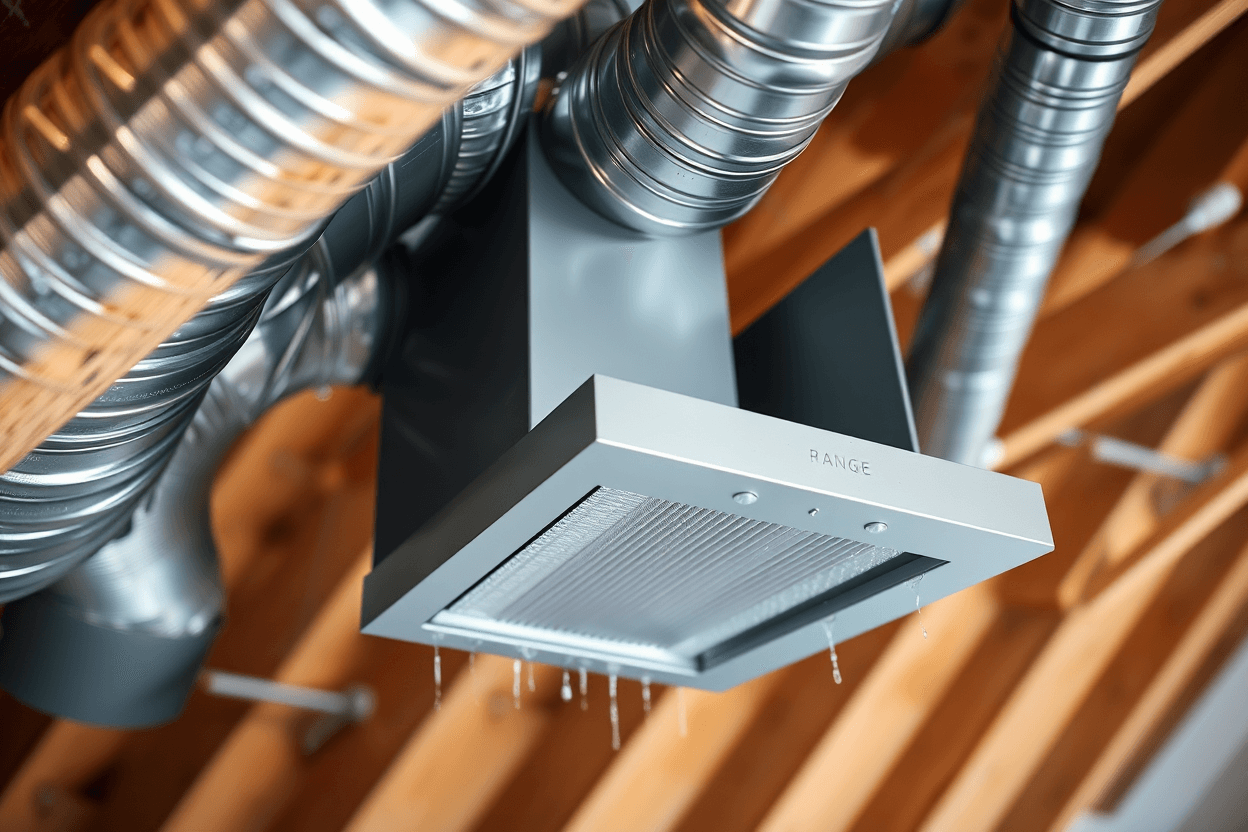
If water is dripping from your kitchen range hood in winter, it's almost always condensation forming inside the exhaust duct, not a roof leak. Warm, moist kitchen air cools suddenly as it passes through a poorly insulated duct in a cold attic, water collects, and it runs back down toward the hood.
What's Happening?
- The range hood pushes warm, moist cooking air outside, usually through the roof or a wall, passing through the attic along the way.
- If that duct isn't insulated (or only partially insulated) along a cold stretch, the warm air hits a cold surface and condenses, the same way fog forms on a cold glass.
- Water collects inside the duct, often at a bend or a low point, then runs downhill toward the lowest spot: the hood itself.
- A stuck or poorly adjusted backdraft damper can make it worse by letting cold outside air into the duct more easily.
Is It Dangerous?
- No, it isn't an immediate safety hazard.
- That said, moisture building up in or around the duct can eventually damage cabinets, ceiling finish, or encourage mold if it goes on for more than a winter or two.
- It's not an emergency, but it's not something to ignore indefinitely either.
Most Common Causes
| Cause | Frequency |
|---|---|
| Duct not insulated, or only partially insulated, through the attic | Very common |
| Duct too long or with too many bends, cooling the air over a long run | Common |
| Stuck or damaged backdraft damper | Common |
| Sagging flexible duct creating a low point where water pools | Common |
| Poorly oriented exterior outlet letting in cold air | Less common |
| Duct too narrow for the hood's airflow, creating turbulence | Rare |
Why This Happens in Quebec
Quebec winters create a huge temperature gap between cooking air (often loaded with water vapor from boiling pasta, simmering broth, or just boiling water) and an attic that can drop well below -20°C. That gap drives far more condensation than in a milder climate, especially in older homes where the range hood duct was added later without proper insulation.
How to Check It Yourself
- Run the hood on high while boiling a large pot of water, and check for drips after 10-15 minutes.
- If you can safely access the attic, look at the duct directly: check for visible condensation, ice, or a torn or missing insulation sleeve.
- Check that the backdraft damper at the exterior outlet opens and closes freely, without sticking.
- Note whether it gets worse on very cold days — that pattern almost always confirms condensation rather than a water intrusion problem.
Can I Ignore It?
You can use a towel or a small container as a temporary fix to protect the stove, but ignoring the cause for more than one season risks damaging ceiling finish or cabinets, and can encourage mold inside the duct or the surrounding attic space.
How Much Does It Cost?
| Fix | Estimated Cost (CAD) |
|---|---|
| Inspecting and insulating a section of duct | $150-$350 |
| Full ventilation duct system cleaning | $300-$700 |
| Backdraft damper replacement | $100-$250 |
| Full duct run reconfiguration (more complex cases) | $500-$900 |
A targeted fix (insulation or a damper swap) usually falls at the low end of these ranges rather than the cost of a full system cleaning.
When to Call a Professional
- If water keeps dripping despite a temporary fix, or if you spot mold in the duct or attic.
- If the backdraft damper looks broken, stuck, or missing entirely.
- If you can't safely access the duct in the attic yourself.
- A ventilation installer can properly insulate the duct, adjust or replace the damper, and confirm the full run meets current standards.
Related Questions
- I Hear Noise in My Ducts: Squirrel, Raccoon, or Dead Animal?
- How Can a Clogged Dryer Vent Cause a Fire?
- My House Smells Weird But I Can't Tell If It's the Chimney, the Ducts, or the Plumbing
- My Basement Is Damp — Is It a Plumbing, Foundation, or Ventilation Problem?
- My Garage Has Smelled Musty Since Spring: Why and What to Do
- My Baby's Room Feels Humid Even With the AC On: Why & What to Do
- Is It Normal to See Daylight in My Attic?
Frequently asked questions
Can I insulate the duct myself?+
If the duct is easily accessible in the attic, an insulation sleeve can reduce the problem temporarily. But a rushed job often leaves gaps that recreate the same issue, so a professional inspection is still the best way to fix it for good.
Will this damage my cabinets or ceiling?+
Not right away, but repeated moisture over several winters can swell wood, discolor finishes, or encourage mold if water seeps between the duct and the ceiling.
Is this the same as a roof leak?+
No. A roof leak usually shows up regardless of whether the hood is running, often after rain or snowmelt. This problem shows up mainly during or after cooking, and gets worse on very cold days — that's the most reliable sign it's condensation.
Should I stop using the hood in the meantime?+
No, you can keep using it normally. Just place a towel or a small container to protect the stove until it's inspected.
Get a free quote
More to know before your project.
By Sophie Bouchard — Certified chimney sweep, residential fire safety specialist
Updated on July 24, 2026