
Is It Safe to Light My Wood Fireplace With a Young Child Who's Starting to Walk?
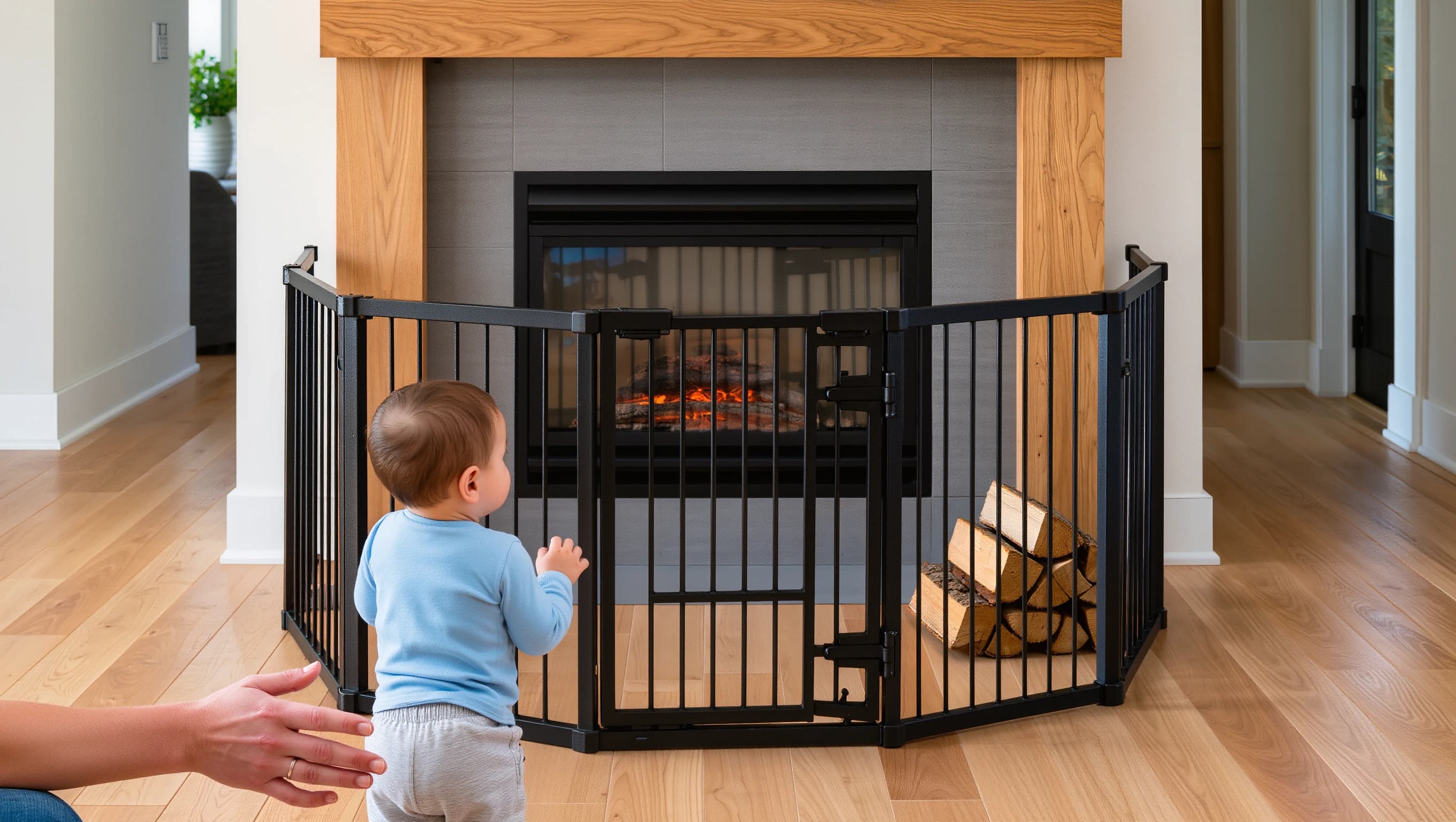
Yes, you can safely light your fireplace with a young child who's walking, but it takes more than just supervision. The biggest threat isn't smoke, it's direct contact: a hand or foot touching the hot glass or metal frame, or a fall against the hearth. Add a physical barrier anchored to the floor, keep the glass door or screen closed during and after a fire, and have the chimney inspected if it's been over a year. Those three things make the real difference.
What's Happening?
A young child learning to walk is drawn to the movement and light of a fire but has no concept of danger and no reflexes to catch themselves if they fall. A fireplace glass panel, even a "closed" or double-pane one, can reach 200°C (400°F) and stay hot for 45 to 90 minutes after the fire goes out, plenty long enough to burn a small hand pressing against it while learning to walk.
The metal frame around the opening also heats up, and the stone or brick hearth surface becomes a fall risk with hard edges. So the real danger isn't smoke or the room's ambient heat, it's direct contact and physical proximity while the child explores their environment at fireplace height.
Is It Dangerous?
It can be, but it's a manageable risk, not a reason to give up your fireplace. The danger comes from three sources: contact burns from the glass or frame, falls against the hearth, and, more rarely, smoke or carbon monoxide exposure if the draft is poor or there's no CO detector.
Inspect or act immediately if:
- The fireplace glass is cracked or the protective screen is missing or damaged.
- There's no working carbon monoxide detector in the house, especially on the bedroom level.
- You notice smoke coming into the room instead of going up the chimney.
- The chimney has never been inspected since you bought the house, or not in over two years.
- The child has already touched or gotten dangerously close to the hot glass.
Outside of those situations, a well-maintained fireplace with the right physical barriers isn't any more dangerous than a kitchen stove, as long as you follow the same basic precautions.
Most Common Causes
| Cause | Explanation |
|---|---|
| No physical barrier anchored to the floor | A decorative screen alone doesn't stop a child from going around or pushing it over; you need an anchored barrier that creates real safe distance. |
| Glass still hot long after the fire is out | Parents often underestimate cooldown time, assuming the glass is safe as soon as the flames are out. |
| Chimney never inspected | Without a recent inspection, you don't know the real state of the draft, the cap, or creosote buildup, all factors that affect the risk of smoke entering the room. |
| Missing CO detector or dead battery | It's the only protection against an invisible risk (carbon monoxide) that neither parents nor a child can detect on their own. |
| Attractive objects or decorations near the hearth | Logs, fireplace tools, or decorative items within reach become both temptations and risks of cuts or falls. |
Why This Happens in Quebec
Wood fireplaces remain very common in Quebec homes, especially in bungalows and country houses built before the 1990s, where they often served as a main supplemental heat source in winter. Many young families buy these houses with a fireplace already in place, without knowing how long it's been since the previous owner had it inspected.
Baby and first-steps season also often coincides with the cold season when the fireplace gets the most use, from November to March. That's exactly when a young child starts exploring the house on two legs, which is why this question comes up every fall with new parents.
How to Check It Yourself
You can safely assess several things:
- Touch the glass (once fully cooled, several hours after the fire) to gauge how easily accessible it would be at a walking child's height.
- Check that the carbon monoxide detector works (test button) and that the battery isn't near the end of its life.
- Look at whether the screen or glass door closes properly with no gap.
- Watch for smoke escaping into the room when a fire starts, a possible sign of a draft problem worth checking.
- Spot objects at child height near the hearth (logs, tools, a slippery rug) and remove them from the reachable zone.
Never try to inspect the inside of the flue or the cap yourself, and never climb onto the roof. Never leave a child alone near a lit or recently extinguished fireplace, even for a few seconds while you "just answer the phone."
Can I Ignore It?
No, not entirely, but that doesn't mean giving up the fireplace. Ignoring physical safety precautions (a barrier, a closed glass door) exposes the child to a real risk of burns, the most common fireplace-related household injury among young children.
Skipping a chimney inspection because "it's always worked fine" is different: the risk builds gradually with creosote accumulation and cap wear, but it isn't an immediate danger if the fireplace has been inspected within the last two years.
How Much Does It Cost?
| Safety Measure | Estimated Cost (CAD) |
|---|---|
| Full chimney inspection | $150 - $350 |
| Carbon monoxide detector (purchase and installation) | $40 - $100 |
| Floor-anchored fireplace safety barrier | $80 - $250 |
| Glass door or protective screen (installation or replacement) | $250 - $700 |
| Sweep, if the inspection reveals buildup | $150 - $350 |
The combination of inspection, barrier, and CO detector is generally a $300 to $600 investment to make an existing fireplace safe, well below the cost of giving it up entirely or having it closed off.
When to Call a Professional
- It's been over a year since the chimney was inspected or swept.
- You just bought the house and have no maintenance history for the fireplace.
- The glass, screen, or fireplace frame shows signs of wear, cracking, or looseness.
- You want to install a permanent glass door or protective screen suited to a young child.
- You notice smoke in the room, a persistent odor, or a CO detector going off.
A certified chimney sweep checks things a parent can't assess alone: the interior condition of the flue, the integrity of the cap, and whether the draft is working properly, factors that directly affect the risk of smoke or CO in a home with a young child.
Related Questions
- Can I Light My Fireplace This Winter If I've Never Had It Inspected Since Buying the House?
- Creosote and Chimney Fire Risk: What You Need to Know
- Why Does Smoke Come Into My Living Room Instead of Going Up the Chimney?
- How Often Should a Chimney Be Swept
- 10 Signs Your Chimney Needs Sweeping
- Home Insurance and Chimney Sweep Certificates: What to Know
- Why Is There Black Soot Around My Fireplace Opening?
Frequently asked questions
Can I keep using my fireplace once my child is walking, or should I stop entirely?+
You can keep using it, you just need to add a floor-anchored physical barrier and keep the glass door or screen closed during and after the fire. Stopping entirely is only necessary if the chimney itself is in poor condition.
Is it normal for the fireplace glass to stay hot long after the fire is out?+
Yes, that's normal and expected: the glass can stay hot for 45 to 90 minutes after the flames go out. That's exactly why a physical barrier needs to stay up well after the fire looks extinguished.
How much does a child-safe fireplace barrier cost?+
A floor-anchored barrier typically costs between $80 and $250, depending on the size of the fireplace and the material. It's one of the cheapest and most effective safety investments you can make.
Should I have my chimney inspected every winter if I have a young child?+
An annual inspection is recommended for any fireplace used regularly, with or without children. With a young child, it becomes even more important because a draft problem or smoke entering the room exposes them directly.
Is a standard smoke detector enough, or do I really need a separate carbon monoxide detector?+
You need both: a standard smoke detector does not detect carbon monoxide, which is invisible and odorless. A dedicated (or combo) CO detector is essential in any home with a wood fireplace, especially near bedrooms.
Get a free quote
More to know before your project.
By Sophie Bouchard — Certified chimney sweep, residential fire safety specialist
Updated on July 23, 2026