
My Neighbor Has a Drainage Problem That's Affecting My Property — What Can I Do?
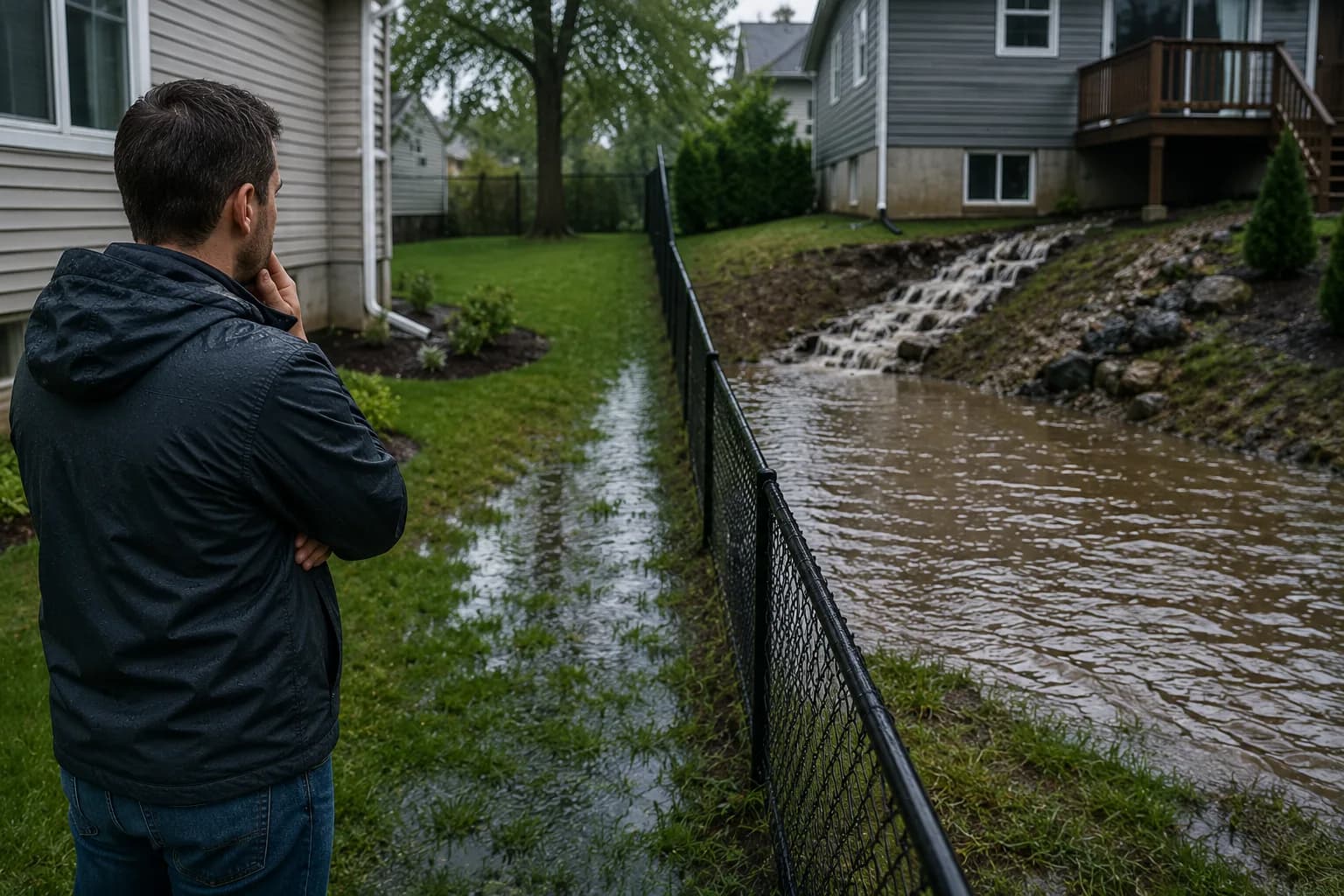
Yes, a drainage problem on a neighbor's property that affects yours is generally your legal business as much as theirs — Quebec's Civil Code specifically governs runoff water between neighboring properties. It's almost never an emergency that puts your home in immediate danger, but repeated dampness in your basement or yard can cause real damage over time. The right first step is almost always to document the problem and talk to your neighbor before going further.
What's Happening?
Water always follows the path of least resistance. If your neighbor's lot sits higher than yours, is poorly graded, or their gutter or French drain empties toward the property line instead of somewhere else, that water will naturally end up on your side — in your yard, against your foundation, or worse, in your basement.
It can also be a wastewater issue: a failing neighboring septic system, a blocked sewer line backing up toward a lower lot, or a poorly made connection between two properties sharing an older section of pipe, especially in neighborhoods built before modern municipal stormwater rules existed.
Either way, the source of the problem isn't on your land, but the consequences — a damp basement, a deteriorating foundation, an odor — very much are.
Is It Dangerous?
This usually isn't an emergency that threatens your immediate safety, except in the case of a sewage backup. But chronic dampness isn't something to shrug off long-term either.
Inspect or act quickly if:
- You smell a sewage odor in your basement or yard
- Standing water regularly appears against your foundation after every rain
- You see cracks widening in your foundation
- Water reaches an electrical panel, heat pump, or any basement equipment
- There's a visible sewage backup in a floor drain
Occasional exposure to clean runoff water after a heavy rain usually isn't dangerous on its own, but it becomes a serious problem if it repeats and saturates the soil around your foundation.
Most Common Causes
| Cause | Explanation |
|---|---|
| Neighboring lot graded toward your property | The natural or modified slope of the land directs rain and meltwater toward you instead of the street or a ditch |
| Neighbor's gutters or French drain misdirected | Their roof or foundation water is discharged right at the property line instead of being routed elsewhere |
| Failing septic system or sewer connection | A full septic tank or cracked pipe lets wastewater seep into the ground and migrate toward your property |
| Blocked shared or municipal ditch between properties | A poorly maintained shared ditch overflows and spreads water on both sides |
| Recent landscaping on the neighbor's property | A patio, pool, or landscaping project changed the natural slope without accounting for water flow |
| Shared or old plumbing between two properties | In older neighborhoods, some services were historically shared or poorly separated between two lots |
Why This Happens in Quebec
Spring thaw and heavy fall rains create large volumes of water in a short time, which stress-tests any poorly oriented drainage between two lots. In older Montreal and Quebec City neighborhoods, many properties were built before strict municipal stormwater regulations existed, so the original grading didn't always account for the neighboring lot.
Quebec's Civil Code (notably articles 979 and 981) specifically governs water that naturally flows from a higher lot to a lower one, and forbids a property owner from artificially worsening that flow — which gives you a clear legal basis if the problem comes from something the neighbor built rather than the land's natural slope.
How to Check It Yourself
Watch where water shows up on your property after a rain and try to trace it visually: a neighbor's gutter emptying toward your lot, a slope that clearly runs from their side down to yours, or an area that's always soggy near the same section of the property line.
Take dated photos and videos of each episode, note the weather and how often it happens — this documentation is essential if you need to file a complaint with the municipality or pursue a legal remedy later.
Do not dig on the neighbor's property or touch any plumbing that isn't yours, even just to "take a look" — you're exposing yourself to unnecessary legal complications. If you suspect a sewage backup, do not wade into suspicious standing water: it may be contaminated.
Can I Ignore It?
It depends on how severe and how frequent it is. A bit of occasional dampness after an exceptional storm can be monitored without panic. But a problem that repeats every heavy rain or every thaw should not be ignored.
Water that repeatedly infiltrates against your foundation eventually creates cracks, encourages basement mold, and can affect your home's resale value if the issue is visible during a pre-purchase inspection. The longer you wait to raise it with the neighbor or the municipality, the harder it can become to establish proof of responsibility, and the more the damage on your side can add up.
How Much Does It Cost?
| Service | Estimated Price (CAD) |
|---|---|
| Drainage inspection and expert report (to support a complaint) | $300 - $700 |
| Fixing drainage on your own property (grading, partial French drain) | $1,500 - $5,000 |
| Emergency drain clearing if sewage backs up on your side | $150 - $450 |
| Full French drain system around your foundation | $8,000 - $15,000+ |
An expert report isn't always necessary if the neighbor cooperates and fixes the problem quickly — but if the matter needs to go to the municipality or small claims court, that document often becomes the key evidence linking the neighbor's landscaping to the damage on your property.
When to Call a Professional
- Water regularly reaches your foundation or enters your basement
- You detect a persistent sewage odor that could point to a sanitary issue
- The neighbor isn't cooperating after an initial friendly conversation
- You need a technical report to support a municipal complaint or legal claim
- Foundation cracks are appearing or widening near the affected area
- You're not sure whether the problem is on your land, the neighbor's, or a shared municipal drain
A plumber or drainage expert can objectively confirm where the water is coming from and document the damage — a neutral technical file is often what unlocks a situation where two neighbors disagree about who's responsible.
Related Questions
- My Basement Is Damp — Is It a Plumbing, Foundation, or Ventilation Problem?
- My Basement Smells Like Sewage After It Rains: Causes & Fixes
- Why Are There Always More Plumbing Emergencies During the Spring Thaw?
- That Floor Drain In My Basement — Should I Be Worried About It?
- How Do I Know If There's a Water Leak Behind My Wall?
Frequently asked questions
Can I sue my neighbor directly over a drainage problem?+
It's possible, often through small claims court if the damage amount is limited, but it's generally a last step. Start with a friendly conversation and a municipal complaint, keeping your photo and video evidence along the way.
Can the municipality help before this becomes a legal matter?+
Yes, many Quebec municipalities have a service that handles drainage complaints between neighbors, especially if a zoning bylaw on lot grading is involved. It's often faster and cheaper than a legal remedy.
Who pays to repair damage caused by the neighbor's water?+
In theory, if the problem stems from something the neighbor built that worsens the natural water flow, they can be held responsible for the damage. In practice, it's often negotiated amicably or partly covered by both parties' insurance.
Does my home insurance cover damage caused by my neighbor?+
Often yes for damage on your own property regardless of the source, but check your policy for exclusions related to groundwater or surface water infiltration. Your insurer can then pursue the neighbor's insurer if their liability is established.
Can I just fix the drainage on my own property without addressing the source?+
You can mitigate symptoms on your side with a French drain or regrading, but if the neighbor's water volume doesn't decrease, you risk just shifting the problem or paying to manage it yourself indefinitely.
Get a free quote
More to know before your project.
By Julien Fortin — RBQ-licensed plumber, 10 years of experience in residential plumbing
Updated on July 23, 2026