
Creosote, Draft, Cap: The Chimney Glossary
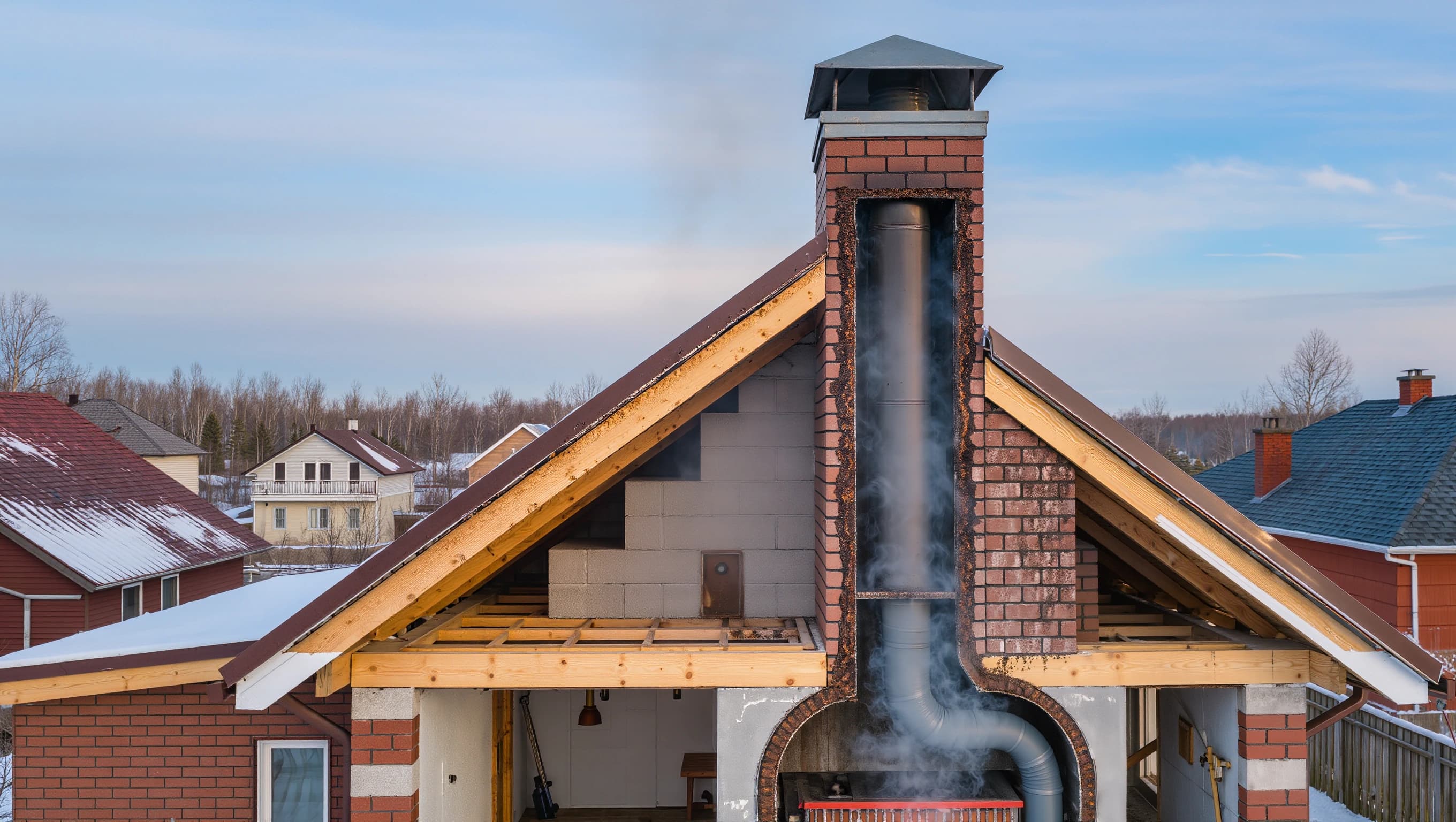
An inspection report or sweep estimate is full of technical terms that, once understood, let you ask the right questions and spot a serious problem at a glance.
Glossary at a glance
| Term | Quick definition |
|---|---|
| Creosote | Black flammable residue from wood combustion |
| Draft | Upward airflow that carries smoke out |
| Cap | Cover that protects the top of the flue |
| Liner | Inner tube that protects the masonry |
| Crown | The part of the chimney above the roofline |
| Damper | Plate that opens/closes the flue |
| Flashing | Metal seal between chimney and roof |
| Backpuffing | Brief smoke backflow into the room |
Creosote
A black, flammable residue that forms on flue walls when wood smoke cools and condenses. Its buildup in large quantities is the leading cause of chimney fires. It's classified into three severity grades, with Grade 3 (glazed or tar-like) being the most dangerous and the most costly to remove.
Draft
The natural upward airflow that carries smoke out of the house. Insufficient draft ("lazy draft") promotes creosote buildup and can push smoke back into the home — often caused by a flue that's too cold, poorly sized, or obstructed.
Chimney cap
The metal cover installed at the top of the flue, keeping rain, snow, debris, and animals out while letting smoke escape. A missing or damaged cap is one of the most common causes of water infiltration and animal nesting.
Liner
The inner tube of the flue — clay or stainless steel — that protects the surrounding masonry from heat and corrosive combustion byproducts. A cracked liner is a serious deficiency requiring repair before continued use.
Chimney crown
The part of the chimney that extends above the roofline, directly exposed to the elements and therefore the most prone to freeze-thaw deterioration.
Damper
The movable plate that closes or opens the flue when the fireplace isn't in use, to prevent heat loss and keep animals from entering.
Flashing
The metal seal that closes the gap between the chimney and the roof, keeping water from infiltrating this particularly vulnerable spot. Failed flashing is a frequent cause of water damage wrongly blamed on the chimney itself.
Single-wall vs double-wall pipe
A double-wall pipe has an insulating gap between two metal layers, reducing heat loss and excessive condensation risk — generally required when connecting a stove to a prefabricated chimney.
Chimney fire
The ignition of creosote buildup directly inside the flue, capable of reaching extreme temperatures and seriously damaging the structure, even when it goes unnoticed from inside the house.
Backpuffing
A phenomenon where smoke is briefly pushed back into the room instead of rising through the flue, often caused by insufficient draft or negative air pressure in the house — for example when a kitchen range hood or bathroom fan runs at the same time as the fireplace.
Frequently asked questions
What's the difference between Grade 1, 2, and 3 creosote?+
Grade 1 is a light powder, Grade 2 a denser flaky crust, and Grade 3 a glazed or tar-like deposit requiring special treatment before removal.
Is lazy draft dangerous?+
Yes — beyond the discomfort of smoke in the house, poor draft accelerates creosote buildup and can contribute to carbon monoxide backflow.
Get a free quote
More to know before your project.
By Sophie Bouchard — Certified chimney sweep, residential fire safety specialist
Updated on July 23, 2026