
Can I Pour Cooking Oil Down the Sink If I Run Hot Water After?
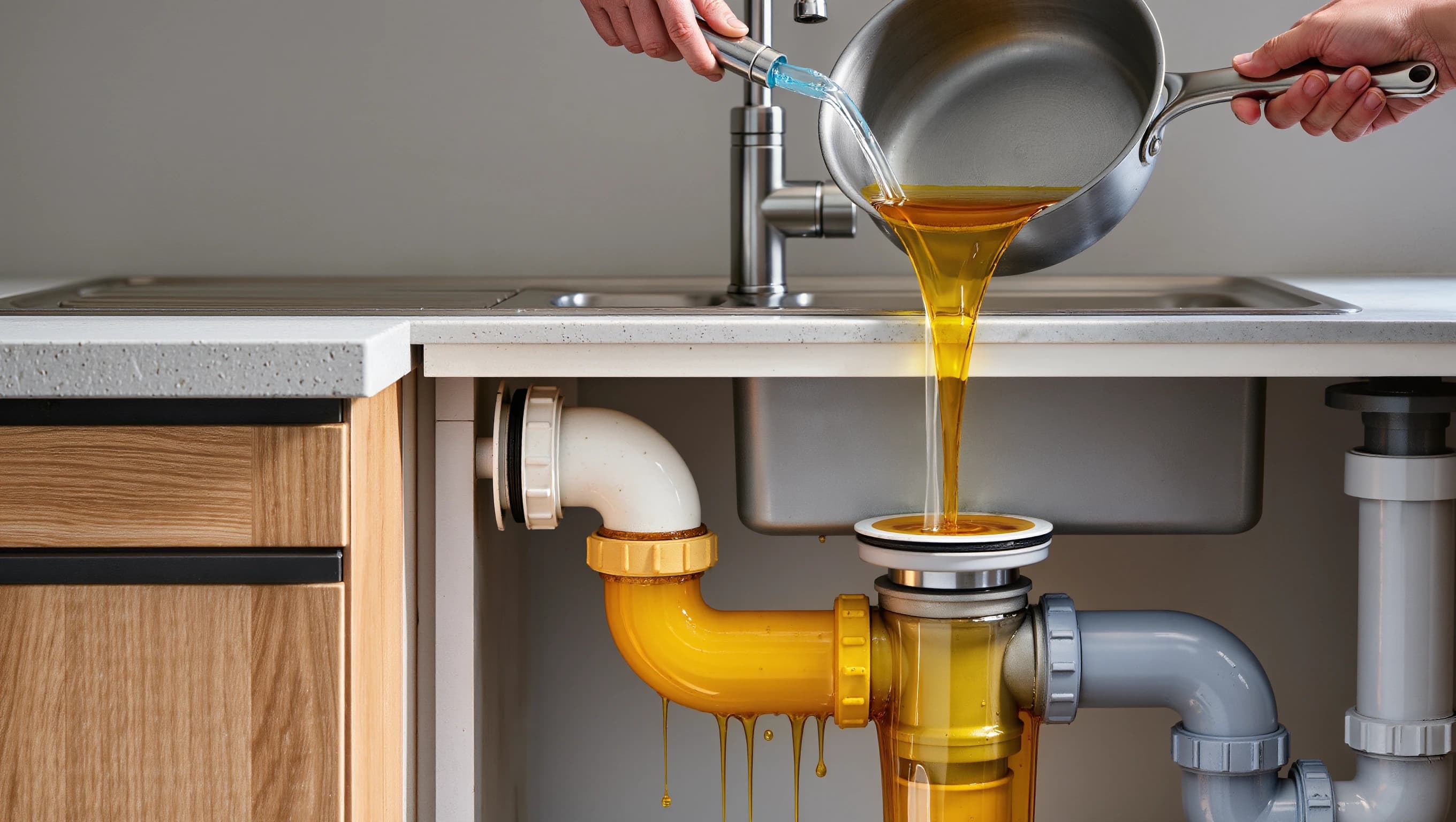
No, pouring cooking oil down the sink with hot water doesn't prevent drain problems, it just delays them. Hot water keeps the oil liquid only while it's moving through your pipes; further down the line, where the water cools, the oil solidifies and sticks to the walls. This is one of the most common causes of clogged drains and sewer backups in Quebec, especially in winter. The right practice: never in the sink, always in a container in the trash or recycling.
What's Happening?
Cooking oil (vegetable oil, bacon grease, melted butter) stays liquid as long as it's hot. That's exactly what creates the illusion that "hot water solves the problem" — the oil slides easily down the drain while it's still hot.
The problem is the heat doesn't last. As soon as the oil reaches a cooler section of pipe — often just a few meters away, or in outdoor pipes, or in the municipal sewer itself — it cools, thickens, and eventually solidifies. It then sticks to the inside walls of the pipes like grease in a cooling pan.
Over time, these grease deposits build up, trap other debris (food residue, hair, toilet paper) and form a compact clog — called a "fatberg" in extreme cases — that can reduce or completely block the flow.
Is It Dangerous?
It's not dangerous for your immediate safety, but it can become a real plumbing problem and even a public health issue. It's not a harmless habit.
Inspect or act immediately if:
- Your sink or tub is draining more and more slowly after recently pouring oil down it.
- You smell a sewage odor near the sink or floor drain.
- Water or residue backs up into another fixture (toilet, tub) when you drain the sink — a possible sign of a clog further down the system.
- You notice a backup in the basement, which can indicate a major blockage in the main line.
Most Common Causes
| Cause | Explanation |
|---|---|
| Oil or grease poured directly down the sink | The number one cause of grease-related residential drain clogs. |
| "Rinsing" with hot water after frying | Moves the problem further down the pipes instead of solving it. |
| Gradual buildup over several months | Each small amount adds a layer of grease that shrinks the pipe's usable diameter. |
| Pureed food scraps through the garbage disposal | The disposal doesn't dissolve grease; it fragments it, which can worsen buildup. |
| Syrup, butter, or grease-based sauces poured while washing dishes | Often overlooked, but contribute to the same problem as cooking oil. |
| Aging drain pipes with insufficient slope | Slow the flow, giving grease more time to settle. |
Why This Happens in Quebec
Quebec winters make this problem especially bad. Drain pipes running near exterior walls or through unheated basements cool much faster than in summer, which speeds up how quickly oil solidifies along the way. What would flow fine in July can clog a drain in January.
Quebec municipalities, including Montreal, regularly run awareness campaigns against pouring grease down drains, because grease buildup in municipal sewer networks causes collective backups that are costly to clean up, on top of the individual problems in each home.
How to Check It Yourself
Watch your kitchen sink's drain speed compared to other drains in the house: a gradual slowdown over several weeks, with no obvious cause, often points to grease buildup rather than a one-time clog.
Smell near the drain: a rancid or sewage-like odor can signal decomposing grease in the trap or further down the pipes.
You can try a light cleaning with very hot water and degreasing dish soap poured in slowly, but avoid strong chemical drain openers if you have older or fragile PVC piping — they can damage it. Never try to clear a main drain or stack yourself with mechanical tools; leave that to a professional equipped to avoid damaging the pipes.
Can I Ignore It?
No, not if it's a repeated habit. A one-time pour that's well flushed rarely causes an immediate problem, but the buildup is cumulative and invisible until the drain starts slowing, then blocks completely — often at the worst possible moment.
The longer you wait, the harder and more expensive the clog becomes to remove, since hardened grease combined with other debris forms a compact mass that resists simple methods like a plunger.
How Much Does It Cost?
| Service | Estimated cost |
|---|---|
| Simple drain clearing (sink) | $150 - $300 |
| Emergency clearing, blocked main drain | $250 - $450 |
| Camera inspection to locate the clog | $150 - $350 |
| Hydro-jetting (high-pressure flush) | $300 - $600 |
When to Call a Professional
- The kitchen drain flows very slowly despite home cleaning attempts.
- You smell a persistent sewage odor around the sink or in the basement.
- Multiple fixtures are affected at the same time, a sign of a blockage in the main stack rather than a single drain.
- You've regularly poured grease down the drain for years and never had your drains inspected — preventive cleaning can avoid a full backup.
Related Questions
- Can Vinegar and Baking Soda Actually Unclog a Drain, or Is That a Myth?
- Can I Pour Coffee Grounds Down My Sink?
- My Basement Smells Like Sewage After It Rains: Causes & Fixes
- Why Does My Tub Drain Very Slowly While the Sink In the Same Bathroom Works Fine?
- My Toilet Gurgles When the Washing Machine Drains: What Does It Mean?
- That Floor Drain In My Basement — Should I Be Worried About It?
Frequently asked questions
Is a small amount of oil now and then really a big deal?+
A tiny amount poured rarely causes little immediate harm, but the effect is cumulative — each pour adds a thin layer of grease that stays on the walls. It's best to get in the habit of wiping pans before washing dishes.
Doesn't degreasing dish soap solve the problem since it dissolves grease?+
It helps disperse a small amount, but doesn't dissolve grease that's already solidified further down the pipes. For large amounts of oil, it's no substitute for proper disposal in the trash.
How should I properly dispose of cooking oil?+
Let it cool, pour it into a sealable container (like the original container or a glass jar), then throw it in the trash or bring it to an ecocenter that accepts used oil for recycling.
Should I call a professional right away if my sink drains slowly?+
Not necessarily urgently if it's mild and recent — try hot water and degreasing soap first. But if it persists more than a week or worsens, a professional clearing prevents a complete blockage.
Does a garbage disposal protect my drain from oil?+
No, the disposal fragments food but doesn't process liquid or solidified grease. Oil still sticks to pipe walls even with a disposal installed.
Get a free quote
More to know before your project.
By Julien Fortin — RBQ-licensed plumber, 10 years of experience in residential plumbing
Updated on July 23, 2026