
Could My Home's Old Cabinets or Trim Contain Lead Paint That's Dangerous for My Child?
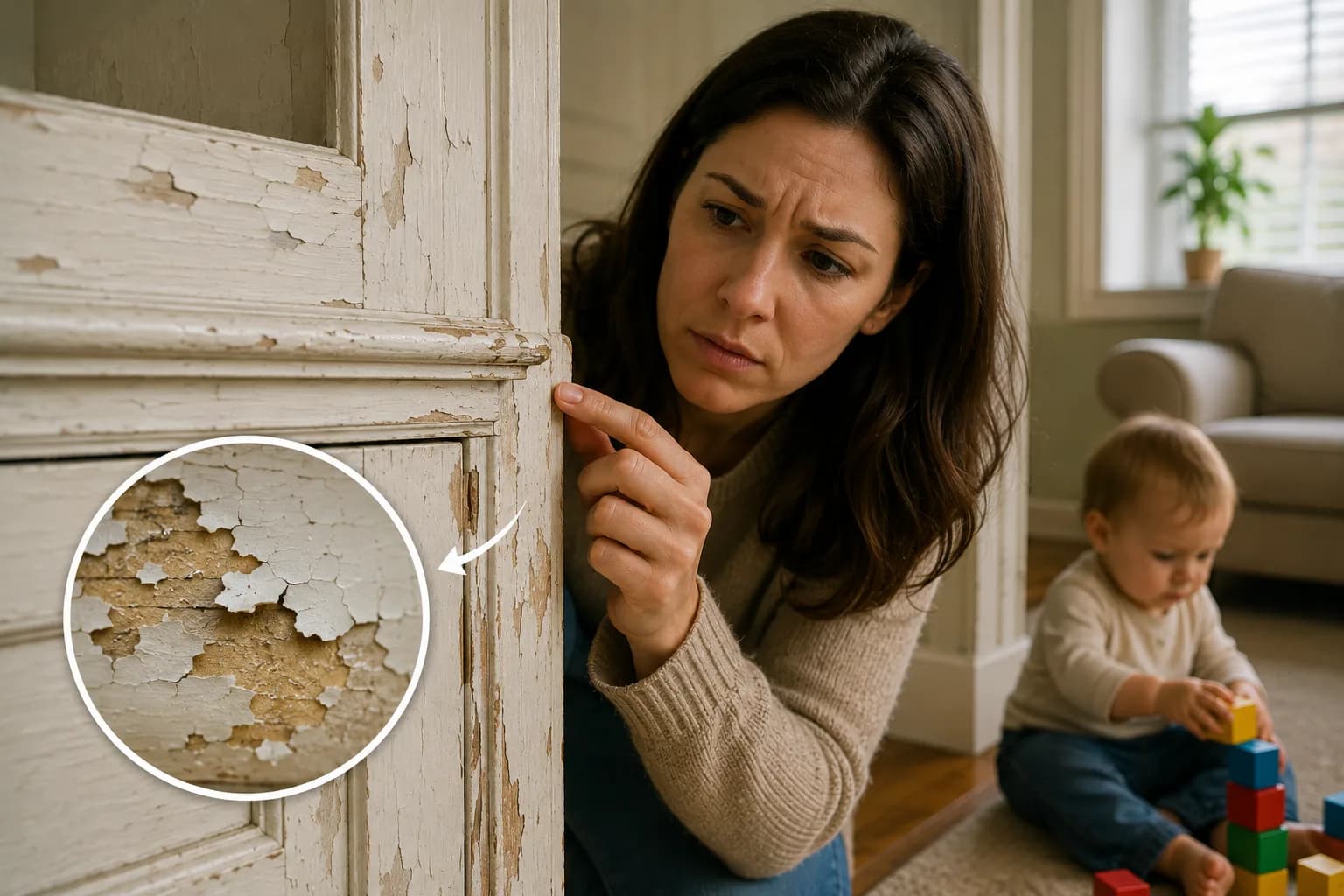
Yes, it's possible if your home was built before 1960, and the risk is real especially for children under 6. The danger rarely comes from paint that's intact and in good condition — it comes from paint that's peeling, cracking, or sanded without precaution during a renovation, which creates chips and dust that young children can ingest. Before sanding, scraping, or demolishing old painted surfaces, test them first.
What's Happening?
Lead paint was commonly used in Canada until the 1950s and 1960s because it hardened well and resisted wear. It was banned for residential use in 1976, but older homes often have multiple accumulated layers, including buried lead layers under more recent, lead-free paint.
The danger isn't the presence of lead itself — intact, well-adhered paint doesn't expose anyone to much. The danger appears when the paint deteriorates: it peels, forms a cracked "alligator" pattern, or gets disturbed by sanding, scraping, or demolition during a renovation.
Young children are most at risk because they often put their hands and objects in their mouths, and because old windowsills or trim are exactly at their grabbing height.
Is It Dangerous?
Yes, potentially, for children under 6 in particular. Lead ingested or inhaled as dust can harm a child's neurological development, even in small repeated doses.
Act quickly if:
- paint is peeling or cracking in an area a child can reach
- you're planning to sand or scrape old paint without containment or protection
- you've seen a child chewing on a windowsill, trim, or a painted railing
- an ongoing renovation is disturbing old paint layers that haven't been tested first
Most Common Causes
| Cause | Explanation |
|---|---|
| Home built before 1960 | Lead paint was commonly used up until this period |
| Accumulated paint layers never removed | Older lead layers remain under more recent coats applied without stripping first |
| Original window frames and trim | These surfaces are often the least renovated and most exposed to friction (opening/closing) |
| Painted over without proper stripping | Painting over an underlying lead layer without addressing it doesn't fix the problem long-term |
| Contaminated exterior soil | Exterior lead paint that flaked off over the years may have contaminated soil near the foundation |
Why This Happens in Quebec
Quebec's housing stock includes a large number of homes built before 1960 — Montreal triplexes and duplexes, centuries-old masonry homes, postwar bungalows in many regions. These homes have often kept their original woodwork, window frames, and trim — exactly the surfaces most likely to hold multiple layers of old paint.
The recent renovation boom also raises the risk: many homeowners are renovating these older homes without realizing that sanding or demolishing old painted surfaces can release lead dust, especially in rooms occupied by young children.
How to Check It Yourself
- Use a hardware-store lead test kit (a swab that changes colour on contact with lead) on old painted surfaces
- For a reliable confirmation, send a paint chip sample to a specialized lab
- Look visually for a cracked or flaking paint pattern, typical of aging lead paint
- Check your home's construction year with the municipality if you don't know it
Do not dry-sand, scrape, or heat-strip old paint without testing the surface first and without proper containment — that's the fastest way to spread lead dust throughout the house.
Can I Ignore It?
It depends. If the paint is intact, well-adhered, and you don't plan to disturb it, the immediate risk is low — encapsulation (painting over it with a new, well-adhered coat) is often enough in the short term.
No, you cannot ignore it if you're planning to renovate: removing cabinets, sanding a floor, demolishing a wall, or stripping old trim without testing first. This work disturbs layers that were otherwise stable, and the resulting exposure for a child can have effects that aren't reversible.
How Much Does It Cost?
| Service | Estimated Price |
|---|---|
| At-home test kit | $15 - $40 |
| Lab test on a paint sample | $30 - $80 |
| Certified lead inspection (whole house) | $300 - $600 |
| Professional encapsulation (per room) | $500 - $1,500 |
| Full professional decontamination/abatement | $1,000 - $5,000+ depending on scope |
These costs generally add to a kitchen renovation budget ($15,000 to $50,000) when old cabinets or surfaces need to be removed — it's better to plan for them upfront than to discover them mid-project.
When to Call a Professional
- Before sanding, scraping, or demolishing painted surfaces in a home built before 1978
- If a child has been seen chewing on or ingesting paint chips — also contact a healthcare professional right away
- If paint is peeling in a child's bedroom or play area
- If you're planning a major renovation that will disturb old paint layers
A certified lead-management professional has the containment and protective equipment needed to remove or encapsulate paint without spreading dust through the rest of the house — a precaution a DIY sanding job can't guarantee.
Related Questions
- How Long Should I Really Wait Before Painting New Drywall?
- Why Won't My New Kitchen Cabinets Close Properly Anymore After a Few Months?
- My Contractor Disappeared In the Middle of the Job — What Do I Do?
- Do I Need a Permit to Finish My Basement?
- Why Does My Renovated Kitchen Still Smell Weird Months Later?
- Do I Need to Tell My Insurer If I'm Renovating Myself Without a Contractor?
Frequently asked questions
Can I keep using a room with old peeling paint while I wait to have it tested?+
Limit young children's access to the area in the meantime, especially if they're young enough to put objects in their mouths. Avoid sweeping or vacuuming the chips carelessly, as this can spread the dust.
Is it normal for my older home to contain lead paint?+
Yes, it's common for any home built before 1960 in Quebec. It's not necessarily dangerous if the paint is intact — the risk mainly comes from deterioration or renovation work.
How much does a reliable lead test cost?+
A home kit costs $15 to $40 and gives a quick indication. For a reliable confirmation before major work, a lab test at $30 to $80 or a certified inspection at $300 to $600 is recommended.
Do I need to call a professional right away?+
Right away if a child has ingested paint chips — also contact a medical resource. Otherwise, before starting any sanding or demolition of old painted surfaces, test first and call in a professional if the test comes back positive.
Is a simple new coat of paint enough to solve the problem?+
For an intact surface, a good adhering coat (encapsulation) can be enough short-term. But if you're planning to renovate or the paint keeps peeling, it's only a temporary fix, not a substitute for proper testing and treatment.
Get a free quote
More to know before your project.
By Catherine Lavoie — RBQ-licensed general contractor, residential renovation specialist
Updated on July 23, 2026