
How Long Should I Really Wait Before Painting New Drywall?
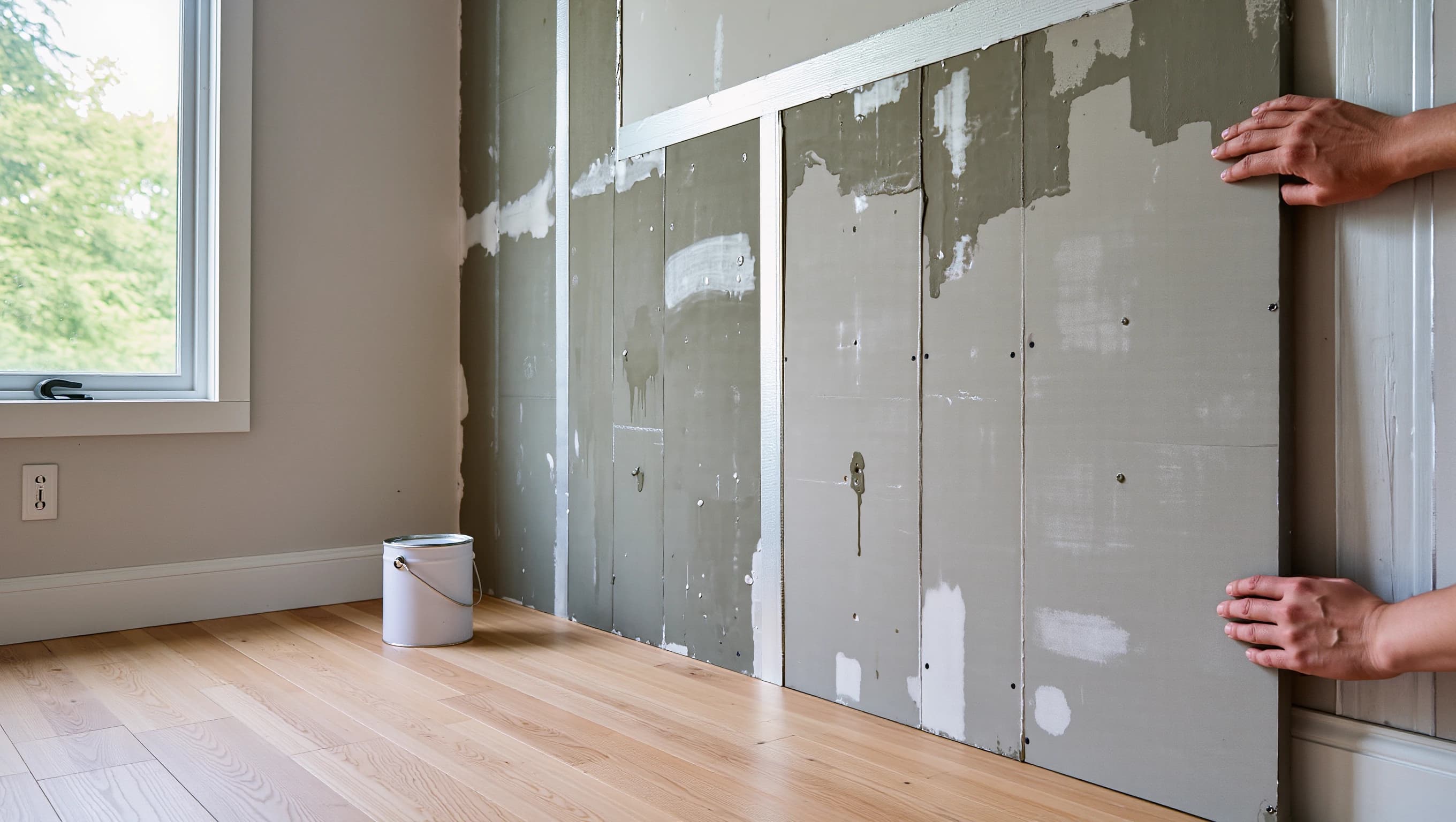
The drywall has just gone up and the joints have been taped and mudded, and the urge to paint right away to finish the project quickly is strong. The right time to paint depends on several factors more precise than just "whenever it seems dry."
Why the joint compound needs to be fully dry, not just dry on the surface
Joint compound dries on the surface first, giving a false impression of complete drying while internal moisture still lingers, particularly for thicker coats applied at joints and corners. Painting over compound that's still damp underneath can trap that moisture, potentially causing paint adhesion problems or mold down the line.
The generally recommended waiting period
| Factor | Impact on drying time |
|---|---|
| Thickness of the applied compound coats | Thicker coats need more time to fully dry |
| Room's ambient humidity | High humidity considerably slows drying |
| Ventilation and air circulation during drying | Good circulation speeds up the process |
| Room temperature | Cooler temperature slows compound drying |
How to tell if the drywall is really ready to paint
The compound should have a uniformly white or slightly gray color, with no darker areas that would indicate residual moisture. Lightly touching the surface shouldn't leave any mark or unusual coolness that might signal moisture still present deeper down.
Why a primer is an essential step, not optional
New drywall and joint compound absorb paint differently, which can create an uneven finish with shinier or duller patches if the finish paint is applied directly with no primer. A sealing primer evens out absorption across the whole surface, guaranteeing a uniform final finish regardless of variation between the drywall and the compound.
What happens if you paint too early
Paint applied over still-damp compound can crack, peel, or bubble once the underlying compound fully dries, a problem that often requires stripping the paint and starting over, costing more time than the initial wait would have taken.
Frequently asked questions
How long should I generally wait before painting?+
Generally at least 24-48 hours after the last coat of compound, but longer in a humid or poorly ventilated room — always check for the absence of residual moisture.
Can a dehumidifier speed up the compound's drying?+
Yes, reducing ambient humidity and improving air circulation considerably speed up the process, particularly useful during more humid months.
Can I skip the primer if I plan to apply two coats of finish paint?+
This isn't recommended — primer seals drywall and compound in a specific way that finish paint alone, even in two coats, doesn't fully replicate.
How do I know if the compound trapped moisture under paint already applied?+
Bubbles, paint peeling, or a musty smell appearing after painting are signs a repair is needed rather than waiting for the problem to resolve on its own.
Get a free quote
More to know before your project.
By Catherine Lavoie — RBQ-licensed general contractor, residential renovation specialist
Updated on July 23, 2026