
Why Does Snow Melt Unevenly on My Roof?
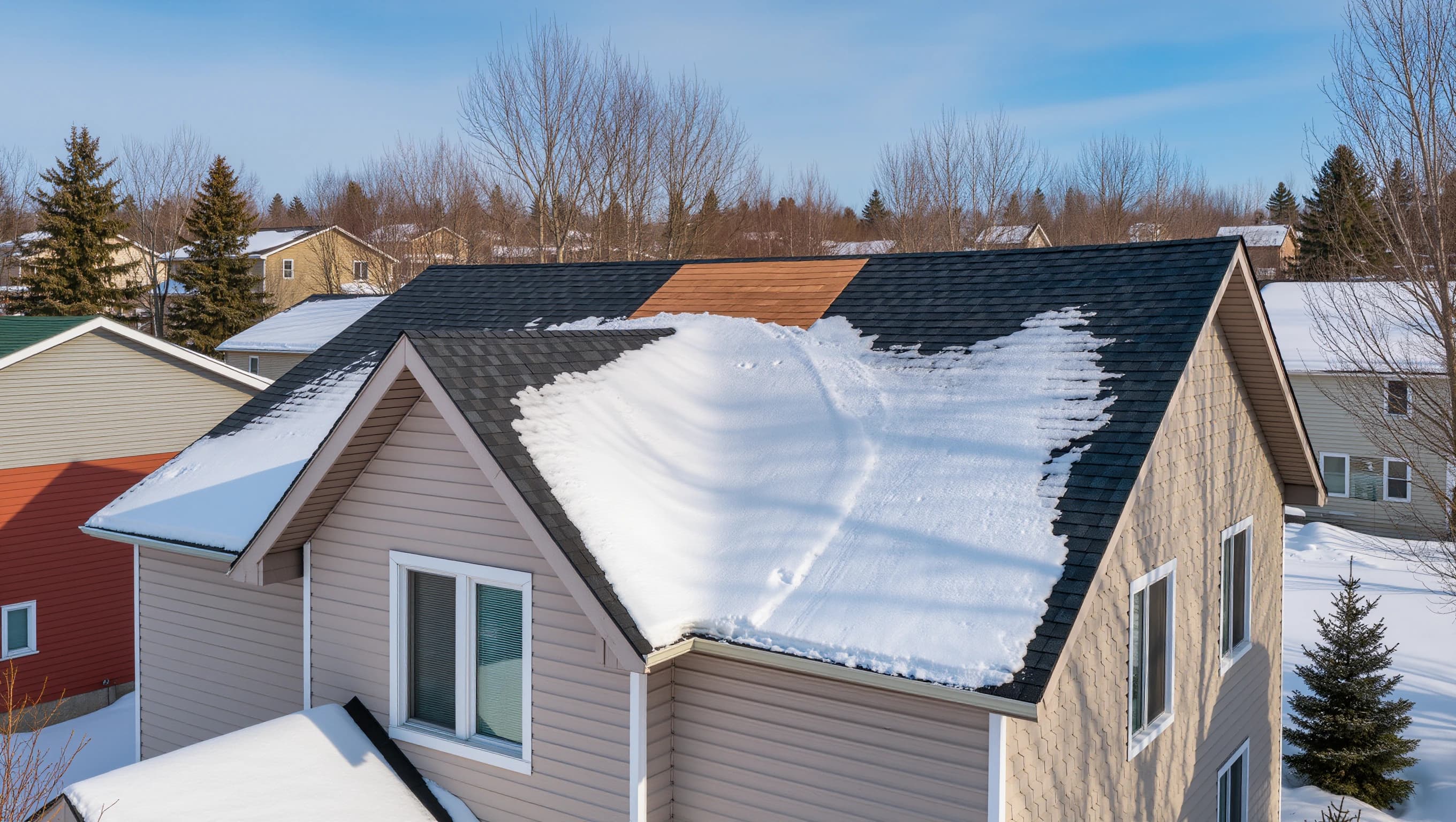
Uneven snow melt on a roof is usually caused by uneven heat loss from the attic below, not a flaw in the roofing itself. It's not dangerous on its own, but it's often the first visible sign of insufficient attic insulation or ventilation, which can lead to ice dams. It's not an emergency, but it's worth checking before it causes water infiltration.
What's Happening?
When you look at your roof after a snowfall and some areas are bare or grey while others stay fully white and snow-covered, it's almost always about heat, not snow. The spots that melt first are the ones where indoor heat is escaping through the roof.
An "ideal" winter roof stays uniformly cold, close to outdoor air temperature, because the attic below is well insulated and ventilated. If heat from living spaces rises and collects under the roof deck instead of staying trapped inside, it warms the underside of the roof in specific spots, melting snow locally even when it's -15 outside.
The typical pattern: the ridge area clear, sections above heated rooms or a skylight melted, and the eaves still icy because they sit outside the home's heated zone.
Is It Dangerous?
On its own, no. Uneven melting isn't a structural issue or an immediate risk to the home. It's a visual symptom, not damage.
The real risk isn't the melting itself, but what it can cause if it persists all winter:
- Check promptly if meltwater from the warm spots refreezes into thick ice at the roof edge (an ice dam)
- Act if you see large icicles forming in the same spot year after year
- Look inside for damp staining on a ceiling near an exterior wall, a sign meltwater has found its way under the shingles
- Watch for a sudden musty smell in the attic, a sign of trapped moisture
Outside of these signs, purely cosmetic uneven melting doesn't call for immediate action.
Most Common Causes
| Cause | Explanation |
|---|---|
| Insufficient attic insulation | Heat from living spaces rises and warms the underside of the roof in spots |
| Blocked or poorly designed attic ventilation | Prevents cold air from circulating to keep the roof at a uniform temperature |
| Air leaks around the attic hatch, ducts, or chimney | Let warm air escape directly under the roof at specific points |
| Poorly insulated skylight or chimney | Create a local warm zone that melts snow just around them |
| Poorly insulated heating or dryer ducts running through the attic | Heat the attic directly along their path |
| Difference in sun exposure by roof orientation | A normal factor unrelated to insulation, but can add to the effect |
Why This Happens in Quebec
Quebec's dramatic temperature swings, from -20 to 2-3 degrees within a few days during a thaw, make this pattern especially visible here compared to more stable climates. Every freeze-thaw cycle reveals more clearly where heat is escaping.
The older housing stock, notably postwar bungalows and homes where the attic has never been updated to current standards, often has insulation well below current recommendations (R-50 to R-60 is recommended for a Quebec attic). Many owners don't realize they may qualify for programs like Renoclimat to help fund insulation and ventilation upgrades, fixing the problem at the source instead of managing the symptoms every winter.
How to Check It Yourself
From the ground or an upstairs window, observe the melt pattern: is it localized (around a skylight, a chimney) or spread across a whole section of roof? A widespread pattern points more toward overall attic insulation.
Inside the attic, if you can access it safely, feel whether the air is noticeably warmer than outside, and look for insulation that's thin, compressed, or uneven in spots.
Don't handle heating or ventilation ducts yourself if you're unsure what you're touching, and avoid climbing onto the roof for a closer look, especially with snow or ice present.
Can I Ignore It?
It depends on how long and how widespread the pattern is. If it's minor and localized (around a chimney, for example), you can generally monitor it without urgent action.
If the uneven melting comes back every winter, covers a large part of the roof, or comes with ice building up at the edge, no, it's better not to wait too long. The repeated freeze-thaw cycle gradually wears down shingles at the roof edge and raises the risk of water getting under the roofing, which can lead to repairs far more costly than addressing the original cause.
How Much Does It Cost?
| Service | Estimated Price |
|---|---|
| Roof and attic inspection | $100 - $250 |
| Preventive snow removal with a roof rake | $150 - $350 |
| Attic ventilation improvement | $500 - $1,500 |
| Attic insulation addition or replacement | $1,500 - $4,000 |
| Residential snow removal contract (seasonal prevention) | $400 - $900/season |
Renoclimat rebates can offset part of the insulation upgrade cost, depending on the home's energy assessment.
When to Call a Professional
- The uneven melting comes back in the exact same spot every winter for several years running
- You see thick icicles or an ice dam forming at the roof edge
- You notice damp staining on a top-floor ceiling or exterior wall
- The attic air feels noticeably warmer than outside air to the touch
- Your home is over 25-30 years old and the attic insulation has never been checked
A roofer or energy-efficiency specialist can pinpoint exactly where the heat loss is coming from with an attic inspection and sometimes a thermal camera, rather than guessing from the snow pattern alone.
Related Questions
Frequently asked questions
Is it normal for snow to melt faster near my chimney?+
Yes, that's very common and usually not a concern. A chimney naturally gives off some heat, which melts snow just around it, as long as it stays limited to that specific area.
Will uneven melting damage my roof?+
Not directly, but if meltwater keeps refreezing into thick ice at the roof edge, it can eventually lift shingles and let water get underneath the roofing over time.
Does redoing the attic insulation actually fix the problem?+
In the vast majority of cases, yes. Proper attic insulation and ventilation keep the roof at a uniform temperature and eliminate localized melting, addressing the cause rather than the symptom.
Should I worry if this only happens once this winter?+
No, a single occurrence usually isn't a concern. It's the pattern repeating in the same spot year after year, or thick ice forming at the edge, that justifies a closer look.
Get a free quote
More to know before your project.
By Éric Gagné — RBQ-licensed roofer, roofing and roof snow removal specialist
Updated on July 23, 2026