
Why Is My Driveway Still Icy Even After the Snow Removal Crew Has Been?
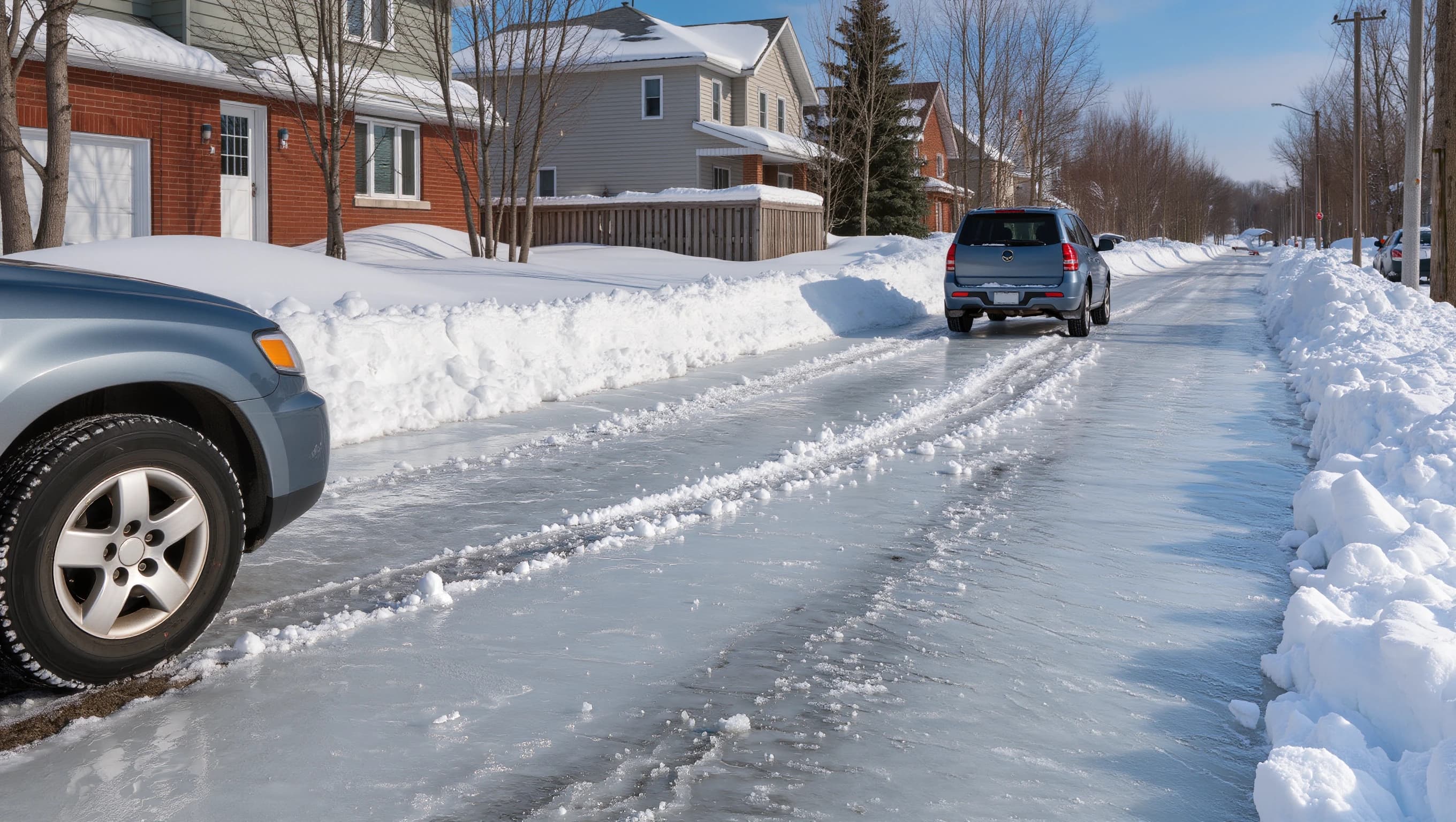
A driveway that's still icy after the snow removal crew has been is usually caused by compacted residual snow refreezing, or meltwater running onto the driveway from the roof or surrounding yard, not a poorly done job. It's generally not a risk to the home itself, but it does create a real slip hazard. An extra de-icing visit or a contract adjustment resolves most cases.
What's Happening?
Snow removal clears surface snow, but it can't always remove a thin compacted layer that's already stuck to the asphalt or concrete, especially if it was walked or driven over before the crew arrived. That thin layer then refreezes into smooth, often nearly invisible clear ice, hard to spot before you walk or drive on it.
Sometimes the driveway is clean right after the visit, but water pools there afterward: meltwater running off the roof toward the driveway, snow from neighbouring yards or sidewalks melting and draining over, or a slight grade in the land that directs water straight toward the most-used spot on the property.
In some cases the timing of the visit is the real factor: if the crew clears before a snowfall has finished, or before a thaw is followed by a fast cooldown, a new layer of ice can form after they've left without any fault in their work.
Is It Dangerous?
For the home, no, it's not a structural risk. For people walking or driving on that driveway, yes, an icy driveway is a genuine slip and skid hazard, especially early in the morning when clear ice blends in and is hard to see against the snow.
Inspect or act quickly if:
- Ice forms in the exact same spot every week (a sign of a drainage issue to fix, not just temperature)
- Family members, especially children or older adults, regularly use that driveway
- You notice water seeping toward the foundation or garage at that spot
- The driveway stays icy for several days straight despite above-freezing daytime temperatures
Outside of these cases, an occasional patch of ice after a storm isn't unusual and is easily fixed with salt or an abrasive.
Most Common Causes
| Cause | Explanation |
|---|---|
| Compacted snow not fully cleared before the visit | A thin adhered layer refreezes into smooth ice after removal |
| Roof meltwater draining onto the driveway | Indoor heat melts roof snow, which refreezes on contact with cold asphalt |
| Poorly graded or oriented driveway drainage | Naturally directs runoff toward the driveway instead of away from it |
| Crew clearing before the snowfall has finished | A new layer falls or refreezes after they've left |
| Thaw followed by a fast cooldown cycle | Water that hasn't had time to drain or evaporate refreezes into hard ice |
| Uneven asphalt or concrete grading | Creates low spots where water pools and consistently refreezes |
Why This Happens in Quebec
Quebec winters bring frequent thaws followed by rapid cooldowns, sometimes within 24-48 hours. This constant back-and-forth between melting and refreezing hits driveways especially hard, since they're exposed and often less well-drained than a roof built with a calculated slope.
Many older properties have a driveway that was originally graded without accounting for optimal water flow, an issue that only becomes visible after several winters of repeated refreezing. A standard residential snow removal contract covers snow clearing, but not necessarily grading or drainage, which is why the problem can persist even with a reliable service.
How to Check It Yourself
Watch whether ice always forms at the exact same spot on the driveway, or whether it's random depending on the storm. A fixed, recurring spot points toward a grading or drainage issue rather than the snow removal service itself.
Look at where the water is coming from: is it visibly running off the roof, draining from a neighbouring yard, or pooling in a low spot in the asphalt with no obvious source?
You can spread salt or an abrasive yourself in the meantime, but avoid aggressively chipping at very adhered ice with a metal tool, which can damage the asphalt or concrete underneath.
Can I Ignore It?
It depends on frequency and location. If it's occasional, after a particular storm, and manageable with salt, it's not something to fix urgently.
If ice consistently comes back in the same spot every week, no, it shouldn't be ignored indefinitely. An uncorrected drainage or grading issue keeps creating a slip hazard all season, and water repeatedly seeping into the same spot can eventually degrade the asphalt or get uncomfortably close to the garage foundation.
How Much Does It Cost?
| Service | Estimated Price |
|---|---|
| Extra de-icing or snow removal visit | $40 - $100 |
| Professional salt or abrasive applied per visit | $20 - $50 |
| Adjusting contract frequency or package | $400 - $900/season |
| Driveway drainage or grading assessment | $150 - $400 |
| Driveway grading or slope correction | $800 - $3,000 |
A simple contract adjustment or extra visit resolves most cases; grading work is only needed if the problem is structural and recurring.
When to Call a Professional
- Ice forms in the exact same spot after every storm or thaw, winter after winter
- You see water pooling against the garage or house foundation at that spot
- The snow removal company hasn't been able to fix the problem despite repeated complaints
- A family member has already slipped or nearly fallen on that driveway
- The asphalt or concrete shows worsening cracks near the icy area
A contractor can assess whether the issue really comes from the snow removal service, or from a grading/drainage flaw that no amount of extra salting will ever fix for good.
Related Questions
Frequently asked questions
Is it normal for ice to keep coming back even with a good snow removal contract?+
Yes, it can happen even with a reliable service, because snow removal clears the snow but doesn't fix an underlying drainage or grading issue. If it keeps happening in the same spot, that's what needs checking.
Should I call my snow removal company every time it's icy?+
For an occasional patch after a storm, a bit of salt is usually enough. But if it happens consistently, it's worth flagging with them to adjust the contract or identify a drainage cause.
Can salt damage my asphalt driveway?+
Used in moderation, standard road salt generally doesn't damage asphalt in the short term. Excessive, repeated use year after year can accelerate surface wear, especially on asphalt that's already cracked.
How long before an icy driveway counts as a drainage problem?+
If it's the exact same spot recurring across more than one winter, that's generally a sign of a grading or drainage issue rather than random weather, and it's worth having assessed.
Get a free quote
More to know before your project.
By Éric Gagné — RBQ-licensed roofer, roofing and roof snow removal specialist
Updated on July 23, 2026