
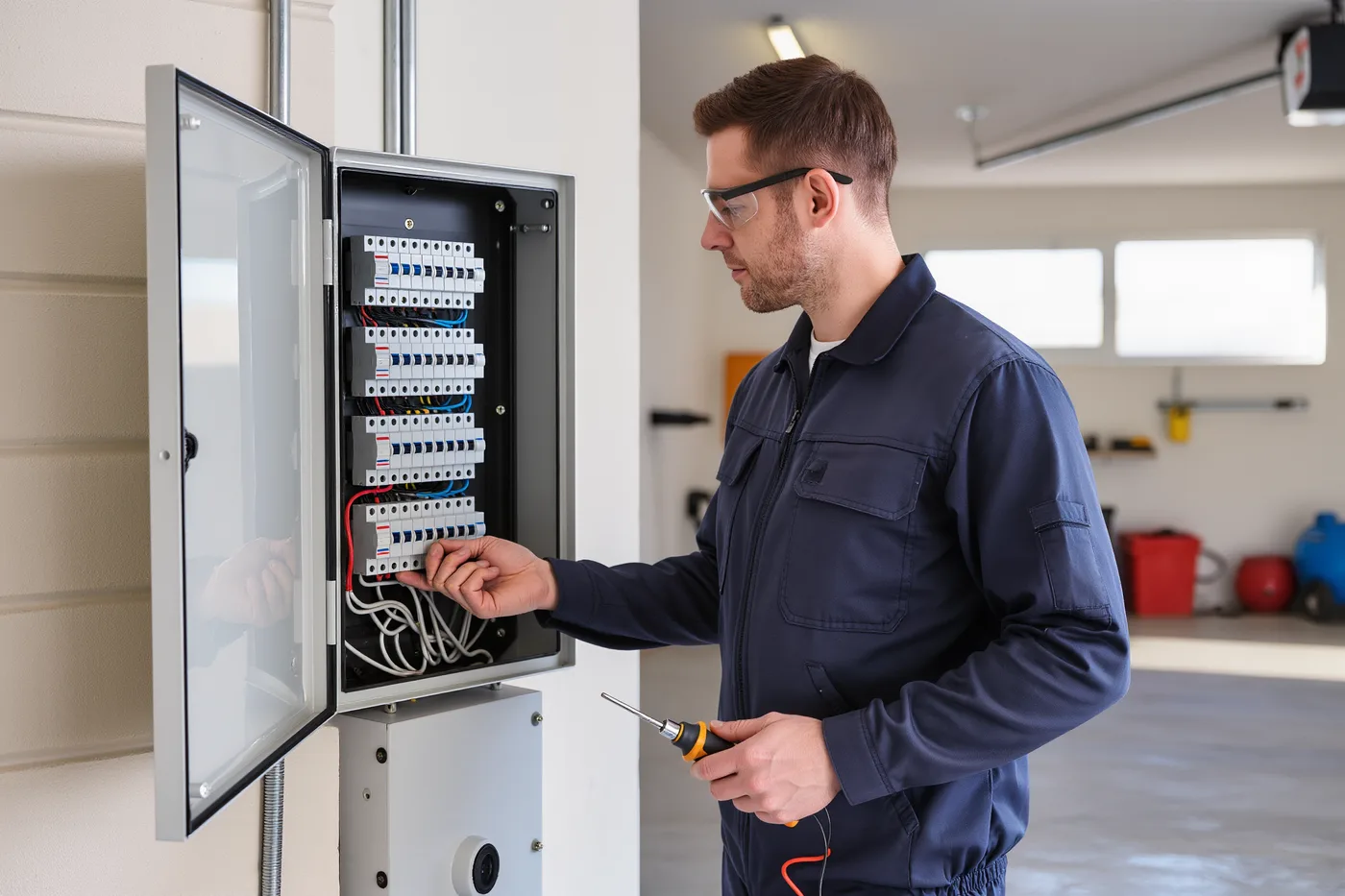
EV Charger Installation in Varennes
With growing EV adoption across Quebec, a 240V home charging station has become a common addition in Varennes. Our RBQ-licensed partner electricians assess your electrical panel's capacity before recommending the right location and dedicated circuit for your vehicle, with the municipal permit handled for you.
Signs to watch for
You've just bought an electric or plug-in hybrid vehicle, charging on a standard 120V outlet takes more than 24 hours, or you're planning to buy an electric vehicle within the next year.
How much does it cost?
Complete guide
Why a 240V charger changes everything
A standard 120V outlet (Level 1) adds roughly 6-8 km of range per hour of charging — nowhere near enough to fully recharge a battery overnight after normal daily driving. A 240V Level 2 charger multiplies that rate 5 to 7 times, fully recharging most vehicles in a single night. It's also the only realistic option for homeowners relying on an EV as their primary vehicle.
The most common charger types
Hardwired chargers (no plug) offer the most reliable and often cheapest option, while chargers with a NEMA 14-50 plug add the flexibility of unplugging the unit when needed. The choice mostly depends on the distance between the electrical panel and the parking spot, plus the vehicle's onboard charger capacity.
How the installation works, step by step
- Panel assessment — an electrician checks the panel's remaining capacity and the distance to the desired parking location.
- Choosing the location and model — indoor (garage) or outdoor, hardwired or plug-in, based on your needs and vehicle.
- Permit application — a municipal electrical permit is generally required; our partners handle this for you.
- Dedicated circuit installation — running the wiring, installing the dedicated breaker and the charger itself.
- Testing and commissioning — verifying actual charging performance before considering the project complete.
What affects the price
| Factor | Price impact |
|---|---|
| Remaining panel capacity | An already-full panel needs an upgrade, meaningfully raising the cost |
| Panel-to-charger distance | Every extra meter of wiring, especially through finished walls, adds labor |
| Indoor vs. outdoor location | An outdoor install needs weatherproof housing and wiring |
| Charger model | Smart chargers (Wi-Fi, load management) cost more than basic models |
Varennes particularities
As everywhere in Quebec, an installation in Varennes requires a municipal electrical permit and compliance with the Quebec Construction Code. Hydro-Québec's ChargezVert rebate may also apply depending on your situation — our partners will confirm your eligibility before work begins.
Myths and realities
Myth: any electrician can install a charger without checking the panel. Reality: ignoring remaining panel capacity can cause repeated main breaker trips — a full assessment is essential before installation.
Myth: a standard outlet is fine for daily use. Reality: at 120V, most vehicles won't fully recharge overnight after a normal commute, limiting the range available the next day.
Frequently asked questions
How much does a charger installation cost in Varennes?+
Expect $800 to $2,500 for a standard installation, and up to $4,000 or more if a panel upgrade is required.
Is a permit required?+
Yes, a municipal electrical permit is generally required in Varennes. Our partners handle this for you.
Can my current electrical panel handle a charger?+
It depends on its remaining capacity. An electrician assesses your home's total load before confirming whether an upgrade is needed.
How long does the installation take?+
Most installations are completed in half a day to a full day, depending on the distance between the panel and the chosen location.
Are there rebates available for charger installation?+
Hydro-Québec's ChargezVert rebate may apply depending on your situation — our partners check your eligibility before work begins.
Can I install the charger myself?+
No, a dedicated 240V circuit must be installed by an RBQ-licensed electrician to comply with the Quebec Construction Code and avoid any risk of overload.